
Water Mill
Home Surveillance in Water Mill: Coverage That Respects the Property
For a Water Mill home, surveillance should provide useful awareness without making the property feel watched, over-equipped, or difficult to manage. The strongest systems begin with a coverage plan, a reliable network, and a clear idea of what the homeowner actually needs to know.
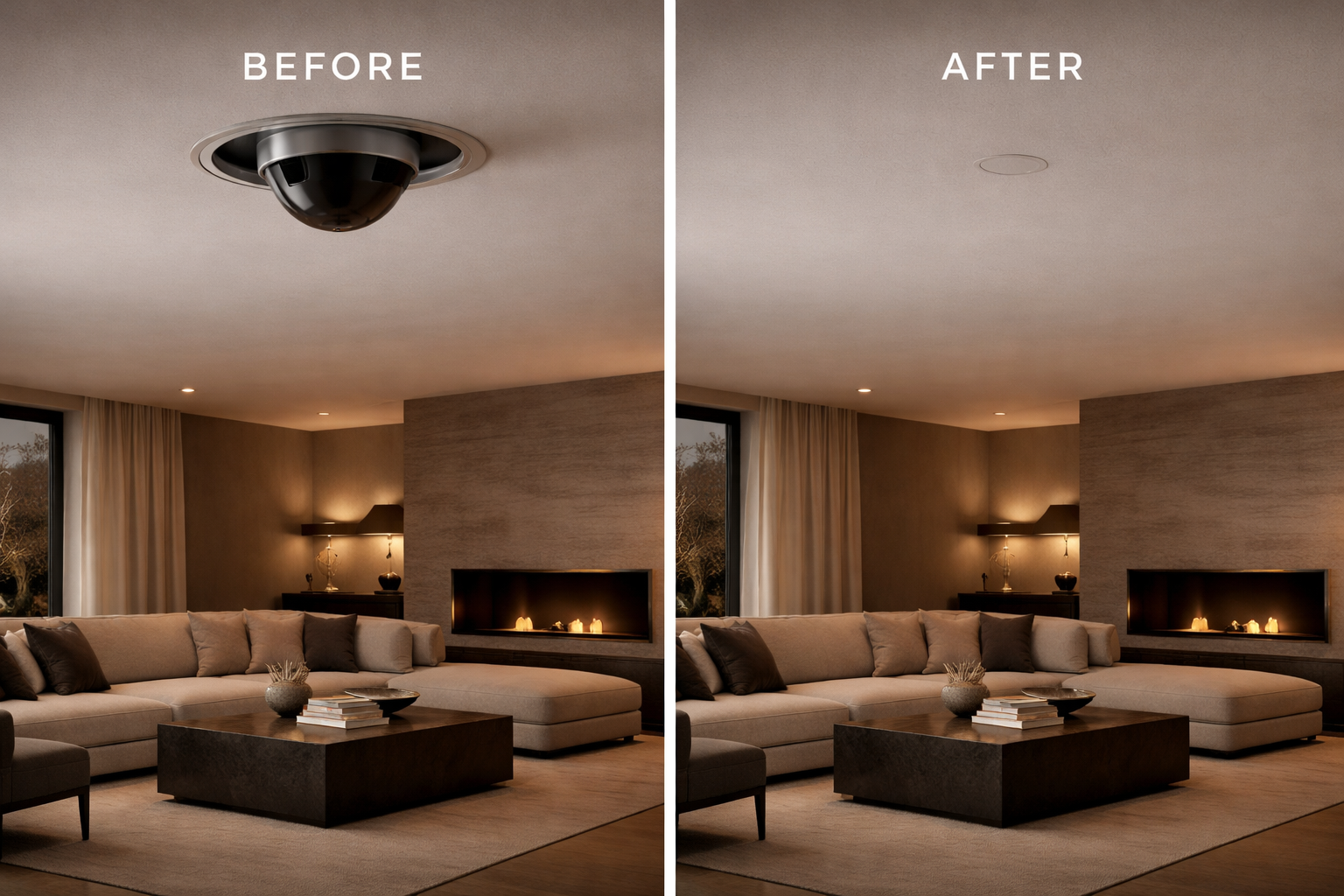
A home surveillance system is not simply a collection of cameras. It is part of the property’s larger technology environment: the network that carries video, the paths used to reach gates and secondary structures, the control interface used by the household, and the access rules that determine who can see what. For a primary residence, a seasonal home, or a house that hosts family and guests, those choices matter just as much as the camera itself.
HTE approaches home surveillance in Water Mill as quiet, practical infrastructure. We coordinate camera locations with architecture and landscape conditions, then design the surrounding network and Wi-Fi foundation so the system is dependable when it is needed. The aim is relevant information—not a phone full of noise.
Begin with the decisions a homeowner will actually make
The first question is rarely “How many cameras?” It is usually: What should be easy to verify when no one is home? That may include a driveway arrival, a delivery area, an entry sequence, a gate, a pool house, an exterior mechanical zone, or a service entrance. The answer varies by property, sightline, and household routine.
Before equipment is selected, define priorities such as:
- which approaches, entries, and exterior zones require coverage;
- where a person or vehicle alert is genuinely useful;
- which areas should remain intentionally private; and
- who should have live-view, playback, or administrative access.
That process avoids the common outcome of broad coverage with unclear purpose. It also supports better coordination with lighting, gates, landscape work, and construction. In a finished home, placement has to respect trim, masonry, rooflines, and carefully composed views. During a renovation or new build, the team can preserve cleaner routes and service access before finishes are complete.

Useful alerts are more valuable than constant alerts
Camera analytics can help distinguish a person, a vehicle, or a defined boundary crossing from ordinary movement. But the value comes from tuning. A camera trained on a busy road, moving tree line, or a frequently visited outdoor area can create more interruptions than confidence if detection zones and notification rules are left generic.
Our guide to motion detection explains why placement, sensitivity, and detection zones need to be considered together. For Water Mill properties, an alert plan might separate a service entry from a guest arrival path or reserve immediate notifications for a particular gate, door, or restricted zone. The homeowner should understand what the alert means without opening several apps to find out.
Good surveillance is specific.
A well-designed system records the coverage the property needs, surfaces the events worth reviewing, and gives the household clear control over access and notifications.
Video depends on network design
High-resolution cameras, recorders, remote access, and mobile playback all depend on the network behind them. A property that can stream a movie may still have weak links for surveillance: distant exterior locations, a detached structure, an overloaded wireless connection, or equipment that was never planned for the traffic it now carries.
Where possible, fixed cameras should be planned with dependable wired connectivity. This gives the system a stronger path back to the recorder and reduces reliance on improvised extensions. It also makes room for a network architecture that separates critical connected systems from personal and guest devices. For a broader look at the risks of underbuilt infrastructure, see how weak network devices disrupt luxury smart homes.
Remote viewing should be controlled and easy to use
Remote access is often the point of the system, especially for second homes or periods when the property is unoccupied. It should also be intentional. Shared passwords, outdated user accounts, and unmanaged remote access create confusion that is avoidable with a structured access plan.
HTE can integrate selected surveillance functions into a broader smart home control system, so the homeowner can move from an event to the relevant camera feed without treating every system as a separate island. For Control4 homes, the newer enhanced NVR surveillance experience is a useful example of how event review can become less fragmented.
Access should be defined by role: homeowners, trusted staff, and service providers do not necessarily need the same controls or history. Multi-factor authentication, reviewed permissions, and well-documented account administration help keep the system usable and accountable over time. HTE’s smart home security design guide explores the broader network, access, and maintenance decisions that support this approach.
Support keeps the plan current
Surveillance needs can change as a property evolves. A new gate, a redesigned entry, a landscape change, or a different household routine may call for revised coverage or alert rules. Ongoing care also matters for firmware, user access, recorder health, and the network that supports the entire system.
Through HTExpertCare, HTE provides an ongoing relationship with the team that understands the design intent and system documentation. That continuity is particularly useful for complex Hamptons residences where reliability and discretion need to hold up long after installation.
Water Mill Home Surveillance FAQ
How many cameras does a Water Mill home need?
There is no useful fixed number. The right count follows the property’s approaches, entries, detached structures, important exterior zones, and the specific events the homeowner wants to understand.
Can surveillance cameras be discreet?
Yes. Early coordination helps integrate camera locations with architectural details, lighting, landscape, and wiring routes while preserving the coverage the plan requires.
Do cameras need a strong network?
Yes. Camera reliability, recording, and remote viewing depend on the network. Fixed cameras are generally best supported with planned wired connections where practical.
Can I view cameras while away from Water Mill?
Yes, with appropriately configured remote access. HTE designs access and user permissions around the household, rather than relying on broadly shared credentials.
Can HTE add surveillance to an existing Hamptons home?
Yes. An existing-home review can identify realistic paths for coverage, network improvements, equipment placement, and discreet integration before recommendations are made.