
Home Theater Planning Guide
How to Plan a Home Theater
The most important home theater decisions happen long before anyone chooses a television, projector or speakers. The room's dimensions, how people sit, the light entering the space and the type of entertainment you enjoy determine which technology will actually feel right.
For a dedicated cinema or a beautifully integrated media room, the goal is not simply to install the biggest screen available. It is to design a comfortable viewing experience from every seat, with dependable operation and an appearance that complements the home.
Start with How You Will Use the Room
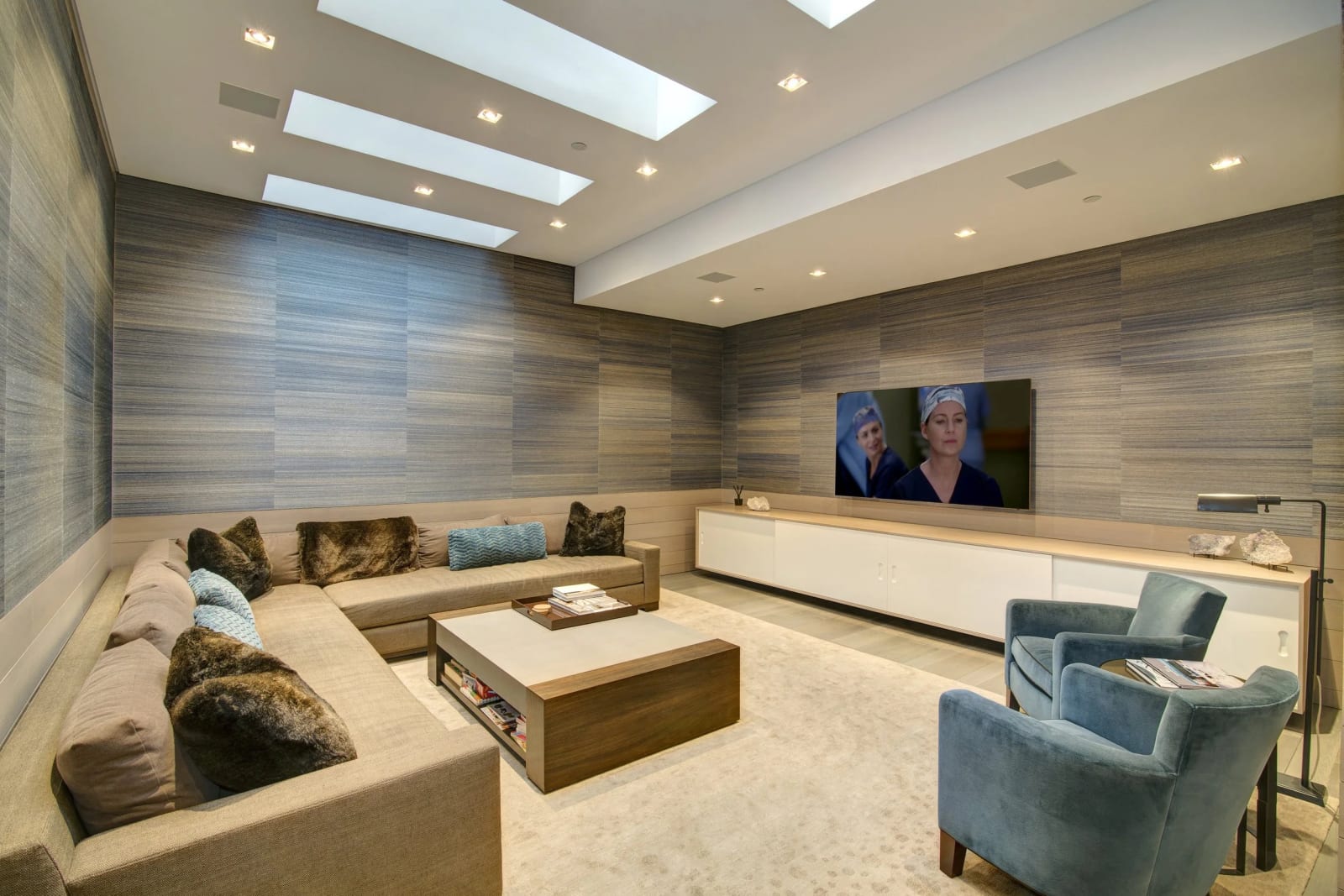
Will this be a room primarily for widescreen films, or a gathering place for sports, streaming, television and gaming? Will the lights usually be dimmed, or does the space need to work during the day? These questions shape the display, seating and lighting strategy.
A dedicated theater can prioritize controlled lighting and a theatrical presentation. A multipurpose media room may benefit more from a high-performance direct-view television. Neither approach is automatically better. HTE explores this distinction in its guide to choosing between a home theater and a media room.
Choose the Display Around the Room, Not the Other Way Around
Screen selection should account for ambient light, room dimensions, preferred movie formats, the practical ability to deliver and install equipment, and budget. A large television, a projection system and a direct-view LED wall create different viewing experiences.
When a television makes sense
Today's large televisions can offer excellent brightness, contrast and color, making them especially useful in rooms with daytime light or varied viewing habits. A television is also an attractive choice when its size suits the seating distance and there is no strong reason to use projection.
Why projection can still feel more cinematic
A projected image is light reflected from a screen rather than light emitted directly toward the viewer. Some people prefer the character of that image, particularly for movies in a darkened room. Projection can also accommodate very large screen sizes and cinema-oriented screen formats.
Where an LED video wall fits
A direct-view LED wall can support a large, striking image and flexible presentation layouts, but it requires careful planning for cost, structure, space and installation. It should be evaluated as part of the overall design rather than chosen simply because it is the most ambitious option.

Consider Aspect Ratio Before Choosing Screen Size
Most televisions use a fixed 16:9 display shape. Many feature films, however, are presented in wider formats. On a 16:9 screen, those films often appear with black bands above and below the image. A larger television does not necessarily mean the movie uses its full height.
Projection allows another approach: a screen shaped for widescreen cinema, such as approximately 2.35:1 or 2.40:1. This can be particularly compelling for film-focused rooms, although 16:9 programming then needs a different presentation area. Some systems use masking to adjust the visible screen boundaries for different formats.
Before deciding, consider whether the room is mostly for films or mixed programming. Screen format is as important as screen size when determining how immersive the experience feels.
Plan Sightlines Before Building Tiered Seating
In a room with two or more seating rows, every viewer needs a clear sightline to the full image. It is not enough to confirm that people in the back row can see the top of the screen. They should also be able to see the bottom without looking through the heads of people seated in front.
That means evaluating riser heights, ceiling height, seating positions, screen height and the chosen aspect ratio together. In some rooms the right answer is to adjust the screen dimensions or seating geometry rather than make the screen larger.
For a room that will be built or renovated, these decisions belong in the architectural planning phase, while ceiling details, risers, power and equipment locations can still be coordinated.
Make Sure the Equipment Can Actually Reach the Room
A surprisingly practical consideration can shape an otherwise sophisticated design: the route from the delivery point to the display wall. Narrow stairwells, tight turns, door openings, elevators and finished interiors can limit which large televisions, screens or wall components can be installed.
Homeowners should not be expected to identify every access problem during the first phone call. A professional site walkthrough should assess the delivery route before equipment is specified and ordered. This helps avoid discovering too late that an impressive screen cannot make it into the room.
Understand What Makes One Picture Look Better Than Another
Two televisions can look remarkably different even when they are both described as smart TVs. The word smart refers primarily to built-in software and streaming features. It says very little about the underlying image quality.
What you see depends on several other factors, including contrast, brightness, color range, resolution, panel and backlight design, image processing, and calibration. These are among the reasons one display may appear richer or more lifelike than another.
Display technologies continue to evolve, but none replaces the need to evaluate the room and viewing preferences first.
Calibration changes the experience
Picture modes alter brightness, color and other display settings. A vivid retail setting may be impressive at first glance but less appropriate for watching films in a dim room. An accurate cinema-oriented mode may look less intense yet better reflect the intended presentation.
Even two identical television models can look different if their settings are not matched. Proper commissioning and, where warranted, professional calibration help the display perform appropriately for its environment and sources. Gaming, movies and daytime television may call for different settings.
Design the Supporting Systems at the Same Time
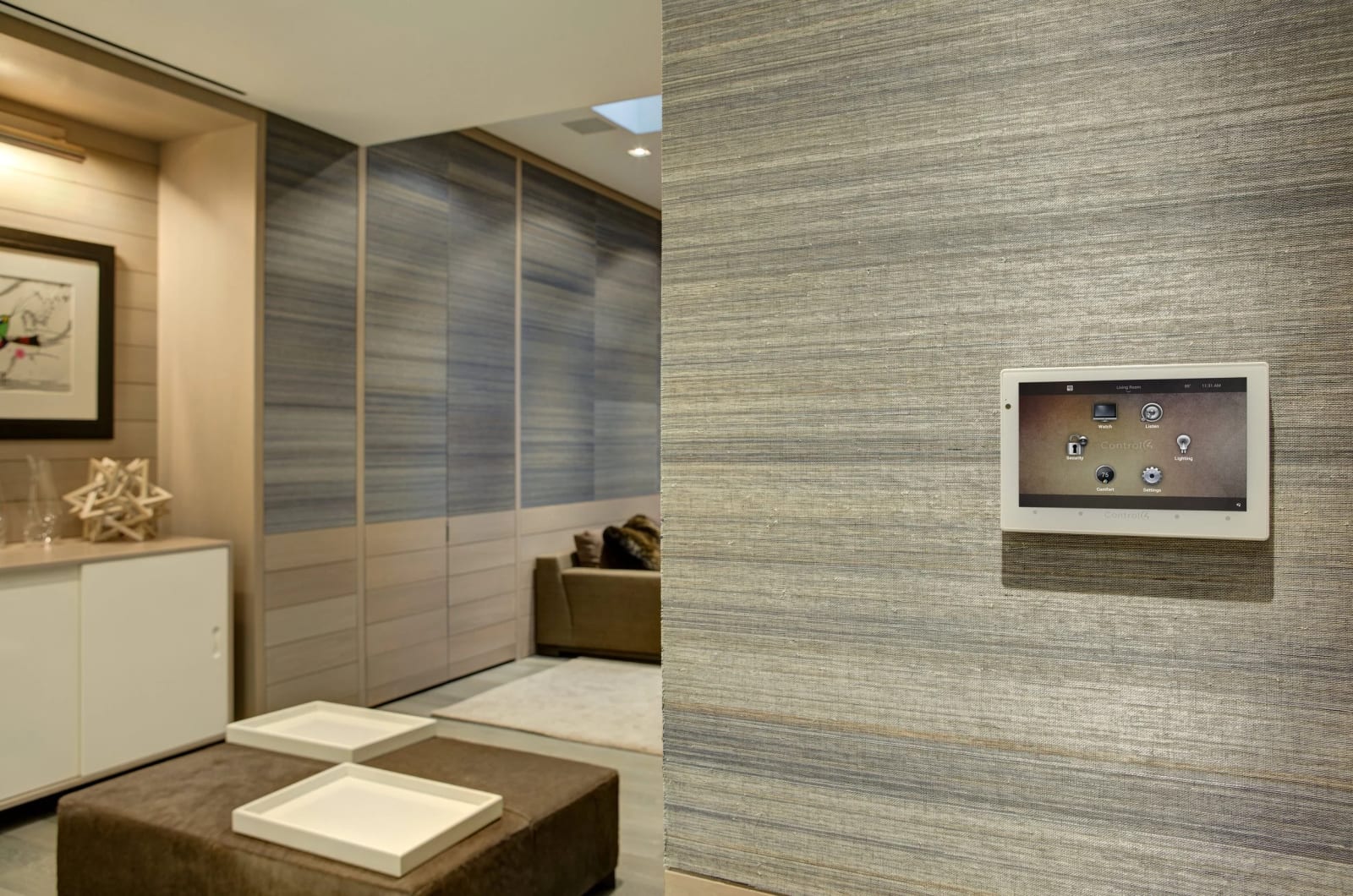
The screen is only one piece of a successful home theater. Speaker locations, room acoustics, lighting control, shading, wiring pathways, ventilation, service access and intuitive operation should all be considered before construction is complete. These systems need to work individually and together without making the room complicated to use.
HTE's home theater and media room design services address the room as a whole. In a larger residence, reliable home networking, thoughtfully planned lighting control and motorized shading may also affect the experience.
Questions Worth Asking Before the Design Begins
- What types of content will we watch most often, and at what times of day?
- Where will everyone sit, and can every row see the full image?
- Would a television, projection system or LED wall fit the room best?
- Should the screen favor 16:9 programming, widescreen movies or a mix?
- Can all selected equipment be delivered and installed through the available access route?
- How will lighting, shading, acoustics and picture calibration be handled?
- How will the system be operated, maintained and upgraded?
Frequently Asked Questions
Is a projector better than a large television for a home theater?
Not universally. A projector can provide a cinematic reflected image and accommodate a large widescreen presentation in a light-controlled room. A modern large television may be more practical in a brighter multipurpose space. The best choice depends on the room, viewing preferences and budget.
How large should my home theater screen be?
Start with seating distance, viewing angles and the shape of the room. For multiple seating rows, verify that people in the back can see the bottom of the image. Bigger is only better when it improves the experience from the actual seats.
Why do some movies have black bars on my television?
Many movies use a wider aspect ratio than a standard 16:9 television. The black bars preserve the movie's original shape rather than cropping the picture. Projection and masking systems can be designed around different viewing formats.
Does a smart TV automatically have better picture quality?
No. Smart features describe software, apps and connectivity. Picture quality also depends on panel technology, contrast, brightness, color, image processing and calibration.
When should a home theater designer visit the property?
Before the equipment list is finalized, especially when large displays, stairs, tight access routes, tiered seating or architectural changes are involved. An early walkthrough can identify constraints while there is still time to design around them.
Plan the experience before the equipment.
Tell Home Technology Experts how you want to use the room. We can help evaluate display choices, seating, installation constraints and the systems that make the experience feel effortless.
Discuss Your Home Theater Plans