
The Cost of Waiting
Whole-Home Wi-Fi Without the Dead-Zone Tax.
A weak network makes every other smart-home system feel unreliable.
HTE designs whole-property networks for Hamptons residences, guest houses, pools, gardens, gates, and the connected systems that need to work everywhere.
The Invisible Foundation
Fast internet does not guarantee reliable Wi-Fi.
Whole-home Wi-Fi is the foundation beneath streaming, video calls, cameras, lighting control, motorized shades, audio, climate systems, gates, and remote access. When coverage is weak or the network is poorly designed, each connected system can appear to have a problem of its own.
That is the Dead-Zone Tax: the time spent reconnecting devices, restarting equipment, moving calls to another room, abandoning outdoor coverage, and paying for isolated fixes that never address the underlying network. The cost is not only inconvenience. It is the erosion of confidence in every experience the home was designed to provide.
The provider brings internet to the property. A professionally designed estate network and whole-property Wi-Fi system distributes it reliably through the residence and across the grounds. Those are different jobs—and large Hamptons properties demand that both be planned.
Where the Tax Appears
One weak network. Problems everywhere.
01
Unreliable control
Apps, touchscreens, cameras, shades, and lighting can seem inconsistent when network connections drop or roam poorly.
02
Rooms you avoid
Calls freeze upstairs, streams buffer in bedrooms, and work migrates to whichever corner happens to hold a signal.
03
Outdoor blind spots
Coverage ends at the back door while pools, terraces, gates, docks, and outdoor entertainment remain disconnected.
04
Temporary fixes
Extenders, extra routers, and repeated service calls add complexity without creating one stable, documented network.
A weak network makes every other smart-home system feel unreliable.
Designed Coverage
Wi-Fi should follow the architecture—not fight it.
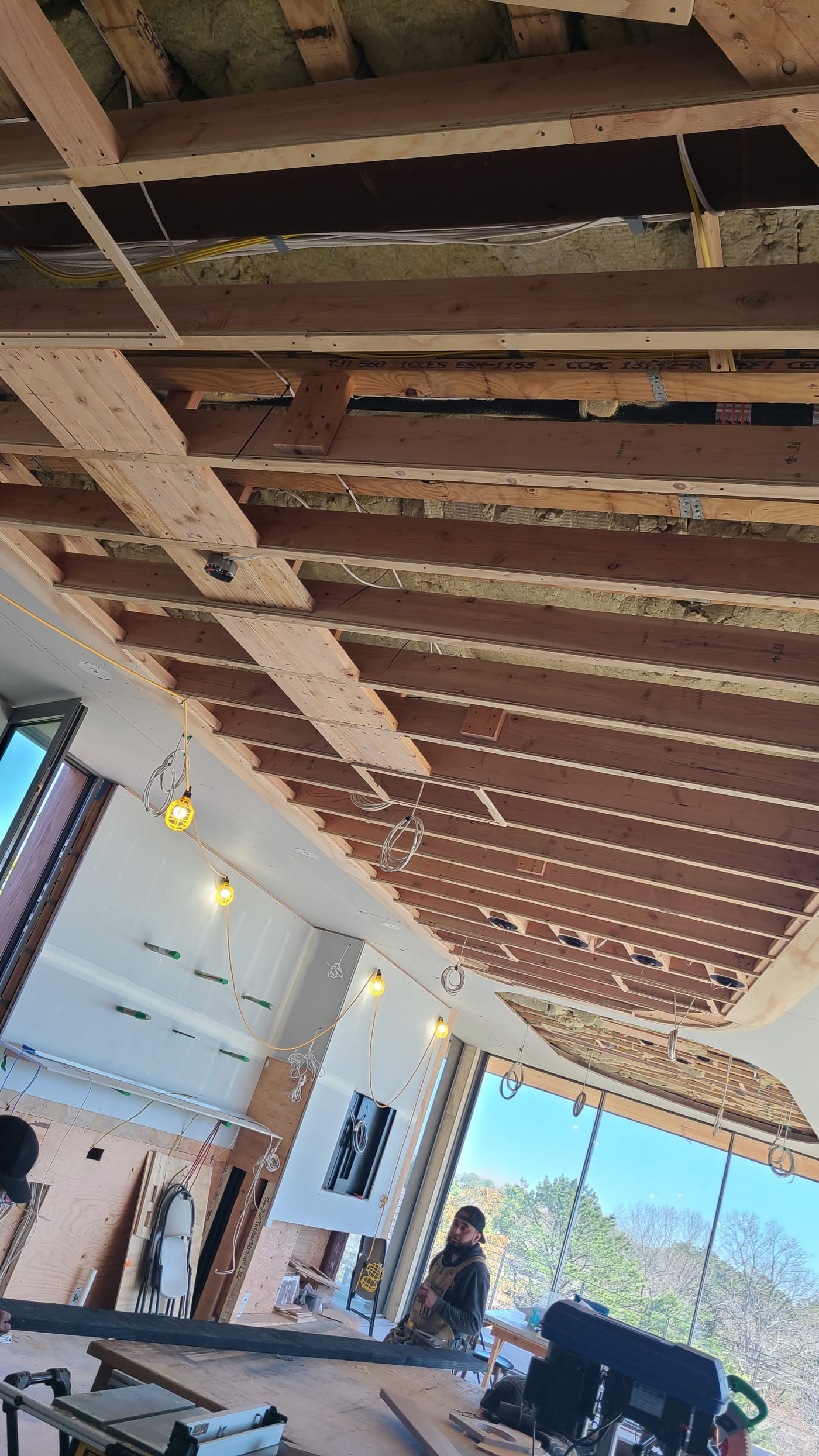
Large residences can be hostile to wireless signals. Thick walls, steel framing, masonry, radiant floors, long distances, neighboring networks, and multiple structures all affect coverage. A router placed where the provider enters the house cannot account for every room and acre.
HTE begins with the property. We identify where connectivity must reach, measure how the construction behaves, review the existing cabling and equipment, and locate access points around real use—not convenience. A wired backbone carries traffic efficiently while carefully placed access points provide the wireless connection where people and devices need it.
When HTE is involved during construction, pathways can be coordinated before finishes conceal them. In an existing home, we assess what can be reused and where a focused correction will deliver the most meaningful improvement.
The HTE Network Standard
Whole-home Wi-Fi engineered as a system.
Reliable coverage is not one product. It is a coordinated design that connects the provider, network core, cabling, access points, property zones, and ongoing support.
Property assessment
Walk the home and grounds, document symptoms, test coverage, and define the spaces and systems that must stay connected.
Wired backbone
Use structured cabling or fiber to give access points and fixed devices a dependable path back to the network equipment.
Planned access points
Place enterprise-grade indoor and outdoor access points according to construction, capacity, overlap, and actual use.
Seamless roaming
Coordinate one network so phones, tablets, and control devices can move through the property without clinging to a distant signal.
Secure separation
Organize family, guest, staff, smart-home, and security traffic to protect privacy and keep critical systems orderly.
Monitoring & support
Document the network, protect its power, manage updates, and support the system as devices and service needs change.
Primary or Backup Internet
Starlink can solve the connection. It does not design the network.
Starlink can be valuable where wired providers underperform or where a second internet connection is needed for resilience. But the dish is only the source. Reliable coverage still depends on the cable path, router and firewall, network equipment, access-point design, and links to other buildings.
HTE evaluates sky visibility, mounting aesthetics, concealed pathways, power, and how Starlink should integrate with the home's existing network. When redundancy matters, primary and backup services can be coordinated so the house is not dependent on a single provider.
Explore professional Starlink installation and integration, or begin with the broader connectivity assessment when the cause of the problem is not yet clear.

The network disappears. The experience simply works.
Streaming, control, entertainment, security, and everyday communication all depend on the same invisible foundation. The goal is not a better speed-test number. It is a home that behaves reliably from room to room and building to building.
Built for the East End
Whole-property Wi-Fi for Hamptons estates.
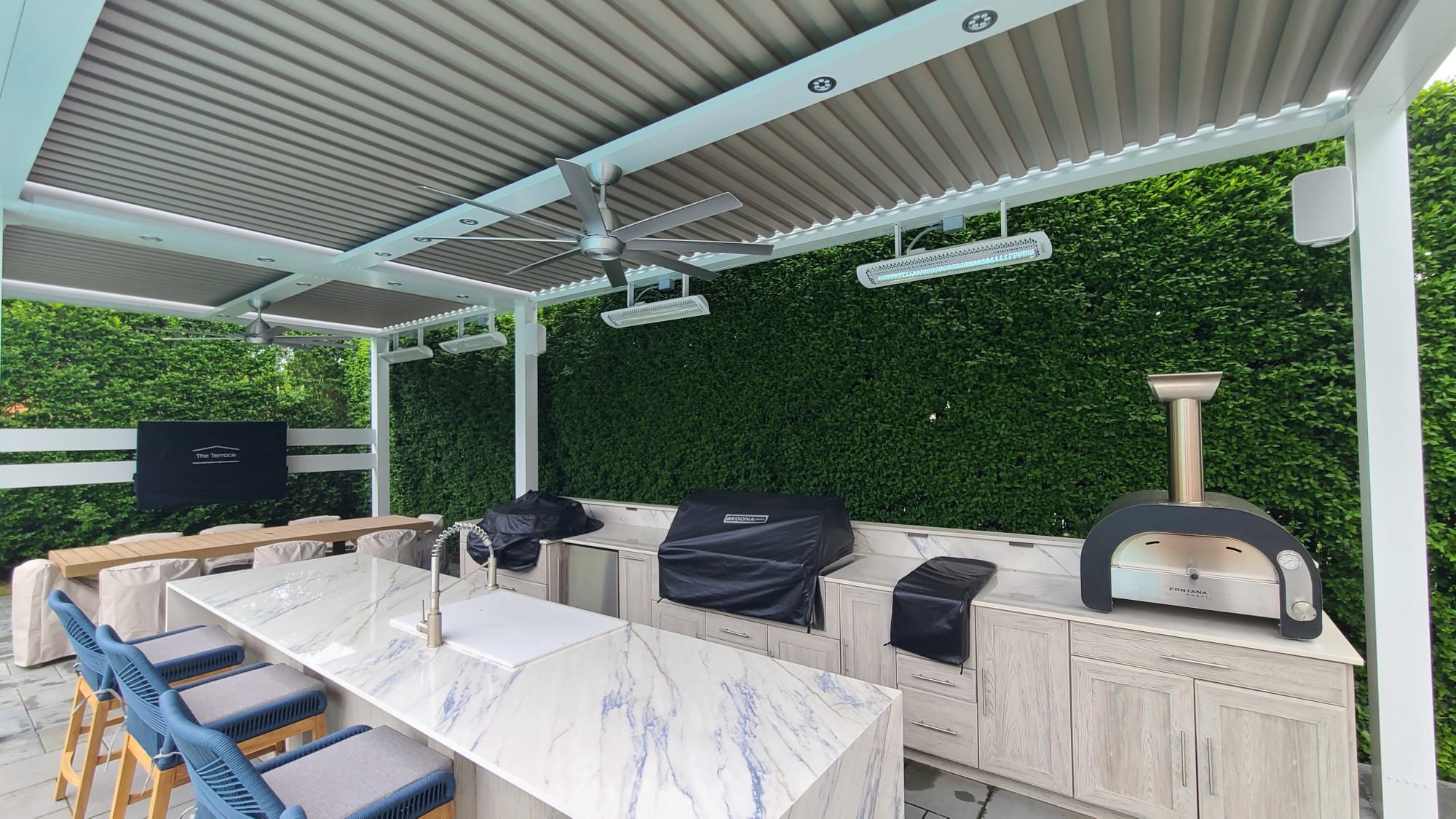
A Hamptons network may need to cover a main residence, guest house, pool house, gym, terrace, gate, garage, dock, gardens, and staff areas. The property may sit quiet for months, then fill with family and guests. It may depend on remote cameras and control while the homeowner is away.
That operating pattern is why coverage must be designed beyond the main building and beyond today’s device list. HTE considers the complete property, seasonal occupancy, outdoor entertaining, service-provider limitations, backup connectivity, and the smart-home systems riding on the network.
If the symptoms are confusing—slow internet, weak Wi-Fi, recurring outages, devices falling offline, or provider visits that create new issues—start with Fix My Crappy Internet. HTE will diagnose the complete connectivity path and recommend the right correction, whether that means reconfiguration, better coverage, new cabling, Starlink, failover, or a redesigned network.
End the Dead-Zone Tax
Make the network as dependable as the home around it.
Start with an honest assessment of the provider, equipment, cabling, coverage, outdoor areas, and every connected system that relies on them.
Common Questions