
Smart Home Renovation: What Can Be Added After the Walls Are Closed?
Many smart home upgrades can be added after walls are closed, including compatible lighting controls, motorized shades, networking, and audio. The right choices depend on existing wiring, power, access, and the finishes you want to protect. Many meaningful upgrades can be added with little disruption, when the system is designed around the home that exists, rather than an idealized blank slate.

Homeowners often assume that once plaster, millwork, wallpaper, and paint are complete, smart home improvements are no longer practical. That is understandable, but it is only partly true. The right approach changes after the walls close. Instead of treating every upgrade as a wiring project, a technology team evaluates existing pathways, electrical conditions, wireless performance, and the areas already being renovated.
Some systems are especially well suited to a finished home. Others become much better when a ceiling, closet, bathroom, or millwork detail is already being opened for another reason. Wireless controls still need appropriate power, compatible equipment, and a reliable communications path. The goal is not to force every possible feature into a completed interior. It is to identify the additions that will make the home calmer, more reliable, and more enjoyable now, while preserving options for later.
What can be added without opening walls?
Quite a bit. Today’s professionally designed systems can combine hardwired infrastructure where it already exists with carefully selected wireless components where it does not. A hybrid plan can be a practical way to improve a home in phases, provided its limitations are understood.
Lighting control
Wireless lighting control can replace existing switches and dimmers in place, potentially allowing a homeowner to create scenes and coordinate lighting with compatible shades or schedules. Consolidating switch banks depends on the wiring, loads, electrical requirements, and selected system. A renovation does not automatically require a new panelized lighting system. For many homes, a well-planned lighting control system delivers a major improvement without reopening finished surfaces.
Motorized shades and drapery
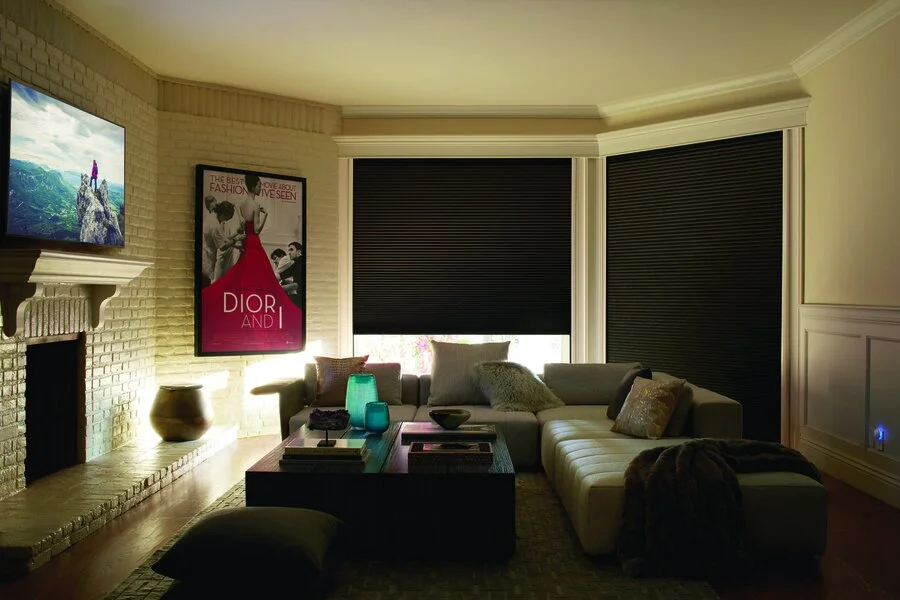
Many motorized shade solutions are designed for retrofit conditions, including wire-free options where appropriate. The right choice depends on the window, fabric, light-control needs, power availability, battery access, and whether the room is also receiving trim or electrical work. Compare the tradeoffs in our guide to wired and wireless motorized shades. The best result still starts with measurements and coordination with the interior designer, not an off-the-shelf shade added after the fact.
Wi-Fi and network improvements
A reliable network often makes the greatest immediate difference in a finished home. Access points can sometimes be placed through attic space, closets, ceilings adjacent to renovation work, or locations that blend into the architecture. HTE’s home network design work focuses on coverage, capacity, and equipment organization so streaming, remote work, cameras, and control systems do not compete for an unreliable connection.
Audio, video, and control
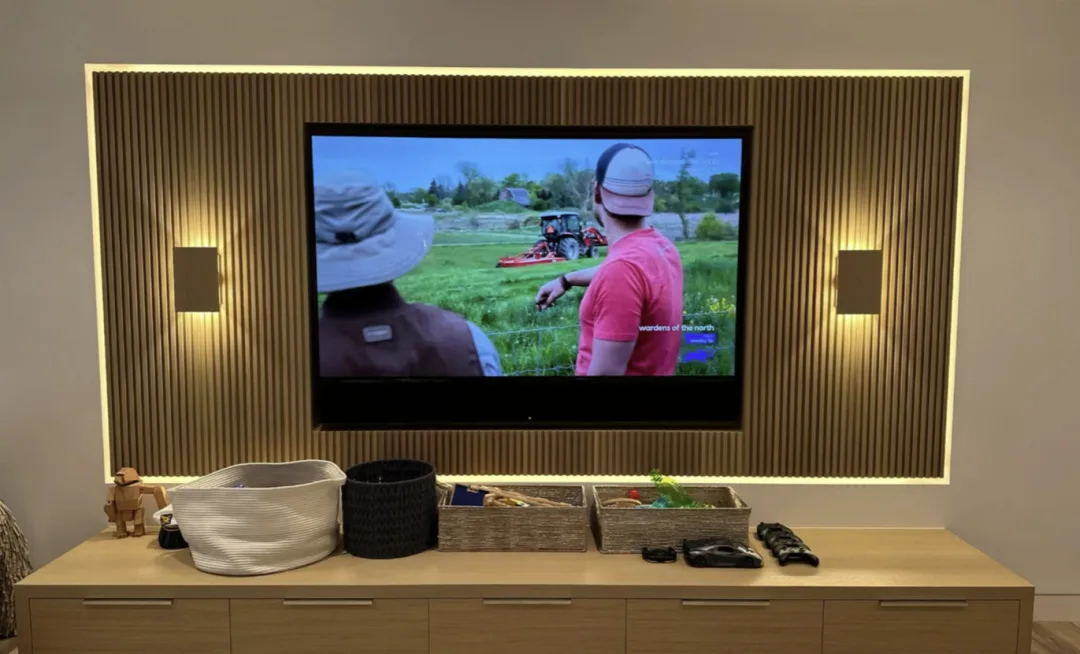
Televisions can be installed with discreet mounting, clean cable management, and integrated control. In rooms where access is limited, thoughtful speaker placement, compact equipment locations, and wireless audio options may be more appropriate than opening ceilings. A coordinated audio and video system is about more than the equipment: it should feel easy to use and support the way each room is actually lived in.
Surveillance, entry, and remote access
Existing pathways, exterior access, and network readiness determine what is practical. A site review can identify where surveillance coverage, a video doorbell, or access control can be improved and where power, wiring, or selective openings may be needed. In each case, the system should be designed with privacy, reliability, and serviceability in mind, not simply added as another app.
When selective opening is worth it
There are moments in a renovation when a small amount of access can prevent a poor compromise. If a bathroom ceiling is being replaced, a kitchen is being renovated, built-ins are coming out, or a closet is being reworked, that area may create a valuable path for cabling, power, or equipment access.
Before a renovation scope is finalized, ask whether these future-facing items should be addressed while access exists:
- Conduit between difficult-to-reach areas for later upgrades
- Structured cabling for access points, displays, cameras, and key equipment
- Power, ventilation, and service clearance for organized equipment locations
- Shade wiring or pockets where the window treatment plan calls for them
- Speaker backboxes or prewire in rooms where architectural audio is likely
- Control wiring and low-voltage pathways for gates, outdoor areas, or future additions
As we explain in Why Smart Home Projects Often Expand Beyond the Original Plan, not every connection needs to be used immediately. Sometimes the value is simply avoiding a much more invasive decision later.
The practical question is not “Can this be added?”
It is “Can this be added cleanly, used simply, and supported long-term without compromising the finished home?” That is the standard that matters in a renovation.
What usually becomes harder after finishes are complete?
Centralized, panelized systems are easiest to execute during major renovation or new construction. Extensive new speaker wiring, concealed pathways to multiple displays, and some shade installations may also require selective opening, access from above or below, or coordination with another trade. None of that makes the work impossible. Ask who will protect furnishings and finishes, make openings, patch and repaint, and coordinate building permissions. An assessment can establish the likely scope, but concealed conditions can change the final approach. Explore the practical considerations behind a smart home retrofit.
This is where a hybrid plan is often the most sensible: use wired infrastructure in areas already under construction, then use wireless technologies in protected rooms. For more on coordinating project teams, read Partnering with HTE for New Construction and Retrofits.
Start with how the home should work
Retrofit planning should begin with routines, not a product list. Do you want the arrival experience to feel more considered? Is Wi-Fi unreliable in a guest wing or outdoor area? Are new window treatments being selected? Does the family room need to handle everyday television without visible clutter? Those answers define the priority.
A well-considered system can bring smart home control, lighting, shading, entertainment, and networking into a more coherent experience, even when the property is already complete. In the Hamptons, Long Island, and Manhattan, that may mean a phased plan that respects seasonal use, co-op rules, historic details, or a home that cannot be taken offline for weeks.
Bring the technology team in before the next trade
If a renovation is underway, or about to begin, the best time to review technology is before the electrician, millworker, drywall team, or painter closes the next opportunity. HTE works alongside homeowners, architects, designers, builders, and electricians to identify what can be improved now, what should be prepared for later, and what should be left alone.
That discipline protects the interior. It also helps avoid the familiar pattern of adding a separate app, remote, or workaround every time the home gains a new feature. For more on the value of early coordination, read Smart Home Integration for Renovations.
Frequently Asked Questions
Can you add smart lighting without opening walls?
Yes. Wireless lighting controls can often replace existing switches and dimmers in place, subject to electrical compatibility and the condition of the existing wiring. The appropriate approach depends on the home’s electrical conditions, desired scenes, and whether lighting will also integrate with shades, audio, or security.
Can motorized shades be installed after renovation?
Often, yes. Retrofit and wire-free options can be very effective in finished homes. A site review helps determine the best treatment, power approach, and degree of concealment for each window.
Is Wi-Fi worth upgrading during a renovation?
Yes. A renovation can offer useful access for additional wiring or better access-point locations, but strong Wi-Fi improvements can also be planned for finished spaces using existing pathways and thoughtful placement.
Do all smart home upgrades require a major renovation?
No. Many improvements, including lighting control, shades, networking, remote access, and selected AV upgrades, can be phased around a completed home. Major construction is most valuable when it creates access to infrastructure that would otherwise be difficult to reach.