
Why Smart Home Projects Often Expand Beyond the Original Plan
How Smart Home Projects Grow Beyond the Original Scope of Work
Most smart home projects begin with a specific request.
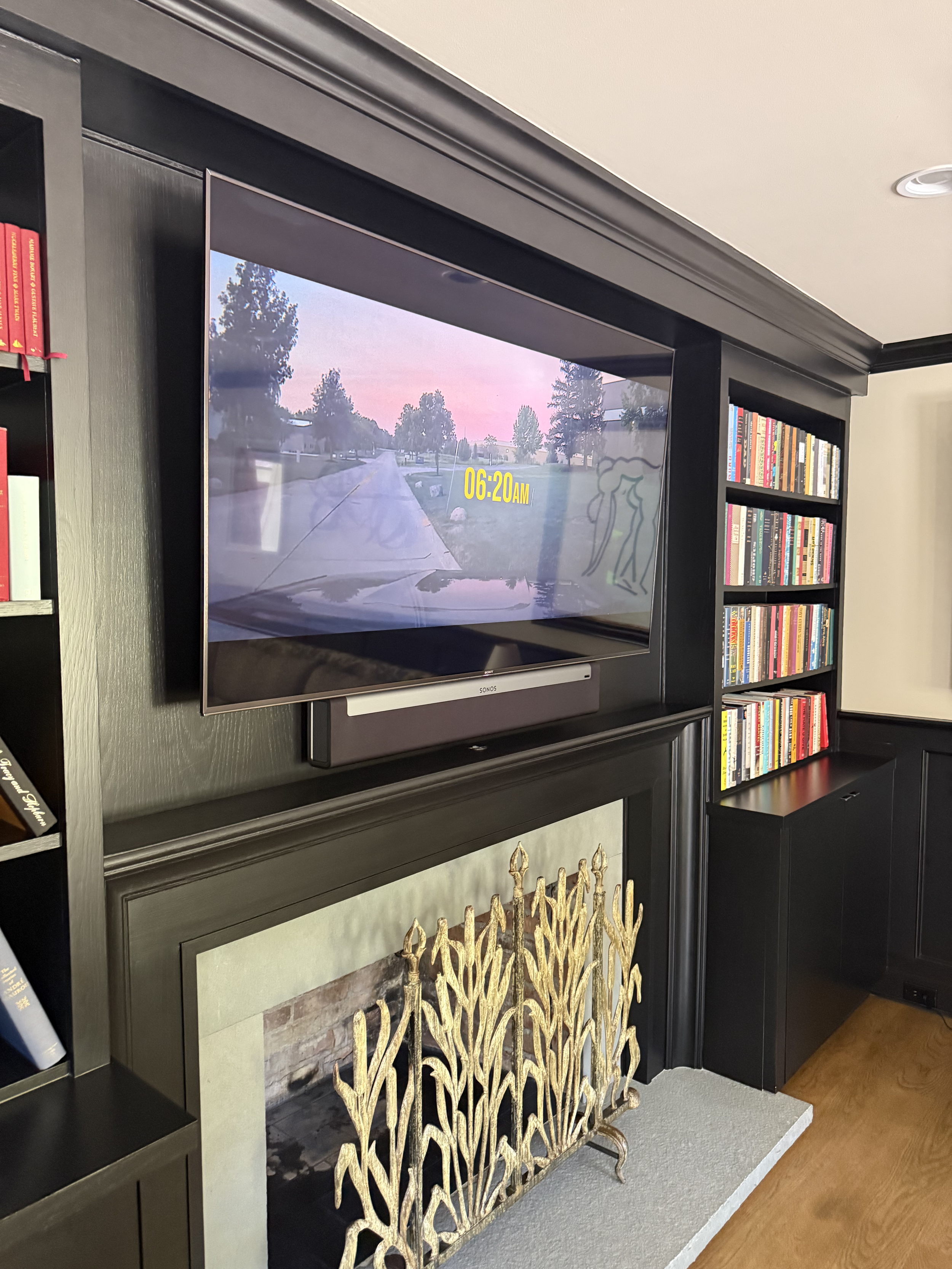
Your smart home is not just a collection of devices. The coordinated system creates relationships that enlarge the original design and plan.
It might be lighting control in the kitchen, automated shades in the primary bedroom, more reliable Wi-Fi, a dedicated theater, or security cameras that can be viewed remotely.
Then the conversation expands.
This does not necessarily mean the project has fallen victim to uncontrolled scope creep. More often, the planning process reveals how one decision affects the rest of the home—and which improvements will be easier, cleaner, and more economical to address now rather than later.
The goal is always a home that functions around the way you live.
A professionally designed smart home is not simply a collection of devices. It is a coordinated system of lighting, shading, networking, audio, video, security, climate, and control. Once homeowners see those relationships, the original request often becomes part of a larger conversation about how the home should work.
The First Upgrade Changes What Homeowners Expect
Project expansion often begins after someone experiences a well-designed system firsthand.
A homeowner may start with lighting control in one part of the house. After living with it, they discover the practical value of arriving to a comfortably lit room, using a single scene to adjust several fixtures, or turning off an entire floor from one keypad.
Those are small conveniences, but they quickly become part of the home’s daily rhythm. Rooms without the same level of control can begin to feel disconnected.
That may lead to discussions about:
Whole-home lighting control
Bedroom and bathroom scenes
Automated exterior lighting
Vacation schedules
Motorized shades
Consistent control across the property
The homeowner is not necessarily asking for more technology. They are asking for the rest of the home to feel as considered as the first space.
Planning Shifts the Conversation From Devices to Systems
Homeowners often begin by thinking about individual products: smart switches, cameras, thermostats, speakers, televisions, or wireless access points.
During design, the more important questions become apparent:
Should the lighting and shades respond together?
What should happen when the security system is armed?
Can pathway lights turn on automatically at night?
Will the network support the number of connected devices in the home?
Should audio follow the homeowner from one space to another?
How will outdoor entertainment, landscape lighting, and pool controls relate to one another?
Can the entire system be managed without adding another collection of apps?
These are system-design questions rather than product questions. They focus on how the home behaves, how simple it feels to use, and whether its technology can be supported reliably over time.
System design questions and solutions are what set integrators like Home Technology Experts apart from installers. We work with you to envision the smart home you want and design a system to work the way you want.
That broader perspective can increase the project scope, but it can also eliminate redundant products, inconsistent controls, and expensive corrections later.
Open Walls Create a Valuable Planning Window
Renovations and new construction create opportunities that become more difficult once the finishes are complete.
While walls and ceilings are open, the HTE project team may recommend:
Structured cabling for current systems
Wiring for future speakers or displays
Conduit for spaces whose eventual needs are not yet known
Properly placed wireless access points
Centralized equipment locations
Power management and ventilation
Connections for shades, cameras, gates, and outdoor systems
Not every planned connection needs to be used immediately. Some can simply preserve future options.
Running the appropriate infrastructure during construction is generally less disruptive than reopening finished walls later. It can also protect the architecture and interior design by reducing the need for visible retrofits.
This is one reason early technology planning matters: decisions made before the walls close can protect both the finished design and the project budget.
Reliability Depends on Work Homeowners Rarely See
A homeowner may ask for streaming televisions, wireless cameras, voice control, or smart lighting. But the reliability of those features depends on less visible systems.
A dependable home technology system may also require:
A properly designed wired and wireless network
Thoughtful access-point placement
Structured wiring
Surge protection and power management
Secure remote-support capabilities
Clear documentation for future service
These elements are rarely the most exciting part of a project, but they are often the reason the finished system works consistently.
A smart home should not depend on an assortment of consumer devices competing for wireless coverage. It should be designed for the actual size, construction, connected-device load, and daily demands of the property.
Design Priorities Become Clearer During the Process
As homeowners review their options, the conversation often moves beyond functionality.
They begin considering how technology will affect the appearance of each room:
Can televisions be concealed when they are not in use?
Can speakers blend into the architecture?
Can wall controls be simplified?
Can equipment be placed outside the living spaces?
Can shades be integrated without distracting from the windows?
Can different systems share a more consistent interface?
The goal is not to display more technology. It is to make the technology less intrusive. Easier to use. More intuitive.
Luxury is simplicity.
Once that standard is established in one part of the home, homeowners often want the same restraint and consistency elsewhere. A broader scope may therefore reflect a desire to protect the design—not simply an appetite for additional features.
Thoughtful Expansion Is Different From Scope Creep
A project should not grow through a series of unexplained recommendations or surprise costs.
Thoughtful expansion is deliberate. The homeowner should understand:
Why an additional element is being recommended
What problem it solves
Whether it is needed now or can be added later
How it affects the construction schedule
What infrastructure is required
What it will cost
What happens if it is omitted
A strong technology partner helps separate immediate requirements from future possibilities. The result might be a complete system installed at once, or a phased plan that establishes the correct foundation now and adds selected features over time.
In either case, the homeowner remains in control of the decisions.
The Best Smart Homes Begin With a Complete Plan
The most successful smart homes are not designed around the greatest possible number of features. They are designed around reliability, comfort, simplicity, aesthetics, and long-term serviceability.
That is why a project may grow beyond its original request. As the planning becomes more complete, homeowners gain a clearer picture of how lighting, shading, networking, entertainment, security, and control affect one another.
The central question changes from:
“What technology should we add?”
to:
“How should this home feel and function every day?”
That shift is not about adding technology for its own sake. It is about planning the technology as carefully as the home itself.
Planning a renovation, new home, or significant technology upgrade? Home Technology Experts can help you define the complete system, separate immediate needs from future options, and coordinate the technology with your design and construction team.
Frequently Asked Questions
Why do smart home projects increase in scope?
Smart home projects often increase in scope because the design process reveals connections between lighting, shading, networking, audio, security, climate, and control. Homeowners may also decide to install infrastructure while walls are open, when doing so is less disruptive.
Is project expansion the same as scope creep?
No. Scope creep is uncontrolled or poorly communicated growth. Thoughtful project expansion is documented, priced, and connected to a clear need, such as improving reliability, coordinating systems, protecting the interior design, or preparing for future upgrades.
Should an entire smart home system be installed at once?
Not always. A home can be planned as a complete system and then installed in phases. The important step is putting the correct wiring, network infrastructure, equipment space, and pathways in place before construction is complete.
When should a home technology integrator join the project?
Ideally, technology planning should begin during the architectural, interior-design, or early construction phases. Early coordination gives the team more options and reduces the likelihood of costly or visually disruptive changes later.
What should homeowners prioritize first?
The foundation typically comes first: networking, wiring, power, equipment planning, and system architecture. Features such as lighting scenes, automated shades, audio, video, and security controls are more dependable when that underlying infrastructure has been properly designed.
LEARN MORE:
HTE’S CHANGE ORDER CLARITY GUARANTEE