
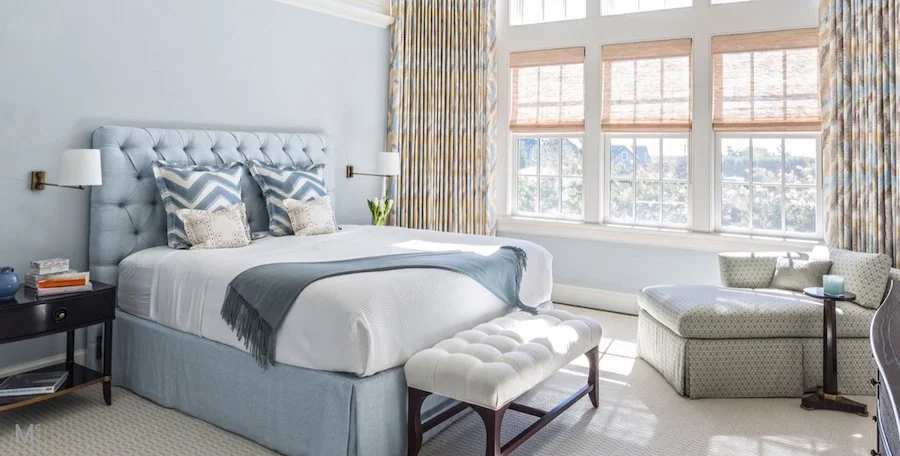
Wired or wireless?
Motorized Window Treatments | Planning Guide
Should you choose wired or wireless motorized shades? In many homes, the most thoughtful answer is both.
A large living room with expansive windows may benefit from a permanent wired installation, while a guest bedroom in the same home may be perfectly suited to battery-powered shades. A motorized drapery track might call for one power strategy, while a discreet roller shade behind it calls for another.
The decision is less about choosing one technology for the entire house and more about selecting the right solution for each window, each room, and the way you use your home.
At Home Technology Experts (HTE), we approach motorized window treatments as part of the overall home design. Power, fabric, window size, architectural details, daily routines, and smart home control all influence the recommendation.
First, an important distinction
Wireless Control Is Not the Same as Wireless Power
The terms wired and wireless can create unnecessary confusion because they describe two different parts of a motorized shade system.
Power refers to how the motor receives electricity. A motorized shade may use permanent low-voltage wiring, another manufacturer-approved wired power arrangement, replaceable batteries, or a rechargeable battery.
Control describes how the shade receives instructions. A permanently powered shade may still communicate wirelessly with its keypad, remote, or smart home system.
For this comparison, wired refers to shades with permanent electrical power. Wireless refers primarily to battery-powered or rechargeable shades that do not need a permanent power connection at the window.
This distinction matters because battery power does not automatically mean limited automation, and permanent wiring does not mean every command travels through a wire.
The two approaches
Wired vs. Battery-Powered Motorized Shades
Both approaches can deliver an elegant, intuitive result. Their advantages become clearer when installation conditions and long-term use are considered together.
Option 01
Wired Motorized Shades
Permanent electrical power makes wired shading particularly attractive for new construction, major renovations, and frequently operated window treatments.
Advantages- No routine shade-motor battery replacement or recharging.
- Well suited to frequently used window treatments.
- Supports a broad range of larger or more demanding treatment configurations, subject to product specifications.
- Power infrastructure can be concealed during construction.
- A strong long-term option for high or difficult-to-access windows.
- Wiring and power supply locations need planning.
- Retrofitting finished walls may add work and expense.
- Installation needs coordination with electrical work and architectural finishes.
Often the right fit: New builds, extensive renovations, large window groupings, inaccessible windows, and selected motorized draperies.
Option 02
Battery-Powered Motorized Shades
Battery and rechargeable solutions provide motorized convenience without requiring permanent power wiring to every window.
Advantages- Minimal disruption to finished walls and decorative surfaces.
- Well suited to individual rooms or phased upgrades.
- Flexible for windows where wiring would be difficult or disproportionate.
- Compatible models can participate in integrated lighting and shade scenes.
- Can make motorized shading practical in existing homes.
- Batteries eventually need replacement or recharging.
- Size, fabric weight, and treatment type may restrict product selection.
- High windows require a practical maintenance-access plan.
- Operating frequency influences battery service intervals.
Often the right fit: Finished homes, selected bedrooms, secondary spaces, and windows where permanent wiring is undesirable.
Side-by-side comparison
How the Two Solutions Compare
No single specification determines the right system. The following differences help narrow the choice before selecting a particular motor, fabric, or control platform.
| Consideration | Wired | Battery-Powered |
|---|---|---|
| New construction | Usually an excellent opportunity to plan permanent power. | Useful where wiring is unnecessary or not practical. |
| Existing finished home | May require access to walls or concealed routes. | Often simpler to install without disturbing finishes. |
| Ongoing maintenance | No routine motor battery changes. | Periodic battery or charging service. |
| Large or heavy treatments | Often offers a wider selection of suitable motor options. | Depends on motor capacity, fabric, and product limits. |
| Smart home integration | Depends on the selected motor and control ecosystem. | Also possible with compatible systems and controls. |
| Initial installation | May require additional electrical infrastructure. | Often less invasive, although equipment costs vary. |
| Long-term ownership | Predictable power provision with less routine access. | Flexible installation with ongoing battery servicing. |
Room-by-room planning
Why the Best Home Often Uses Both
Consider a home with a dramatic living room, several bedrooms, a kitchen, a private office, and a finished guest suite. Choosing a single power method for every window may simplify purchasing, but it does not necessarily improve the finished result.
Each room brings different requirements. This is where an experienced integrator can make a meaningful difference.
Living room
Large Windows and Expansive Views
Oversized glazing, multiple shade groups, and frequent daylight adjustments can make permanent wiring a compelling choice. Coordinated operation and concealed architectural details deserve attention.
Likely direction: Wired, particularly during construction.
Guest bedroom
Privacy Without Major Construction
In a finished guest room, battery-powered shades may offer everything needed for privacy and light control without opening walls or altering decorative finishes.
Likely direction: Battery-powered, subject to window size.
Primary suite
Layered Shades and Draperies
A primary suite may combine roller shades, blackout treatments, and motorized draperies. Each layer can have different motor and power needs, especially when fabrics or tracks are substantial.
Likely direction: Wired or a mixed system, depending on the selected treatments.
Home office
Glare Control Throughout the Day
Office shading is often adjusted throughout the workday. Both power options may work well. Window access, daily use, and integration with lighting scenes help settle the decision.
Likely direction: Either, based on use and accessibility.
Stairwell and high windows
When Access Changes Everything
A shade located well above the floor may be difficult to reach for battery replacement. Permanent power can eliminate that recurring access requirement.
Likely direction: Wired where practical.
Finished secondary spaces
Adding Convenience in Phases
A finished sitting room or secondary bedroom can be a sensible place to introduce battery-powered shading, then expand automation elsewhere as needs evolve.
Likely direction: Battery-powered when compatible.
The objective is not to make every shade identical. It is to make every shade feel like a natural part of the home.
Beyond roller shades
What About Motorized Draperies?
Motorized window treatments are not limited to roller shades. Draperies, sheers, and layered systems add another dimension to the power conversation.
A substantial drapery panel traveling across a long or curved track presents different requirements from a compact roller shade. Fabric weight, track length, bends, mounting, motor capacity, and frequency of operation all matter.
Some drapery configurations are well suited to permanently powered motors. Other compatible designs may support rechargeable or alternative power arrangements. The correct specification depends on the particular product and application.
In a layered installation, the roller shade and drapery track do not necessarily need the same power method. They do, however, need to work together visually and operationally.
HTE can coordinate motorized drapery planning with the interior designer, window treatment specialist, architect, and builder to account for power locations, recess dimensions, fabric clearances, and control requirements.
Explore the broader considerations in choosing motorized window treatments for your home .
Understanding the investment
Installation Cost Is Only Part of the Comparison
Battery-powered shading may be less disruptive to install in a finished room because permanent electrical wiring is not required at the window. That does not make every battery-powered treatment less expensive than a wired alternative.
Motor type, fabric, treatment dimensions, brackets, architectural concealment, and control requirements all influence the overall investment.
There is also the cost of living with the system. A battery-powered shade in an easily accessible guest room may be perfectly convenient. The same power choice at a high window that requires specialized access could create avoidable maintenance.
Conversely, opening finished walls solely to power one modest bedroom shade may offer little practical benefit.
The useful comparison considers installation, daily use, ongoing maintenance, and future changes, rather than simply the price of the motor.
Whole-home coordination
Can Wired and Wireless Shades Work Together?
Yes, provided the selected motors and control systems support the desired integration. A carefully designed home can include permanently wired shading in one area and battery-powered shading in another without creating two disconnected experiences.
For example, a compatible whole-home scene might lower the living room's wired shades, close battery-powered bedroom shades, and adjust the lighting through a single command.
HTE works with integrated home technology platforms and shading ecosystems, including Lutron solutions, to coordinate these experiences.
However, not every motor supports every platform, keypad, or automation feature. Compatibility needs to be confirmed before products are ordered.
The goal is one considered control experience, regardless of how individual shades receive power.
Learn more about how shades relate to automated shading and lighting control throughout the home.
The HTE approach
How an Integrator Helps You Choose the Right Solution
A motorized shade is an individual product. A thoughtful shading plan considers how dozens of individual decisions come together.
Rather than recommending one system for the entire property, HTE evaluates the requirements of each window and the experience you want in each room.
Understand the Room
We begin with privacy, daylight, glare, room darkening, view preservation, and how the space is used.
Evaluate the Window
We consider dimensions, treatment type, mounting conditions, accessibility, and the motor options suitable for the application.
Review Power and Construction
We assess existing power, opportunities for concealed wiring, construction timing, and the disruption of possible retrofit work.
Plan a Consistent Control Experience
We examine how the selected treatments will work with keypads, remotes, lighting scenes, and the home's larger control platform.
Consider Long-Term Service
We look beyond installation to battery access, maintenance, changing needs, and future technology decisions.
For new construction or major renovations, this process should begin while electrical pathways and architectural details can still be coordinated.
For a finished home, the process helps identify where battery-powered treatments are a sensible first step and where permanent power may be worth the additional work.
Plan with confidence
The Right Shade for Every Window. One Thoughtful Plan for the Whole Home.
Whether you are planning a new residence, renovating, or upgrading individual rooms, HTE can help determine where wired and battery-powered motorized treatments make the most sense.
We consider the architecture, the window treatment, the power strategy, and the way you want to live with the finished system.