
Partnering with HTE for New Construction and Retrofits
For builders, architects, and design professionals, the difference between new construction and retrofit is not just scope. It affects coordination, sequencing, labor, access, and long-term serviceability.
Both can deliver a strong result. The path to get there is very different.
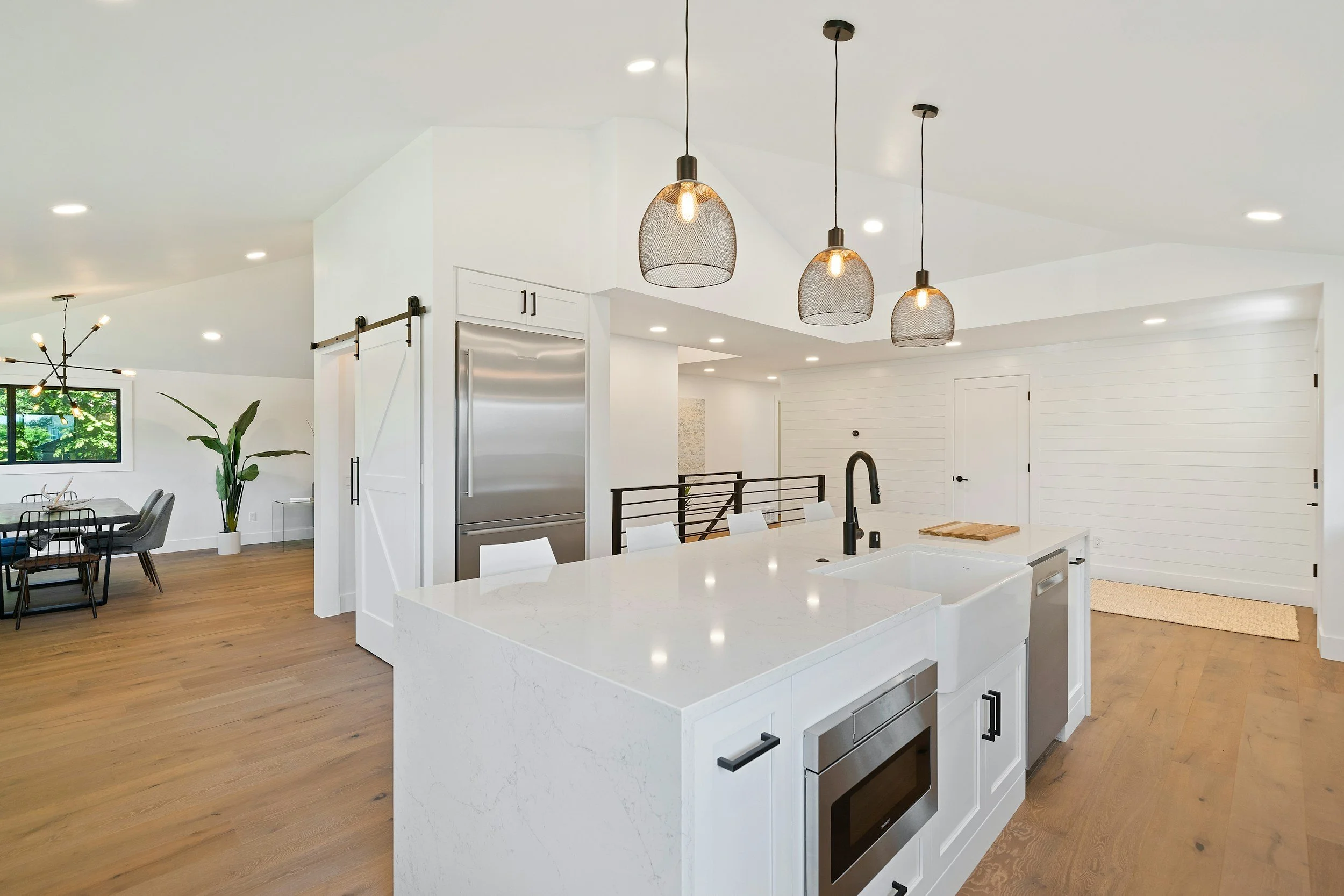
Coordination starts earlier in new construction
In new construction, home technology planning should be addressed during design development.
Pre-wire, lighting control, motorized shades, networking, AV systems, security, and equipment locations can all affect framing, electrical planning, ceiling conditions, millwork, and equipment placement.
When these decisions are made before rough-in, the work is more predictable. Conflicts are reduced, infrastructure is properly allocated, and the system is easier to execute and support.
Late decisions tend to introduce workarounds. Early coordination avoids them.
Retrofit is driven by existing conditions
In retrofit projects, the scope is shaped by what already exists.
Finished surfaces, structural limitations, existing wiring, and current electrical conditions all influence what is practical. The work becomes more selective and more dependent on access.
Routing pathways, equipment placement, and system expansion often require adaptation rather than the open-path planning available in new construction.
Clear expectations upfront help avoid unnecessary disruption and rework.
Labor and sequencing are different
In new construction, installation can follow the build sequence. Infrastructure is installed while framing is open, and systems are layered in a structured way.
In retrofit, the same scope often requires more time and coordination. Walls or ceilings may need to be opened, existing systems may need to be adjusted, and work has to be sequenced carefully around other trades and finished areas.
The technology may be similar. The path to install and support it is not.
Practical scope matters more than theoretical scope
From a design perspective, many solutions are technically possible in both scenarios. The better question is whether they can be executed cleanly, used easily, and supported long-term.
In new construction, broader systems can be implemented when they are planned early.
In retrofit, restraint is often what protects the finished environment, budget, and schedule. The most effective solution is usually the one that delivers better performance without adding unnecessary complexity or disruption.
The role of the technology team
In new construction, the technology team should be part of early coordination with the builder, architect, interior designer, and electrician.
That involvement helps align infrastructure, protect design intent, plan equipment locations, and make sure the system can be serviced after the home is complete.
In retrofit, the role is more tactical. The focus is on evaluating existing conditions, defining practical options, and coordinating closely with the trades involved in the renovation.
In both cases, clarity early in the process leads to a more predictable outcome.
When the technology team should be engaged
For new construction, engagement should happen during planning, not after selections are finalized or rough-in is already underway.
For retrofit, the right time is when any part of the home is already being opened or updated. If ceilings, walls, millwork, lighting, electrical work, or media spaces are already part of the project, technology should be reviewed at the same time.
Aligning technology work with those moments can reduce rework, limit disruption, and prevent missed opportunities.
Final thought
New construction allows for full coordination. Retrofit requires more selective decisions.
Both benefit from early involvement, clear scope, and a plan that reflects how the system will be installed, used, and supported over time.
For builders, architects, and designers, involving HTE early helps keep home technology aligned with the architecture, construction sequence, and long-term needs of the property.
LEARN MORE: CUSTOM AUDIO AND VIDEO SOLUTIONS