
Luxury Homes Need AV Integration, Because Installation is Only Part of the Job
Why Luxury Homes Need an AV Integrator, Not Just an Installer
A finished home can look beautifully resolved and still be difficult to live in if its technology was treated as a collection of installations. The difference is not simply what gets installed. It is who takes responsibility for how the whole house works after move-in.
A luxury residence may include a media room, whole-home audio, discreet displays, outdoor entertainment, lighting control, motorized shades, surveillance, remote access, and a network carrying all of it. Each part can be purchased and installed separately. That does not make it a considered system.
Home Technology Experts approaches AV integration as the quiet infrastructure of the home: planned around the architecture, coordinated with the people designing and building it, commissioned for real daily use, and supported after the last punch-list item is closed. That is a different standard from placing equipment and walking away.

An Installer Places Equipment. An Integrator Owns the Outcome.
Installation is an essential part of the work. Speakers need to be mounted, displays need to be placed, wire needs to be pulled, and equipment needs to be connected. But those tasks are only one phase of a larger responsibility.
An integrator begins earlier and stays involved longer. The question is not, “Where can this television go?” It is, “How should this room work for the people who will use it, and what needs to be coordinated now so it still works beautifully later?”
That responsibility includes:
- defining how each room should perform before equipment is selected;
- coordinating speakers, displays, keypads, shade pockets, millwork, ceilings, wiring, and equipment locations with the project team;
- designing the network and rack infrastructure behind the visible experience;
- programming, testing, tuning, labeling, and documenting the completed system; and
- remaining available when a family’s needs, the house, or the technology changes.
The distinction becomes clearest after move-in. A room that requires several remotes, an app for every system, or a call to someone who no longer knows what was installed is not truly finished. A well-integrated home feels understandable to the homeowner, guests, staff, and property manager alike.
HTE Starts With How You Live, Not With a Platform to Sell
Not every residence needs a large central control system. Not every room needs the same level of performance. A family room may call for an elegant, straightforward display and audio solution; a dedicated theater may need a purpose-designed acoustic, video, lighting, and seating plan. A seasonal house may need reliable remote visibility and simple handoff to a property manager.
HTE is not a one-platform shop. We start with the homeowner’s habits, the property, the design intent, and the level of control that will genuinely make life easier. Sometimes the right answer is a refined standalone solution. Sometimes it is a fully integrated control environment. The recommendation follows the home and the client, not a dealer agreement.
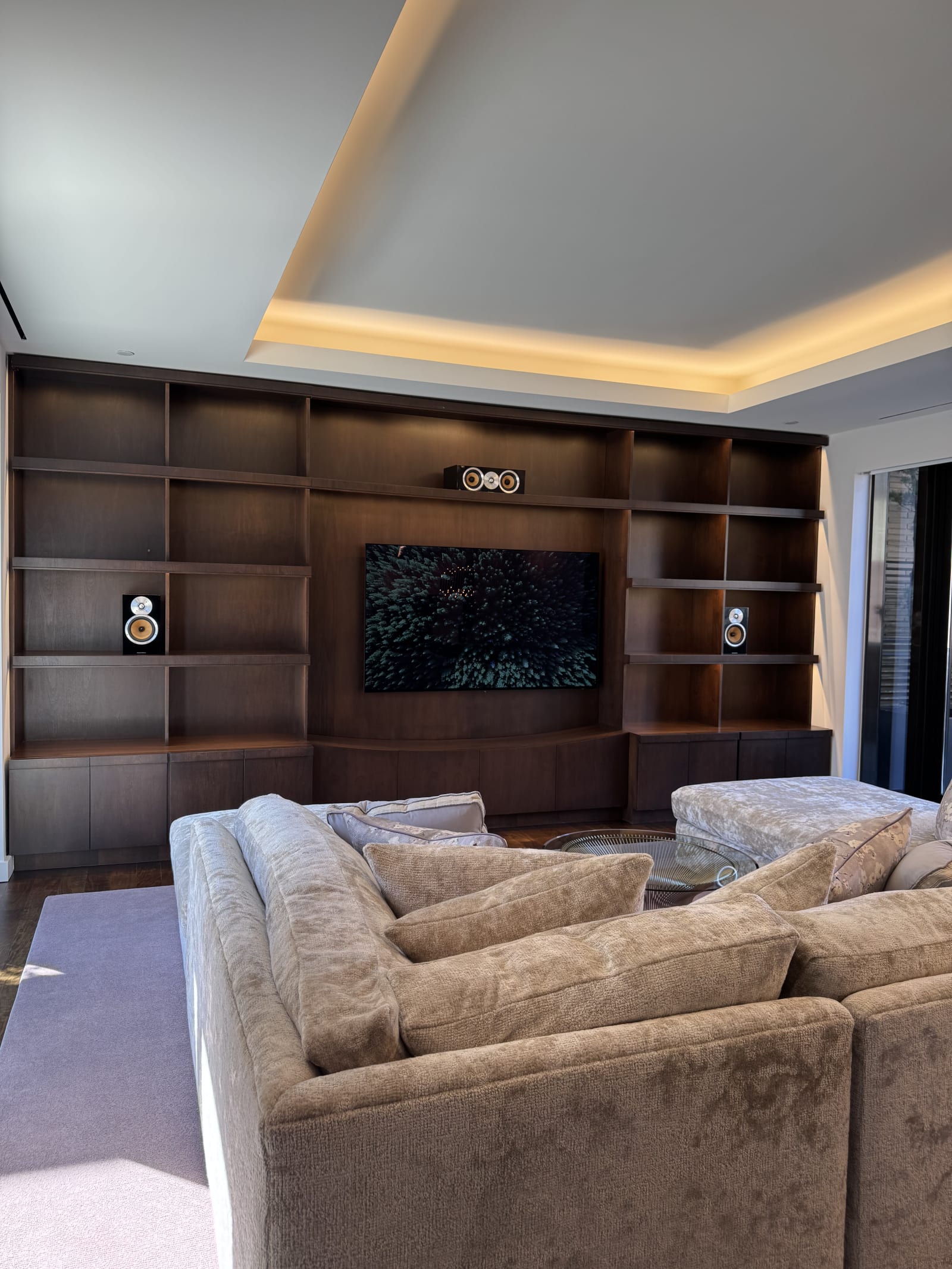
That judgment comes from more than product knowledge. With more than two decades of luxury residential work, our team has seen what ages well, what becomes frustrating, and where complexity adds no value. We know that a media room, for example, is not solved by selecting a screen and speakers alone. Sightlines, dialogue clarity, seating, daylight, lighting scenes, shade behavior, ventilation, equipment access, and control all shape whether it is a room people want to use.
Design Coordination Is Where the Best Results Begin
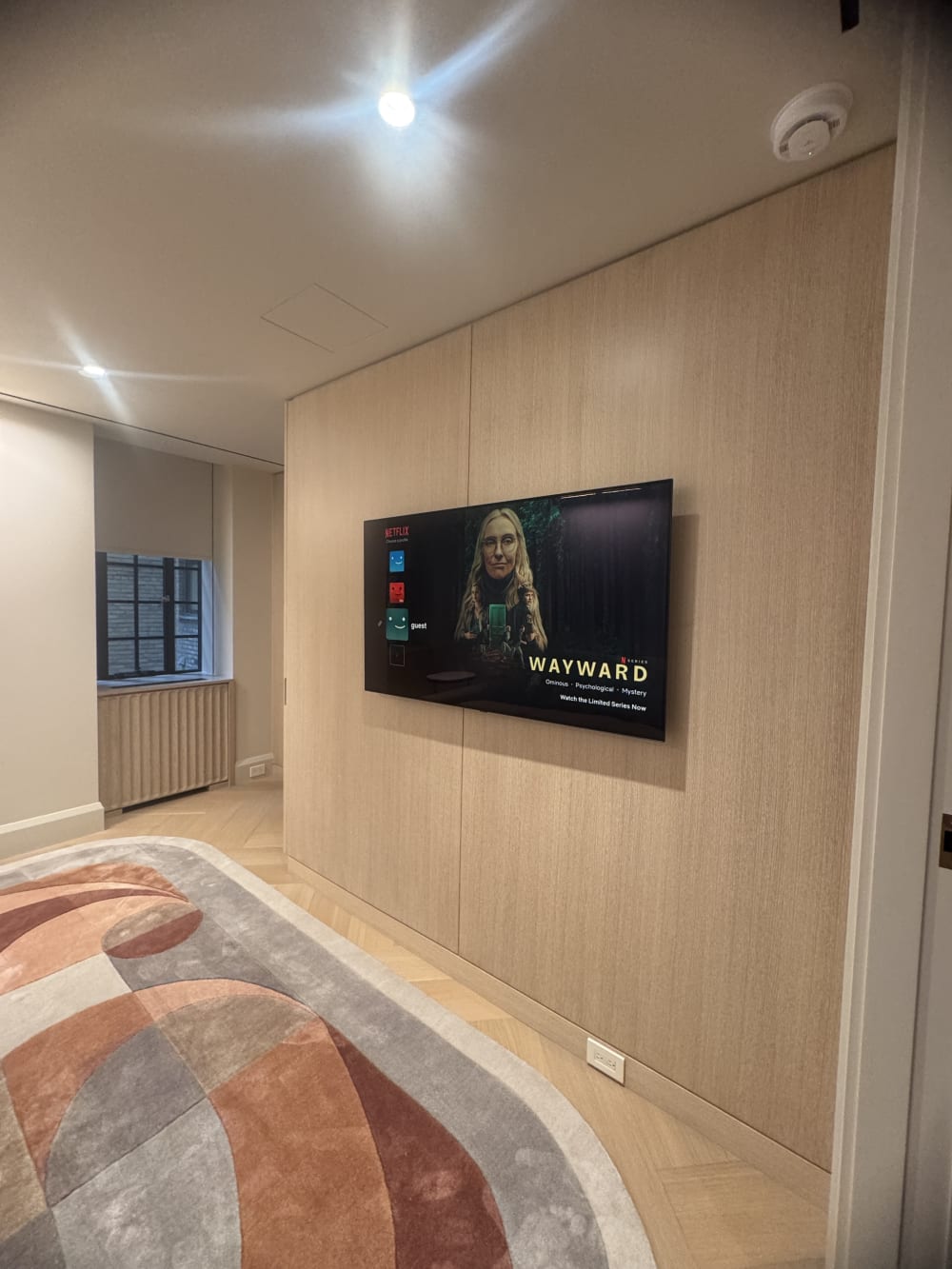
Beautiful technology integration starts before the walls close. Speaker locations affect reflected ceiling plans. Displays affect furniture, art, fireplaces, and millwork. Equipment rooms need ventilation and service access. Wi-Fi access points, keypads, shade pockets, wiring paths, and camera locations all need a place before the finishes are complete.
When these decisions arrive late, the usual result is compromise: a speaker in the wrong location, a visible wire path, a rack squeezed into an inaccessible closet, or a control device added wherever there is still room. Early coordination protects the architecture, the schedule, and the experience.
HTE works alongside architects, interior designers, builders, electricians, and property managers as a technology partner, not as a trade working around everyone else. Our goal is to make the project team look good and to protect the client’s finished design. Explore our approach to technology design support for trade partners.
The Network Is Not an Add-On. It Is the Backbone.
Streaming, distributed audio, video, lighting, shades, surveillance, remote access, and control systems all rely on the same underlying connectivity. When the network is weak, the symptoms show up everywhere: a delayed command, a dropped stream, a camera that will not load, or a room that feels unreliable for no obvious reason.
That is why HTE plans home networking and Wi-Fi infrastructure alongside the AV system. We consider wired connections, access-point placement, rack organization, coverage expectations, remote service access, and room to expand. This discipline matters especially in multi-structure Hamptons properties, seasonal homes, and Manhattan residences where access and finished spaces are harder to revisit.
Commissioning Is the Difference Between Installed and Ready
A system is not complete when the equipment powers on. It is complete when it has been tested, refined, and made understandable for the people who live with it.
HTE commissions systems for real use, not just for a punch list. That means confirming room-by-room behavior, tuning performance, refining control sequences, labeling equipment, documenting what was built, and resolving the small details that can make a house feel disorganized. We design lighting control and motorized shading to work alongside AV because a movie, a morning, or an evening of entertaining rarely involves only one system at a time.
For example, watching a film should not require a homeowner to decide which remote controls the television, which app adjusts the lights, and whether the shades are connected. A thoughtfully planned command can set the room the way it should be, while manual control remains simple when that is what the moment calls for.
Long-Term Support Is Part of the Design
Luxury technology should not become fragile once the project is complete. Homes change. Rooms are renovated. Displays are upgraded. Streaming platforms evolve. Families add outdoor spaces, guest suites, or another property to manage.
HTE designs systems our own team can support: organized racks, serviceable equipment locations, clear documentation, practical programming, and remote assistance where appropriate. We have dedicated service leadership, field support, and remote monitoring capability because the relationship should not end at installation. In fact, HTE regularly takes over systems left behind by companies that no longer service them. That experience reinforces a simple rule: if a system cannot be supported, it was not designed completely.
The Luxury Is Not More Technology. It Is Fewer Decisions.
The best technology is felt, not fussed with. It makes the home calmer to use: sound where it should be, video that works, controls that make sense, rooms that respond predictably, and a team that understands the system when support is needed.
That is what makes HTE a luxury AV integrator rather than simply an installer. We do the visible work carefully, but we are equally accountable for everything behind it: the planning, coordination, engineering, commissioning, documentation, and long-term care that allow the home to stay simple.
Frequently Asked Questions
What is the difference between an AV installer and an AV integrator?
An AV installer primarily places and connects individual components. An AV integrator designs the complete system, coordinates it with construction and interiors, programs and commissions it, documents it, and supports it after installation. The difference shows up in ease of use, reliability, serviceability, and how well the technology fits the home.
When should AV integration be planned?
Ideally during design development or before construction begins. Early planning gives the project team time to coordinate wiring, speaker locations, displays, rack space, access points, shade pockets, lighting controls, and equipment ventilation before finished surfaces limit the choices.
Does every luxury home need a centralized control system?
No. The right level of integration depends on how the household lives and the complexity of the property. HTE can design standalone, layered, or fully integrated systems, selecting the approach that adds clarity rather than unnecessary complexity.