
Ceiling Speakers - Part 2
Part 2 of Home Technology Experts’ (HTE) professional insights on ceiling speakers and their place in the luxury home.
Speaker Placement Should Coordinate With the Lighting Plan
Ceiling speakers rarely exist alone.
They share the ceiling with:
Decorative fixtures
HVAC registers
Sprinklers
Smoke detectors
Access panels
Beams
Cameras and sensors
On a well-coordinated project, these elements should be considered together on the reflected ceiling plan.
This is where collaboration between the technology integrator, architect, interior designer, lighting designer, builder, electrician, HVAC contractor, and other trades can make a noticeable difference.
Moving a speaker two feet during design is easy.
Moving a speaker after a finished plaster ceiling has been completed is not.
Beautiful integration starts before the walls close.
Ceiling Speakers and Motorized Shades
Motorized shades are another example of why technology systems should not be designed independently.
Shade pockets, recessed tracks, power supplies, wiring pathways, and structural requirements can occupy some of the same ceiling areas needed for speakers, lighting, HVAC, and other systems.
Planning the audio system and motorized shades together helps identify these conflicts before construction reaches the finish stage.
The homeowner may never see this coordination.
That is exactly the point.
A Strong Foundation for Whole-Home Audio
Ceiling speakers are a practical foundation for a whole-home audio system because they provide room-by-room coverage without adding visual clutter.
A homeowner might begin with:
Kitchen
Great room
Primary bedroom
Home office
Covered patio
Additional audio zones can then be added throughout the home.
When the underlying infrastructure has been planned correctly, the system can also evolve more easily over time.
That may include adding:
Additional rooms
Outdoor audio
Dedicated subwoofers
Streaming sources
Home automation control
The goal is not simply to scatter speakers throughout a house.
It is to build an organized audio system that performs predictably, is easy to operate, and can be serviced long after construction is complete.
Do Ceiling Speakers Need a Subwoofer?
Sometimes.
Even excellent architectural speakers are limited by the physical size of the drivers and enclosures that can be concealed within the architecture.
Adding a properly designed subwoofer can dramatically change the experience—not simply by making the system louder, but by allowing the main speakers to reproduce music more naturally.
Subwoofers can also be discreet.
Depending on the room and construction, there are:
Freestanding subwoofers
In-wall subwoofers
In-ceiling subwoofers
Concealed architectural subwoofers
Furniture-integrated solutions
A great room designed for entertaining, for example, may benefit much more from four excellent architectural speakers plus an appropriately designed subwoofer than from simply adding additional ceiling speakers.
Amplification Matters Too
The speaker is only one part of the audio system.
Architectural speakers need the right amplification.
Speaker impedance, sensitivity, power requirements, listening level, cable distance, number of zones, and system architecture all influence amplifier selection.
A basic background-audio zone has very different requirements from a large entertaining room using high-performance architectural speakers at higher listening levels.
Good system design matches the speaker, amplifier, wiring, room, and expected listening level rather than selecting each component independently.
Wiring Still Matters in a Wireless World
Streaming music may be wireless, but high-quality architectural speakers are usually wired.
That is a good thing.
Proper speaker wiring provides a reliable connection that does not depend on batteries or wireless communication between every speaker.
During construction, the technology plan should account for:
Speaker wire routes
Appropriate wire gauge
Equipment location
Amplifier locations
Preconstruction brackets
Service access
Future expansion
The ideal time to install this infrastructure is before walls and ceilings are closed.
Preconstruction Brackets and Speaker Placement
Many architectural speaker systems offer preconstruction or rough-in brackets.
These establish the speaker location before drywall is installed and give the construction team a clear target to work around.
They can be valuable for maintaining:
Consistent spacing
Alignment with lighting
Symmetry within the ceiling
Clearance from framing
Accurate locations from the plans
For small-aperture, plaster-in, or invisible speaker systems, the rough-in hardware may be an essential component of the installation rather than an optional accessory.
Integration Should Make Daily Use Easier
Audio should feel like part of the home, not like a separate system that requires extra effort to manage.
Ceiling speakers can be integrated into a broader control system so music, volume, and room selection are easy to manage from familiar interfaces.
Depending on the home, that might include:
A music app
Mobile devices
Touch panels
Keypads
Handheld remotes
Voice control
The appropriate level of integration is different for every homeowner.
Some clients prefer straightforward independent music zones. Others want audio tied into lighting, shading, television, climate, and other home functions through a broader automation platform.
More integration is not automatically better.
The system should match the way the homeowner actually wants to use it.
Ceiling Speakers for Television Audio
Ceiling speakers can sometimes support television audio, but this requires more consideration than using them for background music.
Human hearing is very good at identifying where voices originate.
If a person on the television appears in front of you but their voice is coming from directly overhead, the result can feel disconnected.
For that reason, a television's primary left, center, and right channels are often better positioned closer to the screen or listening level.
There are exceptions.
Carefully engineered directional architectural speakers can sometimes be used where the design does not allow conventional speaker placement.
The important point is that whole-home music and television audio are different design problems.
A speaker that works beautifully for background music may not be the right speaker—or the right location—for television dialogue.
Ceiling Speakers in Home Theaters and Media Rooms
Ceiling speakers are extremely valuable in modern surround-sound systems, but they have a specific role.
In a Dolby Atmos-style system, ceiling speakers can reproduce height information that creates a more immersive sound field.
For example, the primary speakers may surround the listener closer to ear level while additional speakers overhead create the height layer.
That is different from putting every speaker in the ceiling.
For a dedicated theater or high-performance media room, speaker locations should be determined by:
Screen location
Seating positions
Number of seats
Room geometry
Surround format
Acoustic treatment
Speaker dispersion
Desired performance level
These spaces generally deserve a purpose-designed audio plan rather than the same approach used for distributed music elsewhere in the home.
Single-Stereo Ceiling Speakers
Another option occasionally used in smaller spaces is a single-stereo, or dual-tweeter, ceiling speaker.
Instead of using two separate speakers for the left and right channels, one speaker reproduces both channels.
These can be useful in:
Small bathrooms
Closets
Dressing rooms
Hallways
Compact offices
They are not necessarily a replacement for a properly spaced stereo pair in a larger room, but they can be an elegant solution where space is limited.
Outdoor and Covered-Area Ceiling Speakers
Ceiling speakers can also work well in covered porches, cabanas, loggias, and other outdoor living areas.
Products in these environments need to be selected for the actual conditions.
Moisture, humidity, salt air, temperature changes, insects, and exposure can all affect equipment.
A speaker designed for an indoor bedroom should not automatically be assumed appropriate for a covered outdoor ceiling.
For coastal homes especially, product construction and environmental ratings deserve additional attention.
How Much Should You Spend on Ceiling Speakers?
There is no single correct price level because not every room has the same job.
A better way to think about the budget is to decide where audio matters most.
For example:
Background spaces: Reliable architectural speakers may be all that is necessary.
Everyday living spaces: Better-performing speakers can improve clarity, coverage, and musicality.
Design-sensitive rooms: Small-aperture or invisible speakers may justify additional investment because aesthetics are equally important.
High-performance rooms: Premium architectural speakers, dedicated amplification, subwoofers, acoustic consideration, and calibration can provide a substantially different listening experience.
This approach lets the homeowner invest where the difference will actually be appreciated instead of treating every room identically.
What Should Be Decided Before the Ceiling Is Closed?
For new construction or a major renovation, the following decisions are worth making before drywall and finish ceilings are completed:
Which rooms should have audio?
Is each room intended for background music or higher-performance listening?
Will speakers be standard, small-aperture, invisible, or high-performance?
Should the grilles be round or square?
Are directional speakers required?
Does the speaker require a manufacturer-designed backbox?
Will any rooms need subwoofers?
Where will the amplifiers and source equipment live?
How will the system be controlled?
Where are the primary listening positions?
How does the speaker layout coordinate with lighting and HVAC?
Are there shade pockets, beams, sprinklers, millwork, or ceiling details to avoid?
Are there rooms where sound transfer needs special consideration?
Are outdoor speakers appropriate for the environmental conditions?
Is infrastructure being provided for future expansion?
These questions are far easier—and less expensive—to answer during design than after the home is finished.
Where Ceiling Speakers Make the Most Sense
Ceiling speakers are especially effective in:
Main living areas
Kitchens and open-plan spaces
Bedrooms
Home offices
Bathrooms
Dressing rooms
Hallways
Playrooms
Exercise rooms
Covered outdoor spaces
They are particularly well suited to rooms where the objective is consistent music coverage with minimal visual impact.
For dedicated theaters, two-channel listening rooms, or rooms where television performance is a priority, the speaker strategy should be evaluated more carefully.
What Makes a Good Ceiling Speaker Installation?
The best architectural audio installations tend to have a few things in common.
The speakers are appropriate for the room.
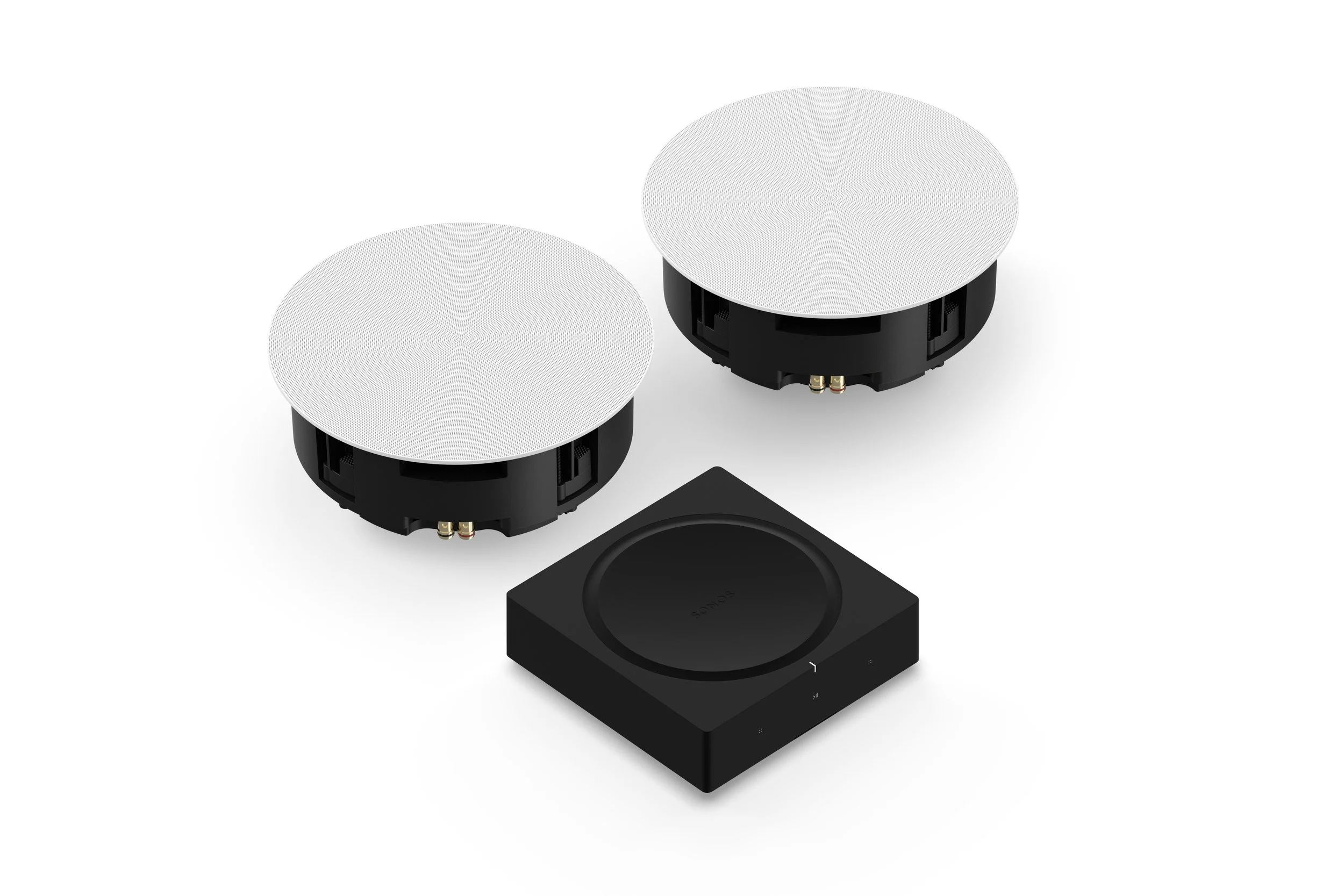
The spacing makes sense acoustically.
The locations make sense architecturally.
Lighting and speaker layouts have been coordinated.
The correct rough-in hardware and backboxes are used.
Amplification has been matched to the speakers.
The wiring is documented and serviceable.
The system is calibrated after installation.
And perhaps most importantly, someone considered all of those decisions before the ceiling was finished.
Frequently Asked Questions About Ceiling Speakers
Are ceiling speakers good for whole-home audio?
Yes. In-ceiling speakers are one of the most common solutions for whole-home audio because they provide consistent room coverage without taking up floor, wall, or furniture space. Speaker quantity, placement, amplification, and room acoustics still need to be considered for good results.
Are expensive ceiling speakers worth it?
They can be, particularly in primary living spaces or rooms where audio performance matters. Higher-performance architectural speakers may offer better clarity, dynamics, bass response, dispersion, and power handling. Not every room needs the same performance level, which is why many homes benefit from using different speaker tiers in different spaces.
What are small-aperture ceiling speakers?
Small-aperture speakers minimize the visible opening in the ceiling while locating much of the speaker assembly above the finished surface. They are often used in design-sensitive homes where traditional speaker grilles would visually compete with recessed lighting or architectural details.
Can ceiling speakers be completely invisible?
Yes. Invisible speakers can be installed behind approved plaster or other finish materials so no grille is visible. They require careful product selection, rough-in coordination, and finishing to perform correctly.
Are round or square ceiling speakers better?
Neither grille shape is inherently better acoustically. The choice is usually architectural. Round grilles may coordinate with round recessed lights, while square grilles can complement more rectilinear ceiling designs.
Do ceiling speakers need backboxes?
Some do and some do not. Certain architectural speakers are engineered specifically for a backbox, while others are designed to operate within an open ceiling cavity. Backboxes can also help improve acoustic consistency and reduce sound transfer. The manufacturer's installation requirements should determine the approach.
Can I use ceiling speakers for my TV?
Sometimes, but speaker placement matters. Voices generally sound more natural when they originate near the television rather than directly overhead. Directional architectural speakers can solve certain design challenges, but a television or media room should be designed differently from a general whole-home music zone.
Do ceiling speakers need a subwoofer?
Not always. For background music, ceiling speakers may be sufficient on their own. In larger living spaces or higher-performance systems, adding a subwoofer can significantly improve bass extension, dynamics, and overall sound quality.
How many ceiling speakers do I need in a room?
There is no universal formula. Room dimensions, ceiling height, speaker dispersion, furniture layout, listening positions, and desired volume all affect speaker quantity. Two speakers may be appropriate in one room while another similarly sized room may benefit from four.
When should ceiling speakers be planned during construction?
Ideally, they should be planned alongside the lighting, electrical, HVAC, shading, and reflected ceiling plans—before drywall or finished ceilings are installed. Early coordination provides far more flexibility in speaker selection and placement.
Final Thought
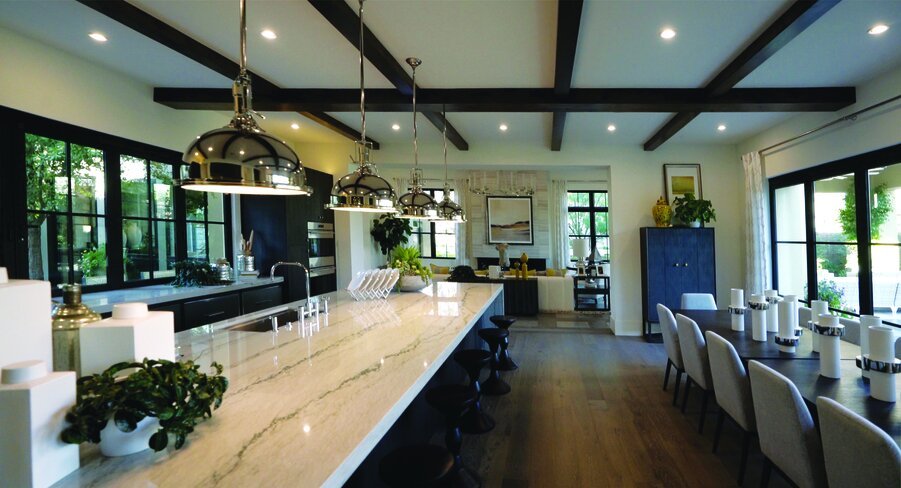
A ceiling speaker may be almost invisible when the project is finished, but there can be a surprising amount of design and engineering behind it.
Standard architectural speakers, small-aperture speakers, invisible speakers, high-performance models, directional speakers, backboxes, subwoofers, amplification, and control all provide different tools for different rooms.
The objective is not to specify the most expensive speaker everywhere or hide technology simply for the sake of hiding it.
It is to choose the right level of performance and discretion for each space—and coordinate those choices with the architecture before construction limits the options.
That is where the best whole-home audio systems begin.
For new homes, renovations, and whole-home audio upgrades, Home Technology Experts can help plan the speaker system alongside the lighting, motorized shades, networking, control, HVAC, and architectural details before the ceilings are closed.
Plan the technology as carefully as the home itself.