
Lighting Control & Motorized Shades That Make Home Feel Natural
Lighting control is about more than dimming fixtures. It is about managing both the artificial light inside the home and the natural light coming through the windows.
When lighting and motorized shades are planned together, the home can respond to the time of day, what is happening in each space, and how the people living there want to feel. The result is a home that is more comfortable, easier to use, and better connected to its surroundings.
Lighting Control That Makes the Home Easier to Live In
Lighting control changes how a home feels and functions throughout the day.
Rather than adjusting individual dimmers and switches, homeowners can control groups of fixtures together and create lighting that suits both the time of day and what is happening in the room.
The same space may need bright, comfortable light in the morning, focused light while cooking or working, softer light later in the evening, and very little light as the household prepares for bed. With the right intelligent lighting fixtures, the system can also adjust color temperature and intensity throughout the day to support natural circadian cues and sleep routines.
- Create lighting appropriate to the room and time of day
- Reduce wall clutter with a single keypad
- Make large homes easier to manage
- Simplify everyday household routines
- Coordinate lighting with shades, climate, and security
- Support comfortable circadian cues
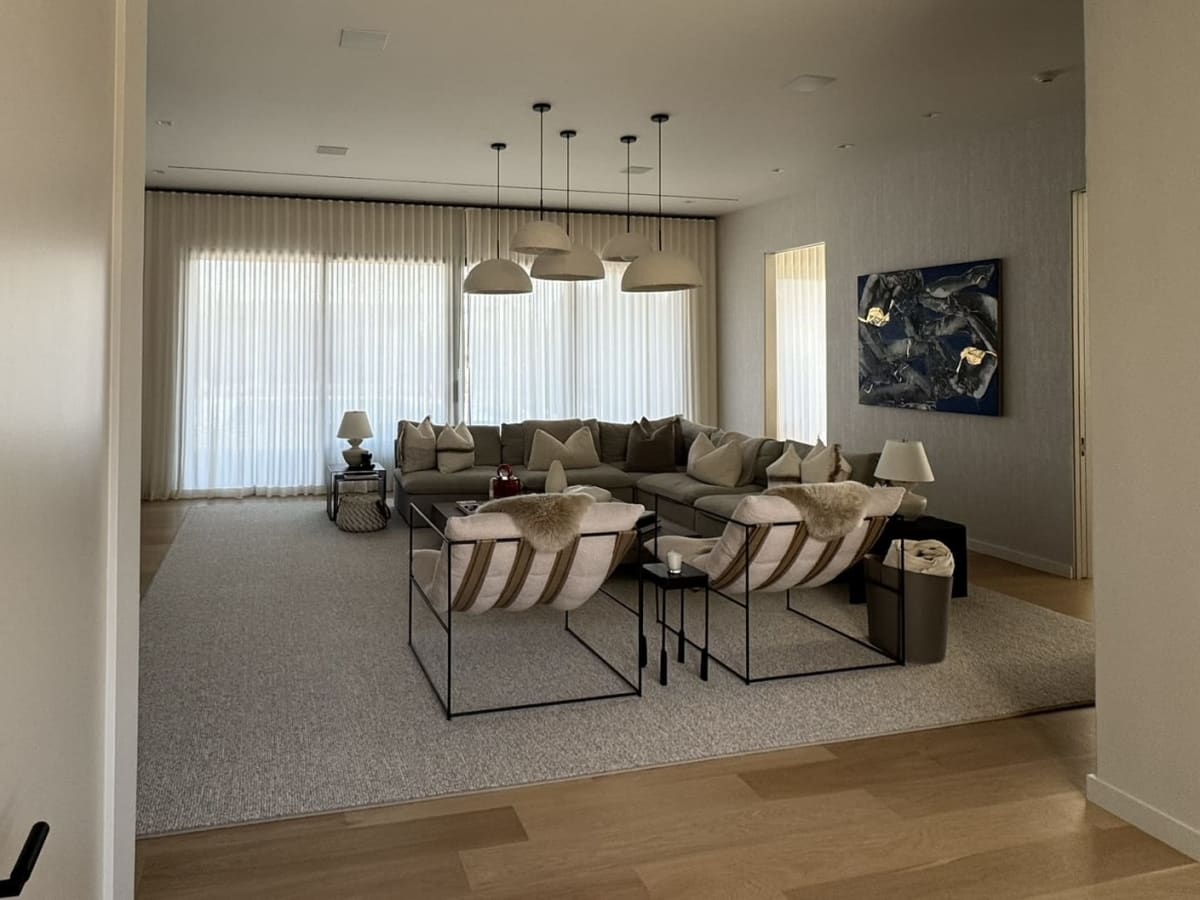

Motorized Shades Planned Around Privacy, Daylight, and Design
Motorized shades are another form of lighting control. Instead of controlling artificial light, motorized window treatments manage the natural light entering the home.
The category goes well beyond roller shades. Depending on the room and design, motorization can be applied to Roman shades, blinds, drapery, cellular shades, and other window treatments.
Natural light affects privacy, glare, room temperature, screen visibility, artwork and furnishings, sleep routines, and the way a room feels. In bedrooms, blackout treatments can create a much darker sleeping environment; side channels, recessed pockets, and sill angles help limit light leakage when full blackout is the goal.
Window treatments can also limit prolonged direct sun on artwork, furnishings, and wood flooring. At night, the right lighting levels and darker shade fabrics can reduce reflections on glass and preserve the view.
- Manage privacy without blocking unnecessary daylight
- Reduce glare on televisions and displays
- Improve nighttime views through glass
- Limit direct sun on valuable interiors
- Support sleep routines in bedrooms
- Control large or hard-to-reach treatments
Why Lighting and Shades Work Better Together
Artificial light and natural light affect the same space, so controlling them together makes sense. The system can respond to changing daylight, using natural light when it is useful and supplementing it with interior lighting when needed.
The experience becomes less about managing separate technologies and more about controlling the light in the home as a whole.
Morning
Selected shades open while interior lighting rises gradually, helping the home transition into the day.
Daytime
Shades and lighting adjust as daylight changes to manage glare, direct sun, displays, and glass reflections.
Bedtime
Window treatments close for privacy while lighting becomes warmer and lower for sleep preparation.
Away
Lighting follows varied schedules while shades, climate, and security move to their appropriate positions.
Keypads, Scenes, Scheduling, and App Control
Good lighting control should make the wall simpler too. In a conventionally wired room, lighting and shades can require a row of individual controls. With a centralized system, six or more controls can often be consolidated into one keypad.
This matters in spaces with layered lighting. A designer can create depth, highlight architecture, illuminate artwork, and support different activities without adding visible controls. Lutron HomeWorks can coordinate intelligent lighting, including Ketra and Rania fixtures, with motorized window treatments through the same system.
Custom Keypads
One keypad can replace multiple dimmers, switches, and window-treatment controls.
Lighting Scenes
Groups of fixtures work together without requiring zone-by-zone adjustment.
Shade Presets
Preset positions manage daylight, privacy, glare, direct sun, and nighttime reflections.
Mobile App Control
Adjust lighting and shades from a phone or tablet at home or away.
Schedules & Automation
Systems respond to time, daylight, occupancy, and established household routines.
Whole-Home Integration
Lighting and shades coordinate with climate, security, audio, and video when useful.
Designed With Architecture and Interiors in Mind
Lighting control works hand in hand with lighting design. Multiple layers can balance a room, highlight architecture and artwork, support tasks, and change its character throughout the day while control keeps the visible interface simple.
HTE works with homeowners, lighting designers, interior designers, architects, builders, and other trade partners to coordinate keypad locations, shade pockets, wiring paths, lighting zones, treatments, control requirements, and service access before those decisions become difficult to change.
- Integrated cleanly with the architecture
- Coordinated with finishes and lighting design
- Practical to install and support
- Simple for residents, guests, and staff
- Designed around actual home conditions
Built for Comfort, Privacy, and Long-Term Reliability
Lighting and shading are used every day. They should not require daily thought. HTE treats them as one coordinated system: understand requirements early, simplify controls wherever possible, and build the system so it can be installed, explained, and supported properly.
The homeowner should experience something straightforward, even when the design and programming behind it are sophisticated.
Lighting Control & Motorized Shades FAQ
What is lighting control in a luxury home?
Lighting control manages the intensity and, with appropriate fixtures, the color of artificial light. It allows lighting zones to work together through keypads, scenes, schedules, apps, and automation. When motorized shades are integrated, the same system can manage natural light.
Why should motorized shades be planned with lighting control?
Artificial and natural light affect the same rooms. Planning them together balances daylight with interior lighting while managing privacy, glare, reflections, direct sun, artwork protection, comfort, and sleep routines. It also allows controls to be consolidated.
Can lighting and shades be controlled from the same keypad?
Yes. One keypad can control multiple lighting zones, motorized window treatments, and common room settings. In some rooms it can replace six or more individual switches, dimmers, and shade controls.
Are motorized shades only roller shades?
No. Motorized window treatments can include roller shades, Roman shades, blinds, drapery, cellular shades, and other treatment types depending on the window, room, and design goals.
Are motorized shades worth it for large windows?
They are particularly useful for large expanses of glass, tall windows, and hard-to-reach openings, making it easier to manage daylight, glare, privacy, direct sun, and heat while helping protect artwork, flooring, and furnishings.
Can motorized shades provide full blackout?
They can get very close when designed for blackout from the start. Blackout fabric alone is not enough; side channels, recessed pockets, and sill angles can reduce edge leakage and create a much darker sleeping environment.
When should lighting control and shading be planned?
As early as possible. Lighting control, lighting design, and shades affect wiring, keypad locations, fixture selection, shade pockets, treatments, and architectural details. Planning during design or pre-construction usually produces a cleaner installation and more options.
Plan a Lighting and Shading System That Feels Natural
The best lighting systems manage more than fixtures. They balance artificial and natural light throughout the day and make sophisticated design easier to live with.
Home Technology Experts designs coordinated lighting control and motorized shading systems for luxury homes, renovations, and new construction projects.