
Home Surveillance Systems on Long Island
HOME SURVEILLANCE LONG ISLAND SECURITY SMART HOME SECURITY
Home Surveillance Systems on Long Island: What a Well-Planned System Should Actually Do
A camera system is only useful when it helps a homeowner quickly understand what happened. For Long Island properties—especially larger homes, second residences, and homes with gates, detached structures, or active service access—that requires more than placing cameras around the exterior.
A properly designed home surveillance system provides clear coverage, reliable recording, meaningful alerts, and a simple way to view the property at home or away. It should support the architecture and the homeowner’s routine without adding visible equipment, unnecessary notifications, or another collection of disconnected apps.
Begin With the Questions You Need the System to Answer
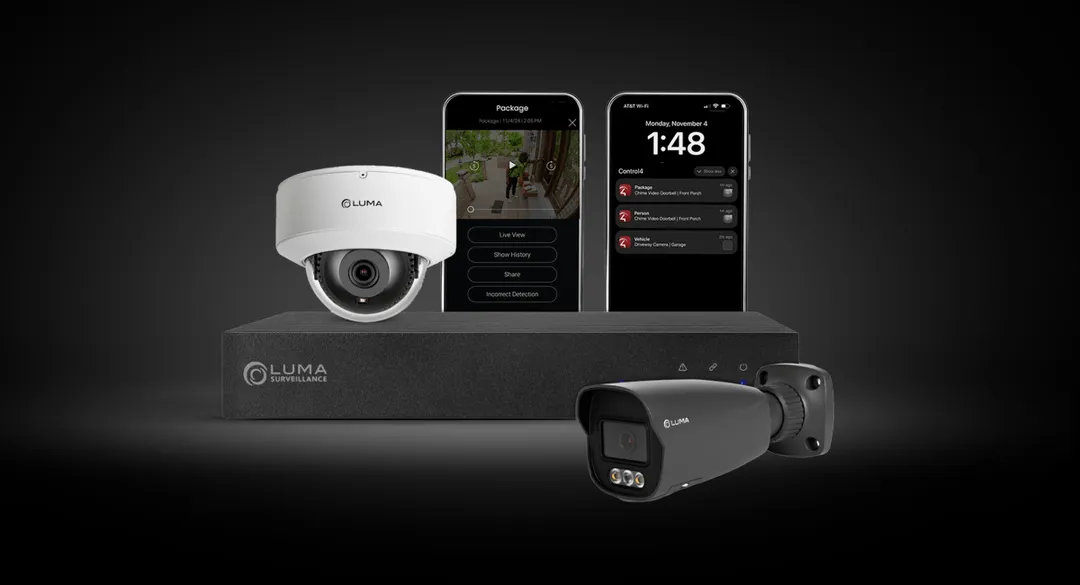
The most productive surveillance conversations do not start with a camera count. They begin with the property and the moments that matter. A home in Old Westbury, Manhasset, Southampton, or on the North Fork may need coverage at a long driveway, service entrance, gate, pool house, dock, garage, or multiple buildings.
Before equipment is selected, define priorities such as:
- Who is arriving at the front entry, service entrance, or gate?
- When did a delivery, contractor, or grounds crew arrive and leave?
- What is happening at the driveway, pool area, detached garage, or perimeter?
- Can the property be checked quickly while the home is vacant?
- Will the system remain dependable through storms, power disruptions, and seasonal changes in occupancy?
Those answers guide camera placement, recording retention, lighting, and the home-control experience. The goal is not to observe every square foot. It is to cover meaningful activity with enough clarity to be useful.
Camera Placement Matters More Than Camera Count
Two carefully placed cameras can be more valuable than six installed without a plan. Each camera needs a considered height, angle, line of sight, and field of view. It also needs to account for mature landscaping, vehicle approach paths, gates, exterior lighting, and the way people move around the property.
For many Long Island homes, primary coverage includes:
- Driveways and vehicle arrival areas
- Front, rear, and service entries
- Gate stations and delivery access
- Pool houses, detached garages, and other secondary structures
- Exterior areas used by staff, trades, guests, and deliveries
Early coordination allows wiring to be concealed, exterior finishes to remain intact, and cameras to be located where they can perform well without becoming a visual distraction. It is the same planning discipline behind smart home planning before construction: infrastructure is easiest to get right before walls, hardscape, and finished details are complete.
Reliable Surveillance Starts With the Network
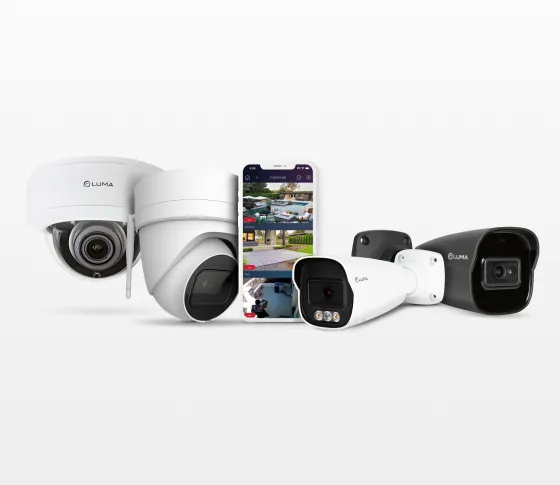
Every connected camera depends on the home network. If that foundation is weak, the result may be delayed live video, intermittent cameras, missed recordings, and unreliable remote access.
For permanent exterior coverage, hardwired cameras are generally the more predictable choice. They have consistent power and network connectivity, which is particularly valuable at long driveways, gatehouses, detached buildings, and exposed exterior locations. Wireless cameras can be useful in select situations, but they rely on battery management and dependable Wi-Fi coverage.
That is why a surveillance system should be planned alongside network and Wi-Fi infrastructure, secure configuration, recording capacity, and remote access. In our guide to Control4 enhanced NVR surveillance, we explain why the ability to find and play back the relevant event matters just as much as capturing it.
Alerts Should Be Helpful, Not Constant
Basic motion alerts can create more noise than value. Moving trees, changing light, pets, and passing vehicles can overwhelm a homeowner with notifications until the system is ignored.
Intelligent detection and thoughtfully defined activity zones help focus attention on what is meaningful. Depending on the system configuration, alerts can distinguish people, vehicles, packages, animals, or activity crossing a designated boundary. A homeowner can be informed about a person approaching a service entrance without receiving an alert every time a branch moves in the wind.
Professional setup and ongoing refinement make the difference. Detection zones, sensitivity, notifications, and recording settings should reflect the property, household routine, and the way the system is used over time. HTE’s Luma Surveillance + Control4 integration overview explains how intelligent alerts can be brought into one coherent home-control experience.
Security Can Trigger a Measured Response
A well-integrated system does more than document activity. It can support an appropriate response. When surveillance is connected with Control4 home automation, a gate call or meaningful security event can bring up a live camera feed on a touchscreen, mobile device, or television. Activity after dark can also prompt exterior lighting to come on in a controlled way.
The point is not to make the home feel reactive or complicated. It is to reduce the number of steps needed to understand an event and act on it. For homeowners already using integrated lighting, shades, audio, and control, surveillance should belong in that same intuitive environment—not exist in another disconnected app.
Design for Long-Term Support, Not Just Installation Day
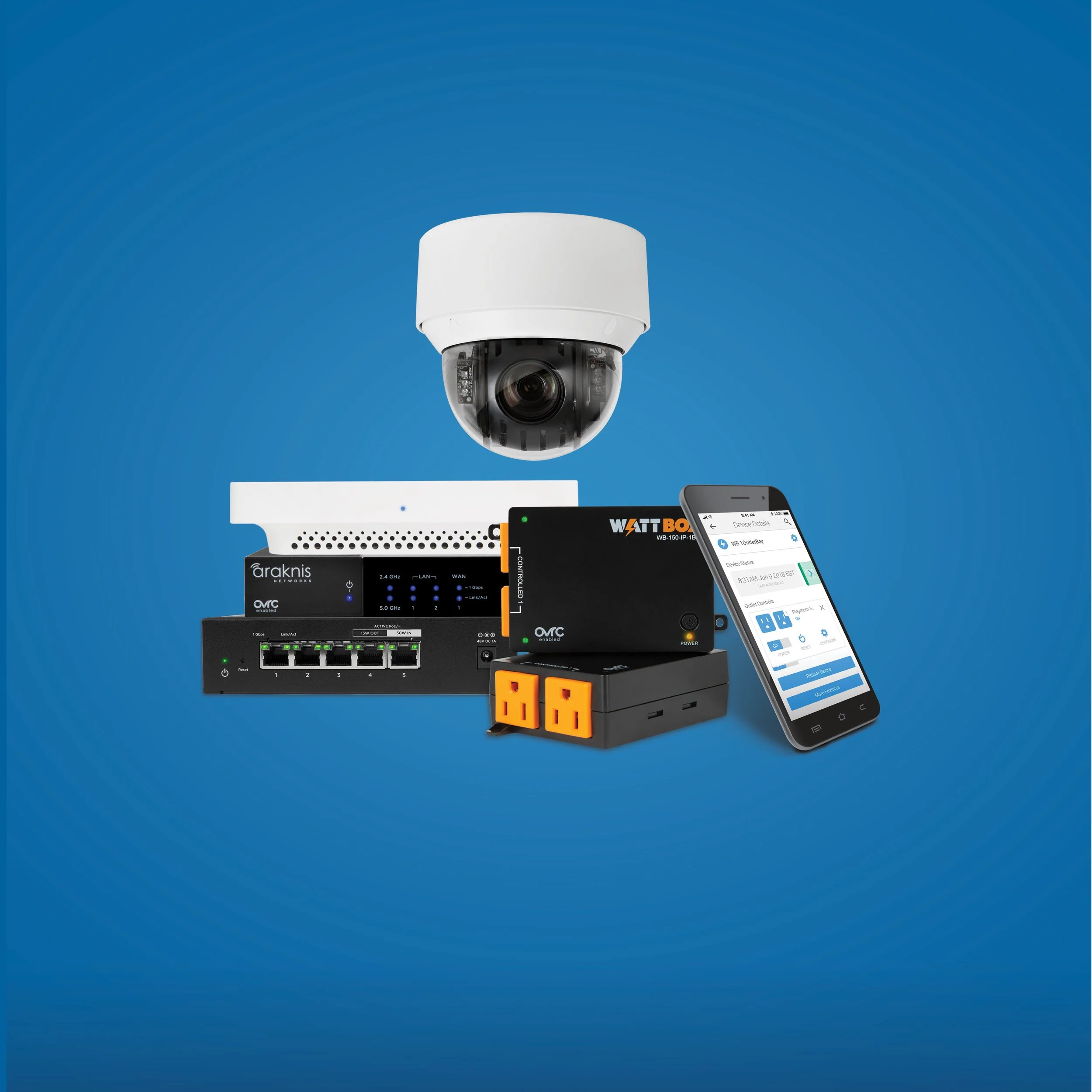
Camera systems evolve. Software updates, changes in landscaping, new construction around the property, household routines, and equipment age can all affect performance. A system should be documented, serviceable, and supported long after it is installed.
HTE can help homeowners review existing cameras, recorders, network performance, remote access, placement, and system supportability before recommending changes. The right upgrade is not necessarily the system with the most equipment. It is the one that is clear, reliable, appropriately scaled, and built to be supported through ongoing ExpertCare service.
Schedule a surveillance consultation to discuss a new home, renovation, existing-system upgrade, or a more dependable way to keep an eye on your Long Island property.
Frequently Asked Questions About Home Surveillance Systems on Long Island
Are hardwired cameras better than wireless cameras?
For permanent exterior coverage, hardwired cameras are generally more reliable because they have consistent power and network connectivity. Wireless cameras can be useful in limited situations, but their performance depends on Wi-Fi coverage, batteries, and environmental conditions.
Where should security cameras be placed around a Long Island home?
Most homes benefit from thoughtful coverage at entrances, driveways, service areas, gates, garages, and important outdoor activity areas. The right locations depend on the property layout, desired views, lighting, landscaping, and access patterns.
Can surveillance cameras work with my smart home system?
Yes. Cameras can be integrated with Control4 so you can view live or recorded video from touchscreens, televisions, and mobile devices. Security events can also coordinate with lighting, gate access, doorbells, and other connected systems.
Can HTE improve an older camera system?
Yes. We can assess existing cameras, the recorder, network reliability, remote access, placement, and system supportability. In some homes, selective upgrades can significantly improve performance without replacing every component.
Related reading: Intelligent Security, Fully Integrated · Control4 Enhanced NVR Surveillance: What to Know · Pre-Construction Smart Home Planning Guide · What Does an AV Integrator Do?