
What Does an AV Integrator Do?
What Does an AV Integrator Do and When Should You Bring One Into a Project?
The best audio and video systems rarely call attention to the work behind them. Music is available in the rooms where it belongs. Displays feel appropriate to the architecture. A movie starts without a negotiation among five remotes. Outdoor speakers deliver even coverage without turning the landscape into an electronics showroom.
That apparent simplicity is designed.
An AV integrator plans, engineers, installs, programs, and supports the audio, video, networking, and control systems within a home. For a luxury residence, the role extends well beyond selecting speakers or mounting televisions. The integrator coordinates technology with the architecture, interiors, electrical plan, millwork, lighting, shading, and network infrastructure so the finished system performs reliably and belongs in the home.
For homeowners, architects, designers, and builders, understanding that role early can prevent expensive compromises later.
An AV Integrator Connects the Experience, Not Just the Equipment
It is easy to think of residential AV as a list of products: televisions, speakers, amplifiers, streaming devices, projectors, and remotes. But equipment is only one layer of the system.
The more important questions are experiential:
- Where should music be available, and how should it sound from one space to the next?
- Which rooms require a visible display, a concealed display, or no display at all?
- How should a dedicated theater, everyday media room, terrace, pool, and landscape operate together?
- Can family members and guests use the system without instructions?
- Will the network support high-resolution streaming and the many connected systems throughout the property?
- Can equipment be serviced or upgraded without disturbing finished spaces?
A capable integrator turns those questions into a coordinated design. The result is not simply more technology. It is less friction.
What Is Included in Residential AV Integration?
The scope varies by home, but a professionally integrated system often includes the following.
Whole-home audio
A whole-home audio system distributes music to selected rooms and outdoor areas while allowing each zone to operate independently or as part of a larger group. The design may include discreet architectural speakers, dedicated listening spaces, landscape audio, and centralized equipment.
The goal is consistent, appropriate sound, not simply maximum volume. Speaker placement, room acoustics, amplification, control, and the way the family listens all influence the design. In larger East End residences, structured, rack-based multi-room audio also makes the system easier to manage and expand over time.
Video and display planning
Display selection is only the beginning. An integrator considers viewing distance, sightlines, daylight, reflected light, room layout, mounting conditions, ventilation, source equipment, and the visual impact of the screen when it is not in use.
In some rooms, the right answer may be a carefully positioned television. In others, it may be a projector, an architectural display, or a concealed solution that preserves the interior design. Planning these decisions before framing, millwork, and electrical work are complete protects both performance and aesthetics.
Home theaters and media rooms
A dedicated cinema and a flexible media room serve different purposes, but both benefit from coordinated acoustic, video, lighting, shading, seating, and control design. HTE's approach to home theater and media room design begins with how the room will be used, then engineers the technology around that experience.
The best room is not necessarily the one with the longest equipment list. It is the one that delivers clear dialogue, convincing sound, comfortable viewing, and simple operation every time.
Outdoor entertainment
Outdoor AV has its own design constraints: weather exposure, salt air, large listening areas, neighboring properties, changing light conditions, and the need to integrate technology into the landscape. Products intended for indoor use are rarely a durable substitute.
Thoughtful outdoor technology places sound and video where people naturally gather while keeping equipment visually quiet. Pool areas, patios, terraces, outdoor kitchens, and lawns may each require a different approach.
Network infrastructure
Modern AV depends on the home network. Streaming, control, software updates, remote service, and communication among devices all rely on stable connectivity.
That makes professional network and Wi-Fi planning part of AV design, not an unrelated utility. Large residences, multiple structures, outdoor areas, dense building materials, and seasonal occupancy all increase the need for properly engineered coverage and capacity.
Unified control
An integrated system should reduce the number of steps required to enjoy the home. One intuitive interface can coordinate music, television, lighting, motorized shades, and climate for a room or an entire property.
This is where AV becomes part of a broader smart home automation system. A single command might prepare a media room by lowering the shades, adjusting the lights, setting the temperature, and starting the preferred source. The complexity remains behind the scenes.
Service and long-term support
AV systems evolve. Streaming platforms update, network demands increase, components reach the end of their useful lives, and the way a family uses a home changes. A good integrator designs for serviceability from the beginning and remains responsible after installation.
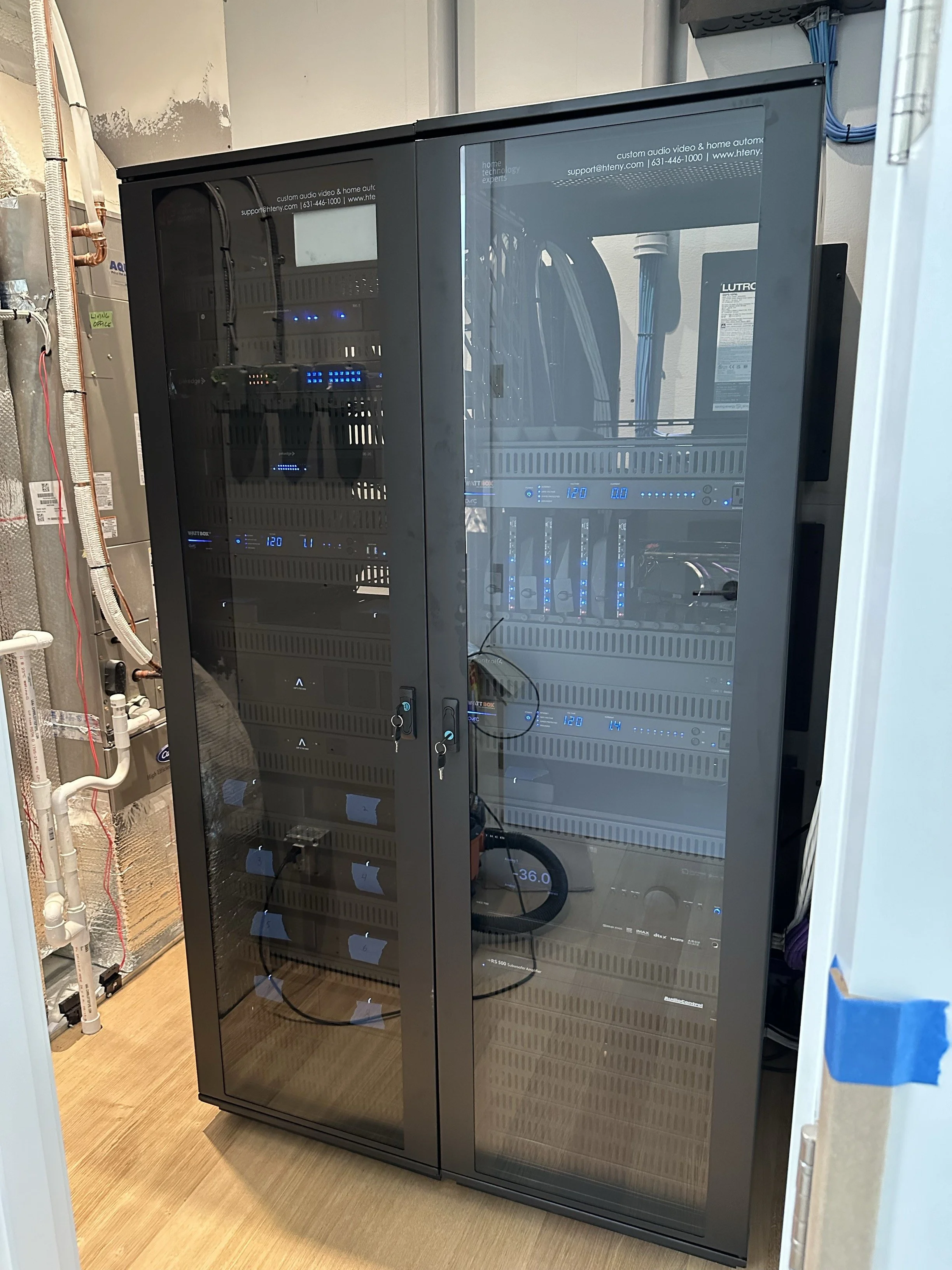
That includes clear documentation, organized equipment racks, remote troubleshooting, system updates, and a practical path for future upgrades. Support is not separate from the premium experience. It is what allows that experience to remain dependable.
Why Early AV Planning Matters
Many of the decisions that determine AV performance are made before the equipment is installed. Speaker locations affect framing and finish details. Displays require power, data, backing, ventilation, and sometimes custom millwork. Equipment racks require adequate space, cooling, power, and service access. Outdoor systems need conduit and infrastructure before hardscape and landscaping are complete.
When an AV integrator joins the project early, these requirements can be coordinated with the architect, interior designer, builder, electrician, lighting designer, and landscape team. That collaboration helps avoid visible wires, awkward speaker placement, undersized equipment spaces, unnecessary patching, and last-minute design concessions.
Early planning is equally valuable in a renovation. A skilled integrator can assess existing wiring and infrastructure, identify what can be retained, and determine where selective upgrades will produce the greatest improvement.
The Hamptons and NYC Present Different AV Challenges
The principles of good integration remain consistent, but the properties do not.
In the Hamptons, AV systems often serve large homes, guest spaces, pool houses, expansive landscapes, and seasonal patterns of use. Outdoor performance, reliable property-wide networking, remote monitoring, and systems that are ready when the family arrives are especially important. HTE's Hamptons audio-video services address these conditions as part of the overall design.
In New York City, the constraints may include limited equipment space, apartment construction, building requirements, close coordination with millwork and interiors, and the need to achieve high performance without visual clutter. Audio-video integration in NYC requires careful planning around those realities.
For clients with more than one residence, consistent control and a familiar user experience can make both homes easier to use. The specific systems may differ, but the logic should feel the same.
How Is an AV Integrator Different From an Installer?
An installer completes a defined task. An integrator takes responsibility for how multiple systems work together.
Mounting a television or connecting a pair of speakers may be installation. Designing signal paths, specifying infrastructure, coordinating with trades, programming unified control, calibrating performance, documenting the system, and supporting it over time is integration.
Luxury residential projects need both excellent installation and systems thinking. A beautifully mounted display is still a poor outcome if the network cannot support it, the controls confuse the homeowner, or the equipment cannot be serviced without opening a finished wall.
Questions to Ask Before Hiring an AV Integrator
Before selecting a partner, ask:
1. When will you create the system design and documentation? The design should precede installation and provide a clear basis for coordination.
2. How do you work with architects, designers, builders, and electricians? AV decisions affect multiple trades and should not happen in isolation.
3. How do you balance performance with interior design? The answer should address placement, concealment, acoustics, millwork, and user experience not merely product choice.
4. How do you design the network that supports the AV system? Reliable entertainment requires reliable infrastructure.
5. What happens after installation? Ask about training, documentation, remote support, service response, software updates, and future upgrades.
6. Can you support the entire property? Whole-home audio, theaters, outdoor spaces, control, and networking work best when responsibility is clear.
A Better AV System Begins With a Better Plan
Premium AV is not defined by how much equipment a home contains. It is defined by how naturally the system supports the home: how easy it is to enjoy, how carefully it respects the design, and how reliably it performs over time.
That outcome begins before speakers are installed or displays are mounted. It begins with an integrator who can translate the way people want to live into a coordinated, serviceable system.
Home Technology Experts designs and supports integrated audio, video, networking, and control systems for luxury residences across the Hamptons and New York City. If you are planning a new home, renovation, or system upgrade, learn more about working with an AV integrator serving the Hamptons and NYC, or start a conversation with HTE.
Frequently Asked Questions
What does an AV integrator do?
An AV integrator designs, engineers, installs, programs, and supports connected audio and video systems. In a luxury home, that work commonly includes whole-home audio, televisions and architectural displays, home theaters, outdoor entertainment, networking, and unified control coordinated with the architecture and interior design.
When should an AV integrator join a new construction project?
Ideally, an AV integrator should join during the architectural and engineering phase, before electrical plans, framing, millwork, and finish details are finalized. Early involvement allows wiring, equipment locations, speaker placement, displays, networking, and control requirements to be coordinated efficiently.
Can an AV integrator improve an existing home?
Yes. An integrator can evaluate existing wiring, equipment, networking, and control systems, then recommend a phased upgrade or retrofit. The right approach depends on the home's infrastructure, finishes, performance goals, and tolerance for construction.
Does an AV integrator also handle smart home automation?
Many residential AV integrators also design smart home control that connects entertainment with lighting, motorized shades, climate, security, and other systems. Confirm the firm's capabilities and who will remain responsible for programming and long-term support.
What should a professionally integrated AV system feel like?
It should feel intuitive, reliable, and appropriate to the home. Homeowners and guests should be able to enjoy music or video without managing technical complexity, while the equipment remains discreet, organized, and accessible for service.