What “Thoughtfully Integrated” Really Means in Smart Home Technology
Thoughtful smart home integration is not about putting more devices in a home. It is about planning the infrastructure, control, equipment locations, and long-term support so technology works quietly in the background and respects the architecture around it.
The phrase “thoughtfully integrated” appears often in residential technology. It can sound vague until you look at what it requires in a real home.
It means the television does not dictate the room. The speakers do not interrupt the ceiling plan. The network is reliable before the home depends on it. Lighting, shading, climate, audio, surveillance, and access work together without requiring a collection of apps, remotes, passwords, and workarounds.
Most importantly, it means decisions are made around the way the home will be used, not around a list of products.
It starts before devices are selected
A well-integrated home begins with questions, not equipment.
How will the family use each room? Where do guests gather? What should happen when the owners arrive for the weekend, leave for the season, host a dinner, or settle in for a movie? Which elements need to disappear into the architecture, and which need to remain easy to reach and service?
Those answers shape the technology plan long before final devices are selected. They affect wiring pathways, network coverage, equipment racks, speaker locations, television placement, shade pockets, keypad layouts, camera views, and outdoor connectivity.
That early work is why HTE collaborates with project teams through technology design support for architects, builders, and interior designers. The goal is to resolve technology requirements before they become expensive compromises in the field.
Infrastructure is what makes the experience feel simple
The most important part of a connected home is often the part no one sees.
A reliable network, structured cabling, correctly located wireless access points, power protection, equipment ventilation, and practical service access give every connected system a stronger foundation. When that foundation is weak, even good devices can feel unreliable.
A television may buffer. A camera may lag. A control command may take too long. A system that should feel quiet and dependable starts asking for attention.
Thoughtful integration treats the network as core infrastructure, not a router purchase made after move-in. Read more about whole-home networking for luxury residences and why planning matters across large homes, outdoor areas, and detached structures.
Technology should support the design, not compete with it
Integration has a visual side as well as a technical one.
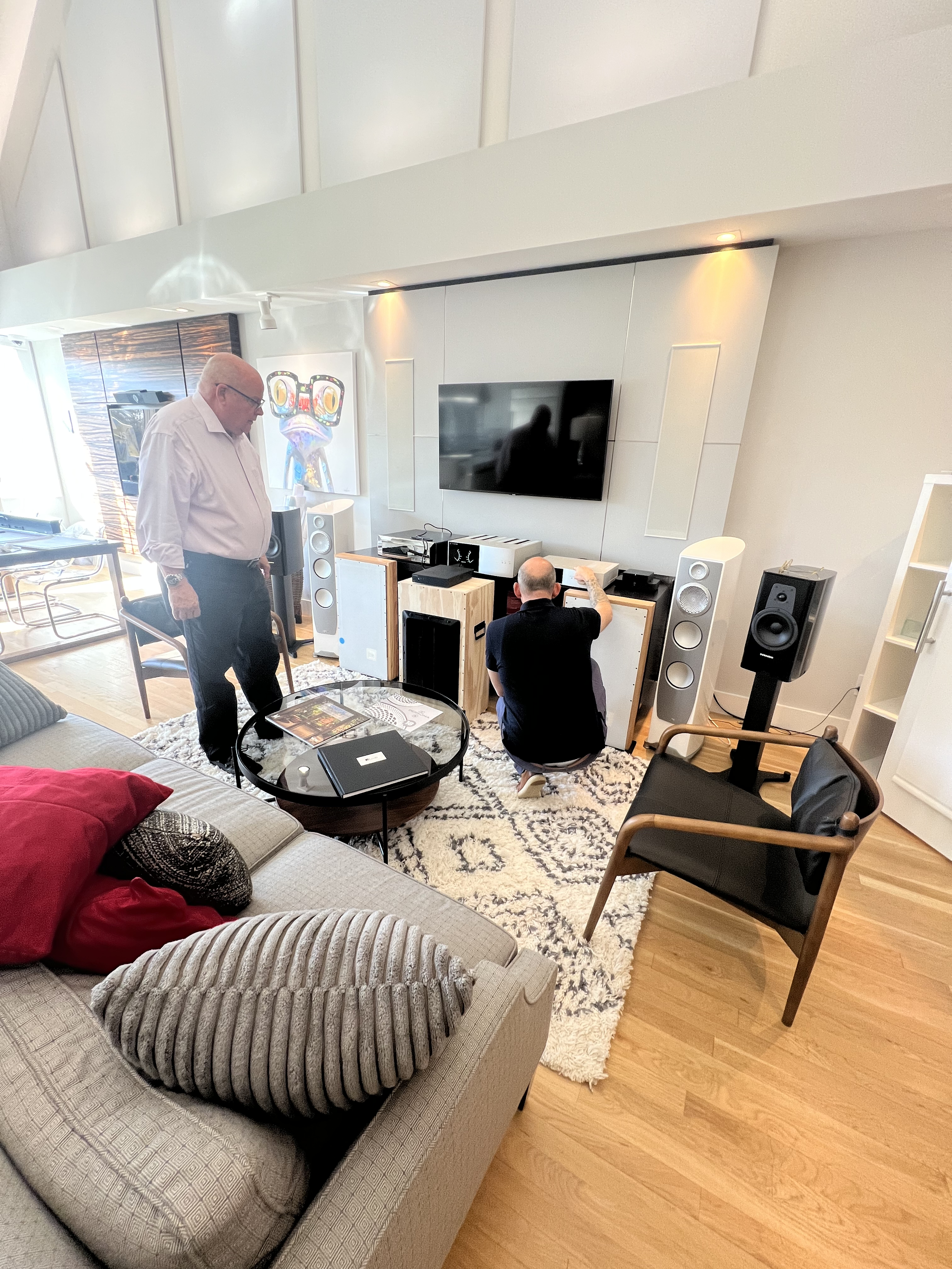
In a thoughtfully planned home, display locations are considered with furniture layouts and sightlines. Speaker placement is coordinated with ceiling details and lighting. Keypads are located intentionally. Equipment has a place to live that does not take over a closet, millwork cabinet, or finished room.
This does not mean every device needs to disappear completely. It means the visible technology should feel intentional, proportionate, and appropriate to the room.
That is especially important when integrating audio and video systems, motorized shading, lighting control, and other systems that touch both the technical and design sides of a project.
One system does not mean one-size-fits-all
A connected home should reduce unnecessary friction, but it should not force every household into the same template.
Some homeowners want control from an elegant keypad. Others prefer a touchscreen, a mobile device, or natural voice control in selected rooms. Some spaces need a full entertainment system; others need only dependable Wi-Fi, lighting, and shading.
The right approach is to create a clear relationship between systems without making the home feel over-programmed. A “Goodnight” scene might turn off selected lights, lower shades, arm the appropriate systems, and reduce the need for a late-night walk through the house. A terrace scene may bring together lighting, music, and outdoor television without making anyone manage several interfaces.
The system should reflect how the household actually lives, not how an installer prefers to sell it.
Reliable systems are easier to own
Thoughtful integration also means planning for the years after installation.
Technology changes. A family’s needs change. A home may gain a pool house, a new office, an updated theater, or a different control preference. Systems should be organized so they can be maintained, updated, and expanded without unnecessary disruption to finished spaces.
This is the practical side of future-proofing: not predicting every new product, but building a structure that allows the home to evolve. Our guide to future-proofing a luxury home with smart technology explains why flexibility, serviceability, and dependable infrastructure matter more than chasing the newest device.
Security and privacy are part of that conversation as well. Network structure, controlled access, software updates, and careful remote-access practices all affect how confidently homeowners can use their systems. Explore smart home security design for a closer look at the relationship between system architecture, privacy, and long-term reliability.
Thoughtful integration is felt more than it is seen
The best integrated homes do not feel like demonstrations of technology.
They feel organized. Comfortable. Dependable. The lighting responds naturally. The music is where it should be. The network works throughout the property. Systems are easy to control, easy to support, and aligned with the architecture.
That outcome does not come from one platform or one device. It comes from a coordinated process that treats technology as part of the home from the beginning.
Frequently Asked Questions About Thoughtful Smart Home Integration
What does thoughtfully integrated smart home technology mean?
It means technology is planned as a coordinated system rather than added one device at a time. The infrastructure, control, equipment locations, visible details, and long-term support are considered together.
Why should smart home planning begin early?
Early planning helps coordinate wiring, network coverage, equipment locations, lighting control, shades, speakers, displays, and other technology before construction decisions become difficult or costly to change.
Does an integrated home require every system to be controlled from one app?
No. The goal is to make the home easier to use, not to force every interaction through one interface. A well-designed system gives homeowners appropriate control options while reducing unnecessary app and remote clutter.
Can a thoughtfully integrated system be added to an existing home?
Yes. A renovation or existing-home upgrade may require a different strategy than new construction, but meaningful improvements can often be made through careful planning, practical pathways, network improvements, and phased system design.
What makes an integrated system easier to support long-term?
Clear documentation, accessible equipment locations, a dependable network, structured wiring, proven platforms, and a team familiar with the home all make updates, troubleshooting, and future expansion more manageable.
LEARN MORE: HOME THEATER SYSTEMS
EXPERTCARE/SUPPORT