
Wall-Mounted Sonos Speakers
Better Sound Without Compromising the Room
Wall-mounted Sonos speakers can bring music, television sound, and surround audio into a room without taking over its surfaces or competing with the interior design.
But mounting a speaker is not simply a matter of choosing an open section of wall. Height, angle, power, network coverage, seating position, room acoustics, and architectural alignment all affect the result.

At Home Technology Experts (HTE), we plan audio as part of the room. We consider how the space will be furnished, where people will listen, how the television will be positioned, where wiring can be concealed, and whether Sonos is the right solution in the first place.
The goal is a system that sounds balanced, looks intentional, and remains easy to use and support.
Why Wall-Mount Sonos Speakers?
Wall-mounting can solve several practical and design challenges at once. It keeps speakers off consoles, counters, nightstands, and shelves while allowing them to be placed more deliberately.
A properly planned installation can provide:
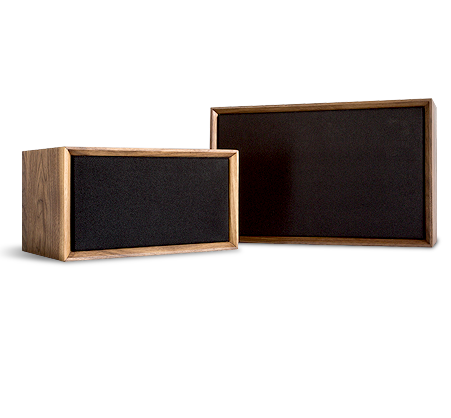
A cleaner, more architectural appearance
Better alignment with televisions and furnishings
More consistent sound across the listening area
Secure placement at an appropriate height and angle
Concealed power and network connections where feasible
More usable furniture and counter space
Integration with compatible whole-home control systems
The objective is not simply to get the equipment off the furniture. It is to make the audio system feel considered as part of the home.
Wall-Mounted Does Not Necessarily Mean Wireless
Sonos is often described as a wireless audio system, but that can create the wrong expectation.
Most permanently installed Sonos speakers still require power. Some installations may also benefit from a wired network connection, depending on the product, system configuration, and surrounding network conditions.
That means a clean wall-mounted installation may require:
A properly located electrical connection
A concealed cable path
Suitable wall construction or mounting support
Reliable Wi-Fi or an appropriate wired network connection
Coordination with millwork, televisions, artwork, and other finishes
If these details are not planned, a “wireless” speaker can still leave a visible cord running down the wall.
Beautiful integration starts before the walls close. During construction or renovation, power, mounting support, and wiring can be placed exactly where the finished system will need them. Existing homes can also be upgraded, but the available access and wall construction should be evaluated first.
Does Wall-Mounting Improve Sonos Sound?
Wall-mounting does not automatically make a Sonos speaker sound better. The improvement comes from placing the speaker correctly for the room and its intended use.
Speaker height, orientation, angle, distance from nearby surfaces, and relationship to the listening position all influence what the homeowner hears. A speaker placed too high, pushed into a corner, or aimed away from the primary seating area may sound less balanced even though it looks neatly installed.
Before selecting a mounting location, HTE considers:
Room size and shape
Primary seating and listening positions
Ceiling height
Openings into adjoining spaces
Reflective materials such as glass, stone, and tile
Upholstery and other sound-absorbing finishes
Stereo or surround-sound geometry
Manufacturer clearances and orientation requirements
The visual relationship between speakers, television, furniture, and architecture
Compatible Sonos systems can also be tuned for the room. Sonos Trueplay evaluates how sound interacts with walls, furnishings, and other surfaces, then adjusts the system accordingly. Tuning can improve the result, but it cannot fully correct poor placement. The physical design still matters. Sonos explains its current Trueplay options and compatibility in its support guidance.
Wall-Mounted Sonos for Television Sound
A wall-mounted Sonos soundbar can be an effective alternative to television speakers, particularly in bedrooms, family rooms, home gyms, kitchens, and other spaces where a traditional equipment cabinet or component-based audio system would be unnecessary.
The soundbar should feel visually connected to the television. Its width, spacing, mounting height, and relationship to surrounding millwork all affect whether the installation looks resolved.
Planning should also account for:
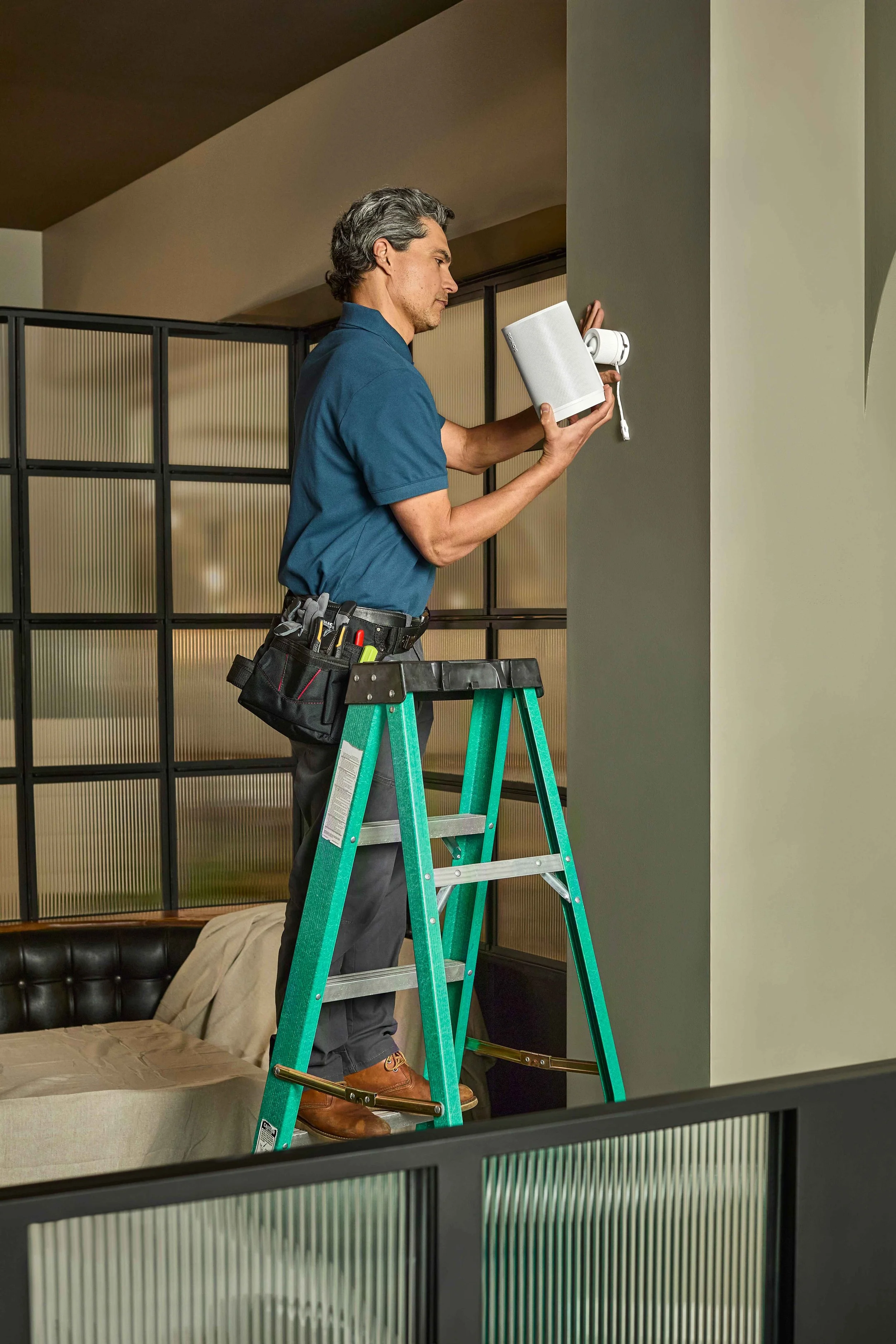
Sonos speakers in a restaurant installation
Television ventilation
Screen clearance
Remote-control and television sensors
Cable access
Serviceability
Soundbar orientation
Future television replacement
Mounting hardware and wall structure
A soundbar should not be mounted so tightly against the television or nearby surfaces that its performance, ventilation, or service access is compromised.
Wall-Mounted Sonos for Surround Sound
A Sonos home theater can combine a soundbar with a compatible subwoofer and two matching surround speakers.
For surround sound, the rear speakers generally belong behind and to the left and right of the primary listening position. The exact height and angle depend on the room, seating arrangement, speaker model, and desired performance. Sonos also requires compatible speaker pairings and applies certain feature limitations when speakers are assigned as surrounds. Current compatibility and placement guidance is available through Sonos Support.
This is where professional planning becomes especially valuable. The most visually symmetrical mounting locations are not always the best acoustic locations. A well-designed installation balances both.
In some rooms, wall-mounted Sonos surrounds provide the right combination of simplicity, performance, and restrained visibility. In others, in-wall or in-ceiling architectural speakers may preserve the design more successfully.
Wall-Mounted Sonos for Music Throughout the Home
Wall-mounted Sonos speakers can also support music in kitchens, bedrooms, offices, gyms, playrooms, and other secondary spaces.
This approach is particularly useful when:
Counter or furniture space is limited
Speakers need protection from everyday activity
A permanent location is preferred
Architectural speakers are not practical
The homeowner wants straightforward app-based control
Rooms need to operate independently but also play together
Compatible Sonos rooms can play different content individually or be grouped for shared listening. This makes the platform approachable for homeowners who want flexible multiroom audio without a fully centralized audio system.
The simplicity still depends on the supporting network. In a larger home, detached structure, or property with challenging construction, audio performance can become inconsistent if Wi-Fi coverage was not designed for the number and location of connected devices.
A speaker system can only be as reliable as the infrastructure supporting it.
Can Sonos Integrate With a Smart Home System?
Sonos can work as a standalone audio platform or as part of a broader smart home system.
That distinction matters. HTE does not add integration simply because it is available. Sonos should first work reliably for its primary purpose. A control layer can then be added where it makes the experience more convenient.
Depending on the home-control platform, system configuration, and supported components, integration may allow a homeowner to:
Select a room or audio zone
Choose supported favorites or playlists
Start and stop playback
Adjust volume
Group compatible rooms
Include music in selected home scenes
Coordinate audio with lighting and motorized shades
Access frequently used controls from a shared interface
For example, music may be included in a “Dinner” scene that also adjusts lighting and shades. The Sonos app can still remain available for deeper music browsing and management.
The objective is not to replace one useful interface with a more complicated one. It is to give the homeowner the right control in the right place.
Where Do Wall-Mounted Sonos Speakers Work Best?
Living Rooms and Casual Media Rooms
A mounted soundbar and carefully positioned surrounds can improve television and movie sound without requiring a room full of visible equipment.
For a dedicated theater or performance-focused media room, a component-based system may offer greater output, channel separation, and flexibility.
Bedrooms
A compact wall-mounted system can improve television sound or provide music without occupying nightstands, dressers, or other furniture.
Kitchens
Mounting speakers can preserve counter space and help distribute sound through an active room. Placement must account for cabinetry, appliances, hard surfaces, and adjoining spaces.
Home Gyms
Secure wall placement keeps speakers off the floor and away from exercise equipment while supporting more consistent coverage across the room.
Home Offices
Wall-mounted speakers can provide music and improved video-call or television sound without adding equipment to the desk.
Playrooms and Multipurpose Spaces
Permanent mounting can protect speakers from daily activity and reduce clutter in rooms that frequently change function.
When Wall-Mounted Sonos Is Not the Best Choice
Sonos is useful, but it is not automatically the right answer for every room.
A different approach may be more appropriate when:
The design calls for speakers to be almost completely invisible
The room requires higher output or more precise audio performance
The homeowner wants a fully centralized rack-based audio system
The wall cannot provide safe mounting support
Power and wiring cannot be concealed cleanly
Speaker placement would conflict with artwork, millwork, or architectural details
A dedicated theater requires a more advanced speaker layout
The property needs extensive outdoor or multi-structure audio coverage
In these situations, in-wall speakers, in-ceiling speakers, invisible speakers, traditional loudspeakers, or a centralized audio system may produce a better result.
HTE is not committed to one speaker type or control platform. We begin with the room, the homeowner’s priorities, and the desired experience. The equipment follows those decisions.
Plan the Installation Before the Walls Are Finished
The cleanest wall-mounted audio installations are usually planned during architecture, construction, or renovation.
Early coordination allows the technology team to determine:
Speaker locations
Power and network requirements
Concealed wiring paths
Blocking and mounting support
Television and soundbar alignment
Clearances from cabinetry and millwork
Coordination with artwork and decorative lighting
Access for installation and future service
Planning early can help prevent:
Visible power cords
Poorly positioned outlets
Unnecessary openings in finished walls
Conflicts with millwork or artwork
Speakers installed around finished conditions instead of listening needs
Costly changes after painting and construction are complete
When an existing home is being upgraded, HTE evaluates the walls, available access, electrical conditions, network coverage, and potential cable paths before recommending the mounting approach.
HTE’s Approach to Wall-Mounted Sonos Installation
Home Technology Experts treats the audio system as part of the home—not as an equipment package added at the end of the project.
Our planning process may include:
Understanding how each room will be used
Identifying primary listening positions
Comparing wall-mounted, architectural, and freestanding speaker options
Coordinating with architects, designers, builders, and electricians
Planning concealed power and wiring
Confirming wall construction and mounting support
Selecting compatible mounting hardware
Installing speakers at deliberate heights and angles
Configuring the Sonos system and supporting network
Tuning compatible equipment for the room
Integrating supported smart home controls when useful
Providing service and support after installation
This broader approach matters. A neatly mounted speaker is only one part of the experience. The network must remain stable, controls must be understandable, equipment must be accessible for service, and the system must continue to work after the project team leaves.
Is a Wall-Mounted Sonos System Right for Your Home?
Wall-mounted Sonos can be an excellent choice for homeowners who want approachable multiroom audio, improved television sound, and a cleaner visual result.
Before choosing it, ask:
Will the room be used for music, television, or both?
Where will people usually sit and listen?
Can power and wiring be concealed safely?
Is the wall suitable for secure mounting?
Is reliable network coverage available at the speaker location?
Should Sonos operate independently or through home automation?
Is flexible placement more important than architectural discretion?
Would an in-wall, in-ceiling, or invisible speaker better serve the room?
The right answer may be a simple Sonos installation, a fully integrated audio system, or a combination of both across different areas of the home.
HTE can evaluate the room, infrastructure, design priorities, and performance expectations to recommend an audio system that feels appropriate—not excessive, incomplete, or added as an afterthought.
Frequently Asked Questions
Can Sonos speakers be mounted directly to a wall?
Many Sonos speakers and soundbars can be wall-mounted with compatible hardware. The correct mounting method depends on the speaker model, wall construction, required orientation, clearances, and listening position. Manufacturer-approved or purpose-designed hardware should be used where applicable.
Do wall-mounted Sonos speakers still need power?
Most Sonos speakers require a power connection even when audio reaches them wirelessly. The electrical connection should be planned so the cord and outlet do not undermine the clean appearance the installation is meant to create.
Can the wires for wall-mounted Sonos speakers be hidden?
Often, yes. The available solution depends on wall construction, outlet placement, access above or below the room, applicable electrical requirements, and whether the home is under construction or already finished.
Does wall-mounting a Sonos speaker improve its sound?
Not by itself. Sound improves when mounting allows the speaker to be placed at the correct height, angle, and relationship to the listening area. Poor wall placement can reduce performance even if the installation looks clean.
Can Sonos speakers be used for surround sound?
Compatible pairs of Sonos speakers can be used as surrounds with supported Sonos home theater products. Compatibility, orientation, network configuration, and available speaker functions depend on the products being used.
Can Sonos be used for whole-home audio?
Yes. Compatible Sonos rooms can play independently or be grouped for shared listening. A well-designed network is essential, particularly in larger homes, homes with dense construction, and properties with multiple structures.
Can Sonos integrate with Control4?
Sonos can be incorporated into a professionally configured Control4 system. Available functions depend on the current driver, components, software versions, and system design. The integration should be verified for the specific project rather than assumed from general compatibility.
Is Sonos better than in-wall or in-ceiling speakers?
Neither approach is universally better. Sonos may offer simpler installation and familiar app control, while architectural speakers can provide a more discreet appearance and support centralized audio designs. The right choice depends on the room, performance expectations, construction conditions, and design priorities.
Can Sonos speakers be mounted during an existing-home renovation?
Yes. Existing homes can often accommodate wall-mounted Sonos speakers, but the walls, power locations, network coverage, cable paths, and mounting structure should be inspected before work begins.
Should Sonos operate independently or through smart home control?
Sonos should remain reliable for its core audio function. Smart home integration can then provide convenient access to volume, room selection, favorites, or selected scenes. Integration should simplify the experience rather than make the audio dependent on unnecessary layers of control.
Planning a cleaner audio system for a new home, renovation, or existing room?
Home Technology Experts can help you compare wall-mounted Sonos, architectural speakers, and fully integrated audio options—then design the infrastructure, placement, and controls around the way you want the home to work.