Should You Build a Media Room or a Home Theater?
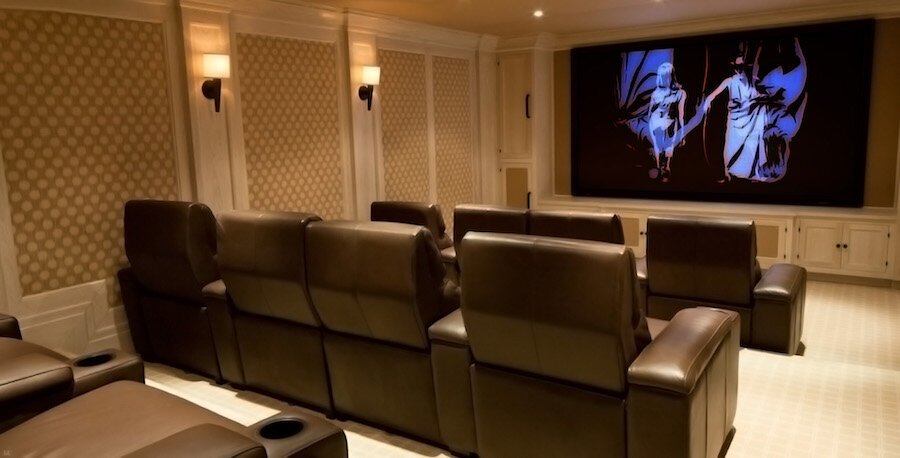
Dedicated Home Theater vs. Media Room: What Is the Difference?
ALL New Revised for 2026
A room can be excellent for watching movies without being a dedicated home theater.
The difference is not simply the size of the screen, the number of speakers or the cost of the equipment. A dedicated theater is purpose-built as a cinema. The room itself is designed around controlled light, acoustic performance, sound isolation, viewing angles, seating, ventilation, lighting and system control.
A media room is designed for greater flexibility. It may support movies, sports, gaming, music, entertaining and everyday family use within a room that still functions as part of the home.
Both approaches can be successful. The right decision depends on how the household wants to use the space and how much of the room can be designed around entertainment performance.
What Is a Dedicated Home Theater?
A dedicated home theater is a room created primarily for cinema and immersive entertainment.
Instead of adding audio and video equipment to a finished room, the room is planned around the experience from the beginning.
A dedicated theater may include:
Complete control of natural and artificial light
Room dimensions selected with acoustics and seating in mind
Sound-isolation construction
Integrated acoustic treatment
Projection or another cinema-scale video system
Engineered speaker and subwoofer locations
Calculated seating positions and sightlines
Quiet heating, cooling and ventilation
Lighting scenes designed for different stages of viewing
Dedicated network, power and equipment infrastructure
A unified control system
Some dedicated theaters have traditional cinema styling. Others are more architectural, with concealed speakers, fabric walls, integrated lighting and finishes selected to complement the rest of the residence.
The appearance can vary. The disciplined room-level planning is what makes it a dedicated theater.
What Is a Media Room?
A media room is a multipurpose space designed to provide strong entertainment performance without giving up its broader role in the home.
It may be used for:
Movies and streaming
Television
Sports
Gaming
Music
Casual entertaining
Reading
Family gatherings
Everyday relaxation
A media room may retain windows, daylight, artwork, flexible furniture and connections to other living spaces.
It can use a large television, a video wall or a projection system. Speakers may be visible, built into the architecture or concealed. Motorized shades and controlled lighting can help the room transition from normal daily use to focused viewing.
A media room is not an unfinished version of a theater. It is a different answer to a different set of needs.
SEE ALSO: 3 Benefits of Having a Pro Handle Your Audio-Video Installation
Whole-Home Audio-Video is Now in High Demand
Home Theater vs. Media Room at a Glance
Decision Factor
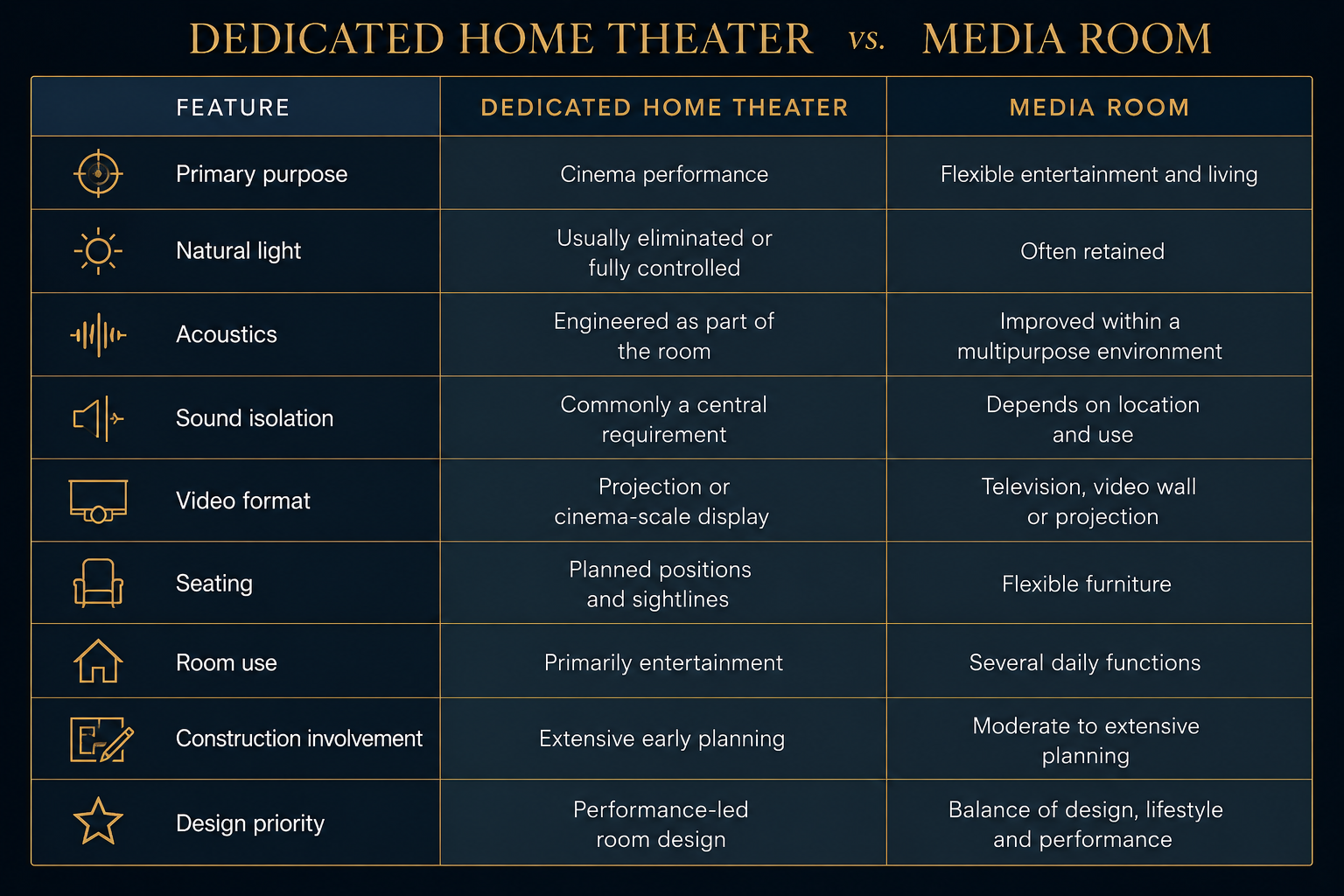
Dedicated Home Theater vs Media Room
A Large Screen Does Not Automatically Create a Theater
The equipment matters, but it cannot be separated from the room.
A large screen may be uncomfortable to watch if the seats are too close. Premium speakers cannot perform properly when their positions are dictated by doors, windows or cabinetry. Powerful subwoofers can create uneven bass when the room and seating locations have not been evaluated.
The same principle applies to lighting and mechanical systems.
Uncontrolled daylight can wash out an image. Recessed lights positioned near a screen can create reflections. A noisy air-conditioning grille can become distracting during quiet scenes. A projector may be technically compatible with the screen while lacking the clearances or ventilation needed for a reliable installation.
A dedicated theater addresses these relationships together.
A media room works within more varied constraints, but it still benefits from the same coordinated thinking.
When a Dedicated Theater Is the Right Choice
A dedicated theater may be appropriate when:
Movies are a major household priority
The home has enough space for a purpose-built room
The owner wants consistent performance across several seats
Natural light can be controlled
Sound needs to be contained
The project is early enough to coordinate construction
The room does not need to perform several unrelated functions
The household values an immersive environment over casual flexibility
A dedicated theater is also useful when the owners want entertainment to remain separate from the main living areas.
Rather than placing a large screen and visible equipment in the family room, the home can maintain quieter, more design-focused living spaces while the theater provides a distinct destination for movies, sports and gaming.
When a Media Room Is the Better Decision
A media room may be the stronger choice when:
The room will be used every day
Daylight and views are important
The space needs to support several activities
Sports and social gatherings are priorities
Flexible furniture is preferred
The display should be less prominent when it is off
The home does not have enough space for a separate theater
A formal cinema environment does not suit the household
The room needs to connect with a kitchen, bar, game area or outdoor space
The most successful media rooms are planned honestly around this flexibility.
Trying to force dedicated-theater conditions into a room that must remain open, bright and social can produce an uncomfortable compromise. A properly designed media room accepts the character of the space and makes informed decisions about the display, sound, lighting and control system.
Light Control
Light affects both the picture and the atmosphere of the room.
A dedicated theater typically eliminates or fully controls natural light. The room may use several lighting zones for entry, cleaning, casual conversation and viewing.
A media room often needs to work in daylight. Motorized shading, careful display selection and controlled fixture placement can help preserve image quality without making the room feel permanently dark.
For both room types, lighting should be planned with the display.
Fixtures that shine directly onto the screen or reflect from nearby finishes can reduce contrast and create distraction. Separately controlled zones allow the homeowner to adjust the room without treating every light as one group.
Acoustics and Sound Isolation
Acoustics and sound isolation are related, but they are not the same.
Acoustic design manages how sound behaves inside the room. It addresses reflections, clarity, tonal balance and consistency among different seating positions.
Sound isolation manages how much sound passes between the room and the surrounding home.
A dedicated theater often requires both.
A media room may use more moderate acoustic improvements, particularly when fabric, rugs, furnishings and architectural materials already contribute to the room’s sound. Isolation requirements depend on the room’s location and the household’s expectations.
When a theater or media room is near bedrooms, home offices or neighboring residences, sound transmission should be evaluated before construction.
Seating and Sightlines
The best seat should not be the only good seat.
In a dedicated theater, screen size, screen height, viewing distance, speaker positions and seating elevations should be calculated together. When several rows are planned, riser height and head clearance become part of the architectural design.
A media room usually has more flexible furniture. That flexibility can be valuable, but the primary viewing positions still need to be considered.
Common problems include:
Displays mounted too high
Seats placed against the rear wall
Furniture blocking speakers
Viewing distances that are too short or too long
Walkways crossing directly in front of the screen
Decorative layouts that leave no strong listening position
These issues should be resolved through room planning rather than equipment changes after installation.
Projection or Television?
A dedicated theater often uses projection because it can provide a cinema-scale image without turning the front wall into a large reflective object.
Projection requires appropriate control of:
Ambient light
Screen size
Viewing distance
Projector position
Image path
Ventilation
Equipment noise
Service access
A media room may be better served by a large television, particularly when daylight, casual viewing and immediate brightness are important.
Projection can also work in a media room when the room conditions support it. A retractable screen can help preserve windows, artwork or millwork when the system is not in use.
The choice should follow the room, not a general rule that one display type is always more advanced than another.
HVAC, Power and Network Planning
Heating, cooling, electrical and network systems are easy to overlook because they are not the most visible parts of a theater.
They are still essential.
A theater may contain several people along with equipment that produces heat. The room needs adequate ventilation without introducing audible fan or air noise.
The system also depends on:
Reliable network connectivity
Appropriate electrical circuits
Surge protection
Power management
Backup power where appropriate
Equipment cooling
Remote service capability
Accessible wire pathways
These requirements should be coordinated with the mechanical, electrical and construction teams before the room is finished.
Equipment Should Be Concealed, Not Trapped
The equipment rack does not need to be visible from the seating area.
It does need to remain ventilated and serviceable.
A proper equipment location should provide:
Access for maintenance
Room for airflow
Reliable power and network connections
Organized wiring
Space for future replacement
A way to service the system without disturbing finished surfaces
Hiding equipment inside unventilated cabinetry or behind inaccessible panels may preserve the appearance of the room temporarily, but it makes long-term support more difficult.
Good integration considers both design and service. Professional home theater and media room design means the system works next year just like it works at installation.
Control Should Make the Room Easier to Use
A theater should not require several remotes and a written sequence of instructions.
A coordinated control system can manage:
The display or projector
Audio
Sources
Lighting
Motorized shades
Climate settings
Playback
Room shutdown
A movie scene might lower the shades, set the lighting, activate the system and present the available sources. An intermission scene can bring up selected lights without shutting everything down.
A media room may include additional presets for sports, gaming, music and entertaining.
The interface should present the choices the household uses and leave unnecessary complexity in the background.
Why Early Planning Matters
Many of the most important theater decisions become harder to change after construction.
These include:
Room dimensions
Door and window placement
Wall and ceiling construction
HVAC routes
Screen and projector clearances
Lighting positions
Equipment space
Conduit and wiring
Electrical requirements
Service access
Late planning can lead to visible speakers, compromised seating, avoidable soffits, poorly positioned lighting or equipment locations that are difficult to maintain.
Early coordination gives the architect, interior designer, builder and technology team more freedom to protect both the performance and appearance of the room.
What Should Architects, Designers and Builders Plan For? And how does Working with Home Technology Experts Ensure Success?
Project teams should evaluate:
Room Geometry
Confirm that the proposed dimensions support the desired screen, seating capacity and circulation.
Doors and Windows
Review their effect on sound isolation, light control, speaker placement, and seating. Working with professional system designers and integrators like Home Technology Experts (HTE) ensures no potential issues are overlooked.
Ceiling Coordination
Coordinate overhead speakers, lighting, sprinklers, HVAC, acoustic features, and decorative details.
Wall Construction
Determine whether the room requires sound isolation, integrated acoustic materials or concealed speaker locations.
Seating and Millwork
Confirm viewing heights, risers, furniture locations, and access before elevations are finalized.
Equipment and Infrastructure
Identify rack space, ventilation, conduit, electrical service, network connections and maintenance access.
Finish Materials
Consider how hard, reflective, or resonant materials may affect the room. Acoustic elements can often be incorporated without creating the appearance of a recording studio.
Should a Spec Home Include a Dedicated Theater?
A properly planned theater space can strengthen the amenity offering of a spec home and help distinguish it for buyers who value private entertainment.
That does not mean every luxury spec home needs one.
The decision should reflect:
The target market
Property size
Floor-plan priorities
Available space
The quality of the proposed room
The expected level of finish
The property’s broader entertainment features
A flexible media room may appeal to a wider group of buyers in some projects.
In others, the strongest strategy is to create the correct room conditions and infrastructure for a future theater without selecting every component before the buyer is known.
Planning the pathways, power, equipment space, lighting, acoustics and mechanical requirements preserves options and reduces the need to disturb finished construction later.
Which Room Is Right for Your Home?
Choose a dedicated theater when the goal is a controlled, immersive cinema experience and an appropriate room can be assigned to that purpose.
Choose a media room when the space needs to support movies alongside everyday living, sports, gaming and entertaining.
The decision should begin with:
How the household lives
How often the room will be used
What the household watches
How many people it should accommodate
Whether daylight and views matter
How close the room is to quiet spaces
How much construction is practical
Whether the technology should remain concealed
How the room connects to the rest of the home
There is no reason to force a dedicated theater into a home that will benefit more from a flexible media room.
There is also no reason to limit a purpose-built theater by treating it like a room that only needs a large screen and speakers.
The correct design follows the intended experience.
Planning a Theater or Media Room with HTE
Home Technology Experts designs and integrates dedicated home theaters and media rooms for luxury residences, renovations and new construction.
Our work extends beyond selecting equipment. We coordinate with homeowners, architects, interior designers, builders, acoustic professionals, electricians, and mechanical teams to plan the room, infrastructure and control experience as one system.
That includes:
Acoustic and sound-isolation coordination
Lighting control
Networking
Equipment integration
Control systems
Construction coordination
Long-term service and support
For location-specific considerations, explore:
Planning a new residence or renovation? Submit your plans or schedule a home-theater consultation with Home Technology Experts.
Frequently Asked Questions
What makes a room a dedicated home theater?
A dedicated theater is designed primarily for cinema and immersive entertainment. Its architecture, acoustics, light control, sound isolation, display, speakers, seating, ventilation, lighting and controls are planned together.
Is a media room the same as a home theater?
No. A media room is a flexible living space that supports entertainment along with other daily activities. A dedicated theater is more fully optimized around cinema performance.
Does a dedicated theater need a projector?
Not necessarily. Projection is common because it supports very large images, but a direct-view display or video wall may be appropriate in some rooms. The decision depends on the room and desired experience.
How much space is needed for a dedicated theater?
There is no universal room size. The space must accommodate the desired screen, viewing distances, speaker positions, seating, circulation and acoustic requirements.
Can a room with windows become a home theater?
A room with windows can become an excellent media room or a highly capable theater environment with effective shading and light control. Whether it is truly dedicated depends on how completely it can be optimized for cinema use.
How important is sound isolation?
Sound isolation is important when high playback levels could disturb bedrooms, workspaces, adjacent residences or other parts of the home. It is most effective when included in the construction design.
Are acoustic panels the same as soundproofing?
No. Acoustic treatment improves sound inside the room. Sound-isolation construction reduces sound transfer into and out of the room.
When should theater planning begin?
Planning should ideally begin during architectural design or early construction documentation, before room dimensions, ceilings, mechanical systems, lighting and wall assemblies are finalized.
Can a theater be used for sports and gaming?
Yes. A dedicated theater can support movies, sports, gaming and streaming. The room remains distinguished by its performance-led design.
Is a media room less expensive than a dedicated theater?
It may involve less specialized construction, but cost depends on the room, display, audio system, lighting, shading, cabinetry and infrastructure. A sophisticated media room can still require substantial planning and integration.
Is a dedicated theater a good choice for a spec home?
It can be when the space, market and property support it. In some cases, preparing the room and infrastructure for future completion provides greater flexibility than making every final selection before the buyer is involved.