
Do You Actually Need a Smart Home Control System?
The smartest home is not necessarily the one with the most technology. It is the one that feels easiest to live with.
No, not every home needs a whole-home control platform. Independent systems can provide excellent lighting, music, and entertainment on their own. A platform becomes valuable when coordinating those systems makes everyday life easier.
That distinction gets lost surprisingly often in smart home design. Homeowners are frequently presented with automation as though there is only one path: choose a platform, connect everything to it, and control the entire house from one interface.
Sometimes that is exactly the right answer.
Sometimes it adds complexity without adding much value.
A beautifully designed home may be better served by Lutron for lighting and shades, Sonos or Bluesound for music, familiar television interfaces, and an excellent network underneath everything.
Another home may benefit from Josh, Savant, or Control4 coordinating those systems into a more unified experience.
At Home Technology Experts, we prefer to ask a different question before choosing any platform:
How much control does this home actually need?
Four thoughtful ways to approach home control
01 / Independent systems
Lutron for lighting and shades, Sonos or Bluesound for music, and dedicated interfaces where they work best.
02 / Josh + Lutron
Natural voice and conversational interaction, with broader coordination of connected home systems.
03 / Savant + Lutron
A refined, unified experience for entertainment, lighting and other integrated home functions.
04 / Control4 + Lutron
Flexible coordination across multiple rooms, sources, devices and third-party systems.
What a Whole Home Control System Really Does
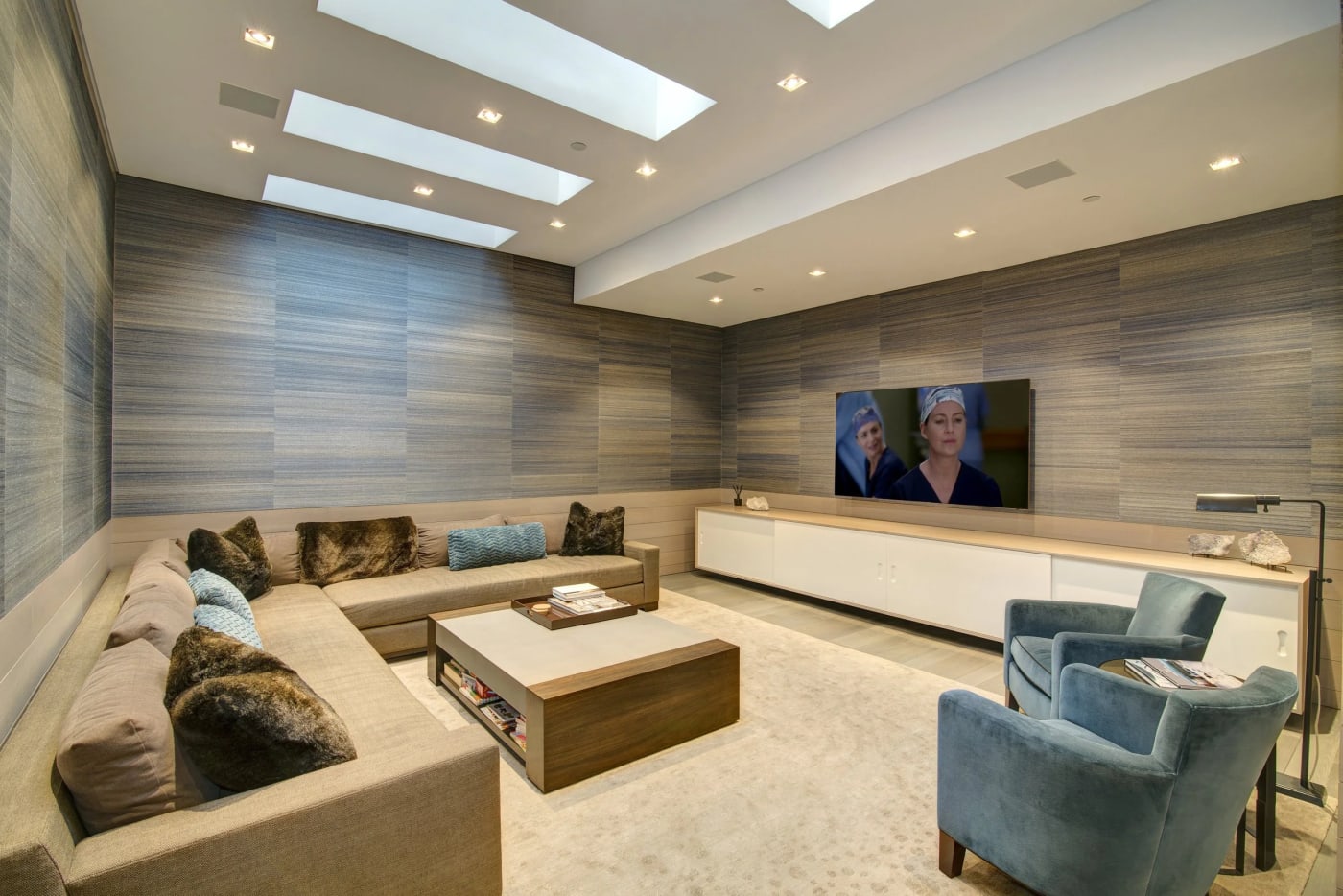
A modern home is already made up of individual systems.
Lutron can control the lighting and shades. Sonos or Bluesound can manage music. Your televisions have their own interfaces. Climate, security, surveillance, pool equipment, entry systems, and other technologies may each have dedicated controls of their own.
A broader control platform adds a layer above those systems.
The real value of that layer is not simply that it can turn more things on and off.
It is orchestration.
Instead of thinking separately about lights, shades, television, music, temperature, and security, the homeowner can begin interacting with the house as a whole.
A Movie scene might lower the shades, adjust the lighting, turn on the television, select the proper source, and set the audio.
A Goodnight command might turn off entertainment, adjust selected lights, lower shades, change the temperature, and prepare the home for the night.
For some homes, that coordination transforms the experience.
For others, it solves a problem that did not really exist.
Compatibility and available functions vary by device, software, programming, and service. Some features may require a subscription, an internet connection, or a separate app. Ask what continues working locally if the network or a control platform is unavailable.
That is why we think about smart home design in several different paths.
Path One: Lutron + Sonos or Bluesound, Without a Master Control Platform
This is probably the most underestimated option.
A home can be highly sophisticated without having a traditional whole home automation platform.
Lutron can handle lighting and motorized shades beautifully. Sonos or Bluesound can handle music. Modern TVs and streaming devices are increasingly easy to use. Other systems can remain in their own well-designed applications.
For the right homeowner, that is not a compromise.
It may actually be the better design.
There are fewer layers. Fewer dependencies. Less programming. The homeowner interacts directly with products and interfaces they understand.
Sonos or Bluesound?
Sonos is often our starting point because it is familiar, intuitive, and extremely easy for homeowners and guests to understand.
It offers speakers, amplifiers, soundbars, subwoofers, and streaming components that can cover everything from a bedroom to distributed whole home music.
Bluesound fills a very similar role.
Functionally, the concept is familiar: streaming amplifiers, wireless speakers, soundbars, subwoofers, music streamers, multi-room playback, and an app that ties the system together.
The difference is emphasis.
Bluesound is more focused on high-resolution audio and the custom AV environment. For clients considering high-resolution sources or a traditional audio system, Bluesound may be a useful option. The audible result depends on the source, speakers, room, and system design.
Both systems offer capable multiroom options. Supported services, product features, sound quality, and integration depend on the specific equipment and how it is configured. Read our comparison of Sonos, Bluesound, and NAD.
So the decision is not necessarily:
Sonos is good and Bluesound is better.
It is more useful to think about it this way:
Sonos prioritizes familiarity and simplicity.
Bluesound puts more emphasis on audio performance and custom integration.
Both can be excellent choices.
And neither requires a master automation system to create a very capable home.
This simpler approach tends to make sense when:
- Television use is relatively straightforward.
- Music revolves around Sonos or Bluesound.
- Lighting and shading are handled by Lutron.
- The homeowner does not mind using a few dedicated apps.
- There are limited reasons for several systems to respond together.
- The home does not have complicated centralized audio or video distribution.
- Simplicity is more important than putting everything into one interface.
We would not describe this as a home without control.
Lutron is a control system. Sonos and Bluesound each have their own control environments.
The difference is that there is no additional platform sitting above everything else.
In many homes, that is an extremely elegant solution.
Path Two: Josh + Lutron
Josh.ai creates another interesting path because it approaches the problem differently.
It began largely around natural voice control, but today Josh can serve as a broader home-control platform with touchscreens, handheld control, an app, automation, and conversational control of the home.
That changes where it fits in the discussion.
For the right residence, Josh can sit above systems such as Lutron lighting and shades, entertainment, climate, security, and other connected technologies while allowing the homeowner to interact with the house much more naturally.
Instead of finding a lighting page and adjusting several loads individually, the homeowner can simply ask for the room to be brighter.
Instead of navigating several screens to prepare the house for an evening, a conversational instruction can trigger a broader scene.
This is especially interesting for homeowners who like the idea of a sophisticated home but do not necessarily want to spend their time navigating an elaborate control interface.
Josh can make the interface feel less like operating a system and more like communicating an intention.
There is another reason we find this architecture interesting.
Many individual subsystems can retain their own native controls, depending on the design and equipment. HTE verifies those independent functions during planning.
Lutron can continue controlling lighting. Sonos or Bluesound can continue handling music. Other systems can still have their own native controls.
Josh becomes another way of interacting with them.
That aligns closely with one of our fundamental design principles:
A control layer should make the individual systems easier to use, not make them unnecessarily dependent on it.
For some homeowners, Josh may be the most natural bridge between independent best-in-class systems and a fully unified smart home.
Path Three: Savant + Lutron
At some point, independent systems can begin to feel fragmented.
Perhaps there are many televisions and audio zones. There are multiple family members, frequent guests, or several residences where the homeowner wants a consistent experience.
Lighting, shades, entertainment, climate, security, entry, and other systems may all need to work together.
Or the homeowner may simply place a very high value on having one refined visual interface.
This is where a platform such as Savant starts earning its place.
Lutron can continue doing what it does exceptionally well: lighting, keypads, shades, and lighting scenes.
Savant sits above those systems and provides a broader layer of control.
Instead of replacing the individual technologies, it helps coordinate them.
The result is fewer decisions for the homeowner.
Compatible entertainment and other connected systems can be presented through a more consistent experience. Some specialized settings or functions may still require a separate app or interface.
The important distinction is that Savant is not necessarily making the individual systems better.
It is making the relationship between them easier for the homeowner to manage.
Path Four: Control4 + Lutron
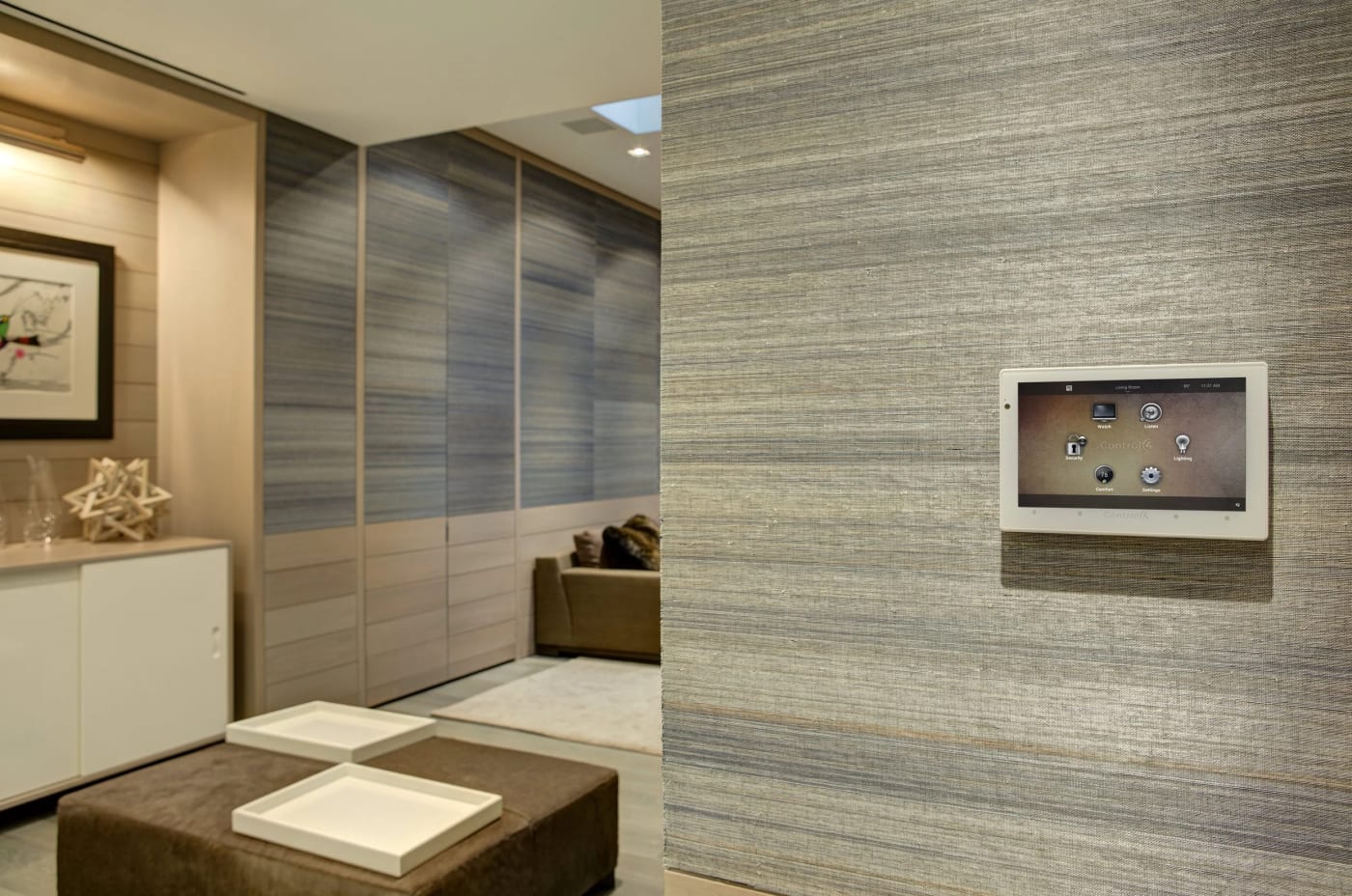
Control4 addresses the same fundamental need in homes with multiple rooms, sources, remotes, devices, and compatible third-party systems. See our Control4 and Savant comparison for a closer look at both platforms.
Again, Lutron does not need to disappear.
Lighting and shades can remain Lutron. Music can still involve Sonos or Bluesound. Security can remain a dedicated security system. The network remains its own professionally engineered infrastructure.
Control4 becomes the layer that coordinates them.
A television remote might control far more than the television. A keypad button might trigger a broader house scene. A touchscreen can give the homeowner access to several systems from one place.
As a property becomes more complicated, this starts to matter.
The value is not that Control4 can control more things.
The value is that a complicated home can begin to feel less complicated.
So Why Wouldn't We Put a Control Platform in Every Home?
Because every additional layer has a cost.
There is the obvious financial cost of processors, interfaces, engineering, programming, and installation.
But there is also a complexity cost.
The more systems that depend on each other, the more thoughtful the design needs to be. Programming has to be maintained. Changes to one part of the system can affect another. Networking becomes even more important. Documentation matters. Long-term service becomes part of the equation.
That complexity may be completely justified in a large integrated residence.
It may be unnecessary in a home where the homeowner really wants beautiful lighting, dependable Wi-Fi, excellent music, and a few televisions.
We would rather recommend the simpler system a client will love than the more elaborate system we happen to know how to build.
The Better Question Is Not "Which Platform Is Best?"
We prefer to start with the homeowner.
What do you have in your current house?
What do you like about it?
What frustrates you?
Do you already use Sonos every day?
Is music important enough that you would appreciate the additional audio focus of a system such as Bluesound?
Would you prefer one physical remote beside every television?
Do you like navigating an interface, or would you rather simply tell the house what you want?
Do guests and extended family use the house frequently?
Would you use a Goodnight button that controls several parts of the property?
How often do you entertain?
Do you want your lighting, shades, climate, music, and entertainment to respond together?
Would opening several applications bother you, or do you actually prefer the dedicated apps you already know?
Those answers tell us much more than a product brochure.
The technology should follow the lifestyle.
Not the other way around.
When a Master Control Platform Starts Earning Its Keep
There is no magic number of rooms or devices that suddenly means a home needs Josh, Savant, or Control4.
But there are signs.
A broader control platform becomes increasingly valuable when the homeowner wants several independent systems to behave like one.
That often happens when there are:
- Many televisions and audio zones.
- Centralized entertainment equipment.
- Multiple family members and frequent guests.
- Whole home scenes involving several systems.
- A desire for the same control experience throughout the property.
- Lighting, shades, climate, security, and entertainment that need to interact.
- Too many independent applications.
- A desire to interact with the home conversationally.
- A large residence where remembering which system controls what has itself become a problem.
At that point, integration stops being an interesting feature.
It becomes what makes the house easier to use.
There Is Another Option: Plan for More Than You Install Today

Not every technology decision has to be permanent.
A homeowner may begin with Lutron, Sonos or Bluesound, a strong network, proper wiring, and thoughtfully selected independent systems.
If the infrastructure has been planned correctly, a broader control platform can be added later.
This is one of the reasons early technology planning matters so much.
The expensive mistake is rarely choosing the wrong automation brand.
The expensive mistake is building a beautiful home without the wiring, network, power, equipment locations, pathways, and documentation needed to support what the homeowner wants later.
A thoughtful technology plan preserves options.
You may decide you do not need a whole home control platform today.
The house should not prevent you from changing your mind five years from now.
Why Lutron Appears in Almost Every Path
Lutron deserves special mention because homeowners sometimes assume that adding Josh, Savant, or Control4 means replacing the lighting control system.
That is generally not how we think about it.
Lutron can remain the foundation for lighting and shading.
A broader platform may communicate with it, recall scenes, or include lighting and shades within larger whole home experiences.
But Lutron continues doing the job it was designed to do.
We like that separation.
A sophisticated home does not need to become one enormous piece of software.
It can instead be a collection of excellent systems, each doing its job well, with coordination added only where that coordination improves the homeowner's experience.
The HTE Approach: Add Complexity Only When It Creates Simplicity
This is ultimately the principle behind how we think about residential technology.
Technology should earn its place in the home.
If Lutron, Sonos or Bluesound, and a professionally designed network provide everything a homeowner needs, we are comfortable recommending exactly that.
If natural interaction with the home is the priority, Josh may be the right additional layer.
If the property needs a highly unified control experience, Savant may make sense.
If a large number of systems, rooms, sources, and integrations need flexible coordination, Control4 may be the better fit.
And there will be plenty of projects where the lines between these approaches are not quite so neat.
That is the point.
There is no single correct smart home architecture.
There is only the architecture that best fits the homeowner, the property, and the way the home will actually be used.
Neither the simplest approach nor the most integrated approach is automatically more sophisticated.
The sophistication is in knowing which one to use.
Luxury is simplicity.
The goal is not to build the home that controls the most things.
It is to build the home that requires the least thought to enjoy.
Start With the Experience
If you are building, renovating, or reconsidering the technology in an existing residence, the first conversation should not be about choosing Josh, Savant, Control4, Sonos, Bluesound, or Lutron.
It should be about how you want the home to work.
Once that is understood, the right technology architecture becomes much easier to see. If your home already has equipment, an existing smart home system review can help identify what to retain, update, or connect.
Home Technology Experts can help you work through those decisions before equipment is selected. For a closer look at your options, explore our comparison of Control4, Savant, and Josh.ai.
Frequently Asked Questions
Do I need Control4, Savant, or Josh to have a smart home?
No. Lighting, shades, music, televisions, climate, security, and other systems can all operate independently. A whole home control platform becomes valuable when coordinating those systems creates a meaningfully simpler experience.
Is Bluesound better than Sonos?
We would not describe one as universally better. Sonos is extremely familiar and easy to use. Bluesound supports high-resolution audio and offers options for custom AV systems. Actual performance and integration depend on the equipment and the way the system is designed.
Does Bluesound do the same things as Sonos?
For most homeowners considering whole home music, they occupy a similar category. Both offer multi-room streaming, speakers, amplifiers, soundbars, and app-based control; available products and features vary by system. The differences become more noticeable when sound quality, audio system design, and custom integration are higher priorities.
Is Josh just voice control?
No. Josh can function as a broader smart home control platform, with app, touchscreen, handheld, automation, and conversational control. Voice remains one of its most distinctive interfaces, but it is no longer the entire proposition.
Can I use Lutron without another control platform?
Yes. Lutron can operate independently as a lighting and shading control platform. A broader automation platform can be added when the homeowner wants lighting and shades to participate in larger whole home scenes and interactions.
Can Sonos or Bluesound be part of a Control4, Savant, or Josh system?
Some combinations can work together, but support varies by product, software, available drivers, and desired features. HTE checks the specific music system and control platform before recommending an integration.
Which is better, Josh, Savant, or Control4?
None is universally better. They represent different approaches to the same fundamental challenge. The right choice depends on the residence, the systems being integrated, how the homeowner wants to interact with the property, and how much complexity needs to be coordinated.
Should I install a control system during construction?
Even if you do not install a full control platform immediately, technology planning during construction can preserve important options. Wiring, networking, equipment locations, power, and pathways are much easier to address before walls are finished.
How do I know which approach is right for my house?
Start with how you live rather than which platform you have heard of. The right technology design should identify which systems you actually need, which ones benefit from being connected, and where added control would genuinely make the home easier to use.