
From Smart Homes to Living Systems: Why Connected Homes Are Becoming Infrastructure
Connected home infrastructure is the wiring, network, power, equipment space, and control strategy that allow a home’s technology to work together. Planned early, it supports a home that is easier to enjoy, maintain, and adapt over time.
Lighting, shades, climate, surveillance, entertainment, and access all shape daily life. When their underlying needs are coordinated with the architecture, the experience can feel simpler and more consistent, whether the home is a primary residence or a seasonal retreat.
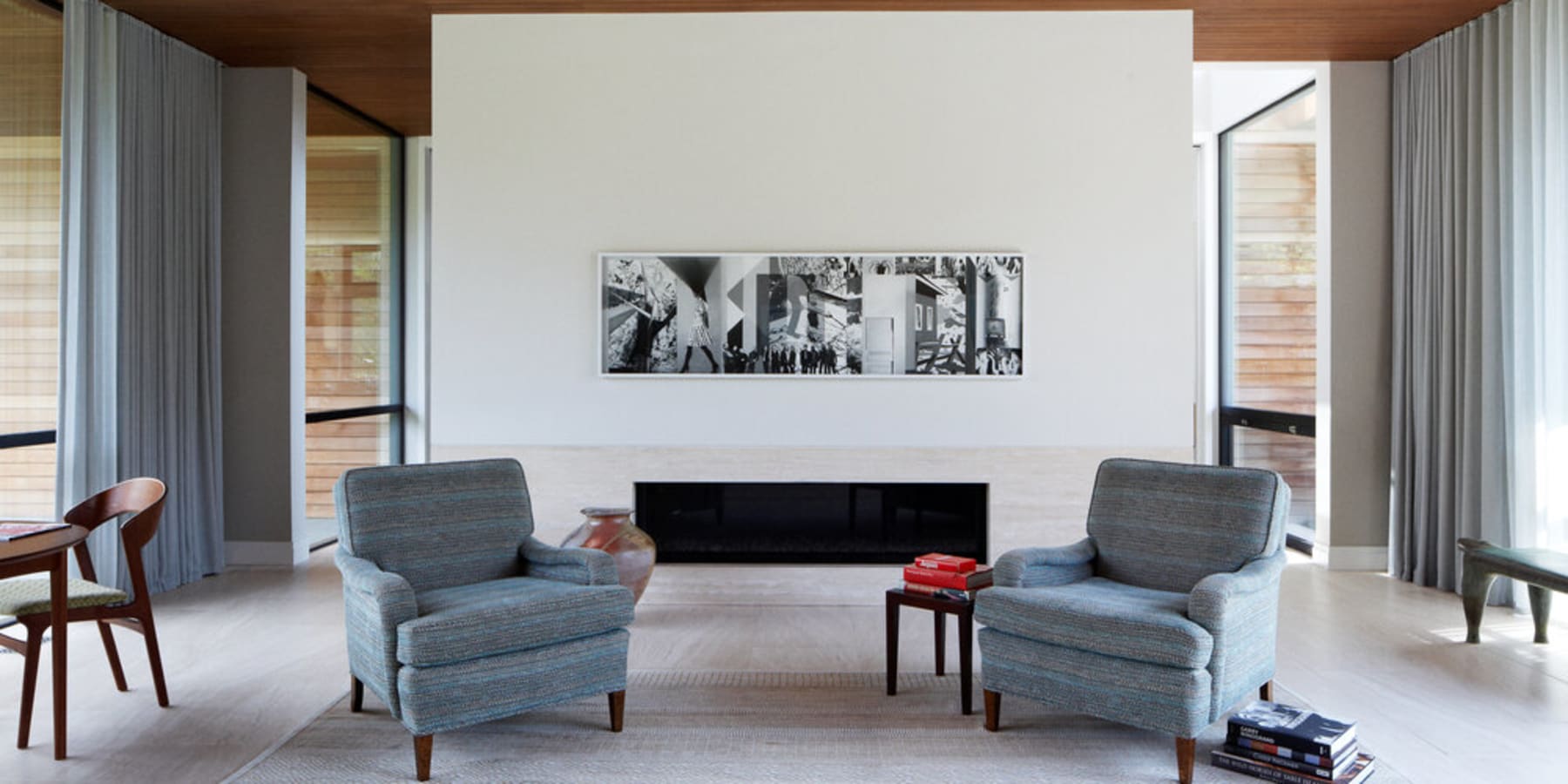
The shift from features to performance.
Earlier smart-home conversations tended to begin with products: voice control, an app, a television system, or an automated shade. Those tools can be valuable, but they do not by themselves make a home coherent. A collection of disconnected products often creates more interfaces, more handoffs, and more uncertainty when something needs service.
A well-planned intelligent living system starts with a different question: what should this home make easier? The answer may include a comfortable arrival, reliable Wi-Fi throughout the property, quieter evenings, privacy at the right time of day, or confidence that a second home can be checked and supported remotely.
What homeowners increasingly value is not novelty. It is performance that feels calm:
- Fewer separate apps and manual adjustments
- Clearer controls for family and guests
- Reliable systems that can be maintained over time
- Infrastructure that can adapt as rooms, routines, and technology change
Technology should support the home quietly.
The strongest integrated environments are often the least noticeable. Lighting can respond to a routine without making a wall of switches feel complicated. Motorized shades can manage daylight and privacy while preserving the design of the room. Climate, audio, and selected exterior systems can follow clear scenes instead of demanding a sequence of separate commands.
That outcome depends on planning relationships between systems, not simply selecting devices. Our article on what an AV integrator does explains the role: coordinating technology with architecture, interiors, electrical planning, millwork, lighting, shading, and the network that supports it all.
Technology is at its best when it reduces decisions in the background while leaving the home feeling unmistakably like the homeowner’s home.
The network, power, and service plan are part of the experience.
Behind every dependable connected home is infrastructure most people never see: structured wiring, thoughtful network architecture, hardwired connections where appropriate, equipment locations, ventilation, power protection, and accessible pathways for future needs. Some systems continue to work locally during an internet interruption; others depend on network connectivity for control, monitoring, or remote access. A sound design makes those dependencies clear before installation.
That is why a well-designed home network. The visible systems may be high quality, but their reliability still depends on the foundation behind them. Smart power planning adds another layer of resilience by protecting essential equipment and helping the technology environment recover more predictably after an interruption.
Just as important, the project should be documented and supportable. Homes evolve. Equipment updates, families change routines, and new guest houses, offices, or outdoor areas can create new demands. A design that anticipates service access and future expansion ages better than one built around a single moment of product selection.
Security and property awareness belong in the same plan.
For many properties, surveillance, access, alerts, and remote visibility are part of the broader living system. The objective is not to make a home feel watched or complicated. It is to create reliable awareness that fits the homeowner’s routine and the property’s architecture.
When the network, controls, lighting, and property access are considered together, they can provide a more useful experience than isolated systems. The plan should also address privacy, access permissions, network segmentation, and which functions depend on power or internet connectivity.
Why early coordination matters to architects and builders.
Connected systems affect ceilings, walls, millwork, electrical layouts, equipment spaces, exterior pathways, and the finished experience of the home. The earlier the technology scope is considered, the more options the team has to make the integration clean and serviceable.
Before equipment is selected, coordinate decisions such as:
- Wiring and pathways for reliable connectivity and future changes
- Equipment locations, ventilation, power, and service access
- Lighting-control keypads, shade pockets, speakers, displays, cameras, and sensors
- Exterior coverage for gates, pools, terraces, guest houses, and detached buildings
HTE brings those decisions forward while there is still room to coordinate them. Explore our guide to smart home planning for new construction and retrofits.
Homes that age well are designed for evolution.
No product can permanently future-proof a home. A practical plan makes change easier through accessible infrastructure, documented equipment, appropriate pathways, and a support relationship after installation. Learn more about planning an intelligent home.
The best connected homes will not necessarily be the ones with the most features. They will be the ones whose technology quietly supports the architecture, the people, and the changing life of the property.
Frequently asked questions
What does it mean to treat a connected home as infrastructure?
It means planning technology alongside the home’s electrical, mechanical, architectural, and construction decisions. Wiring, Wi-Fi, equipment locations, power, controls, service access, and future pathways are considered before devices are selected.
Does this require choosing every product before construction begins?
No. Early planning establishes the structure that gives the project flexibility. Specific fixtures, displays, control interfaces, and other components can be selected later within a coordinated plan.
Can an existing home become a connected living system?
Yes. A thoughtful retrofit begins with existing conditions and the homeowner’s priorities. Some improvements can be made with limited disruption; others are best coordinated with a renovation or other planned work.
Why is long-term support part of the design?
Technology changes after move-in. Documentation, organized equipment, remote diagnostics where appropriate, and a clear service plan help keep the home dependable and make future changes less disruptive.