Why Use Soundbars in a Luxury Home?
Luxury Home Audio · Audio & Video Systems
Are Soundbars Important in a Luxury Home Audio System?
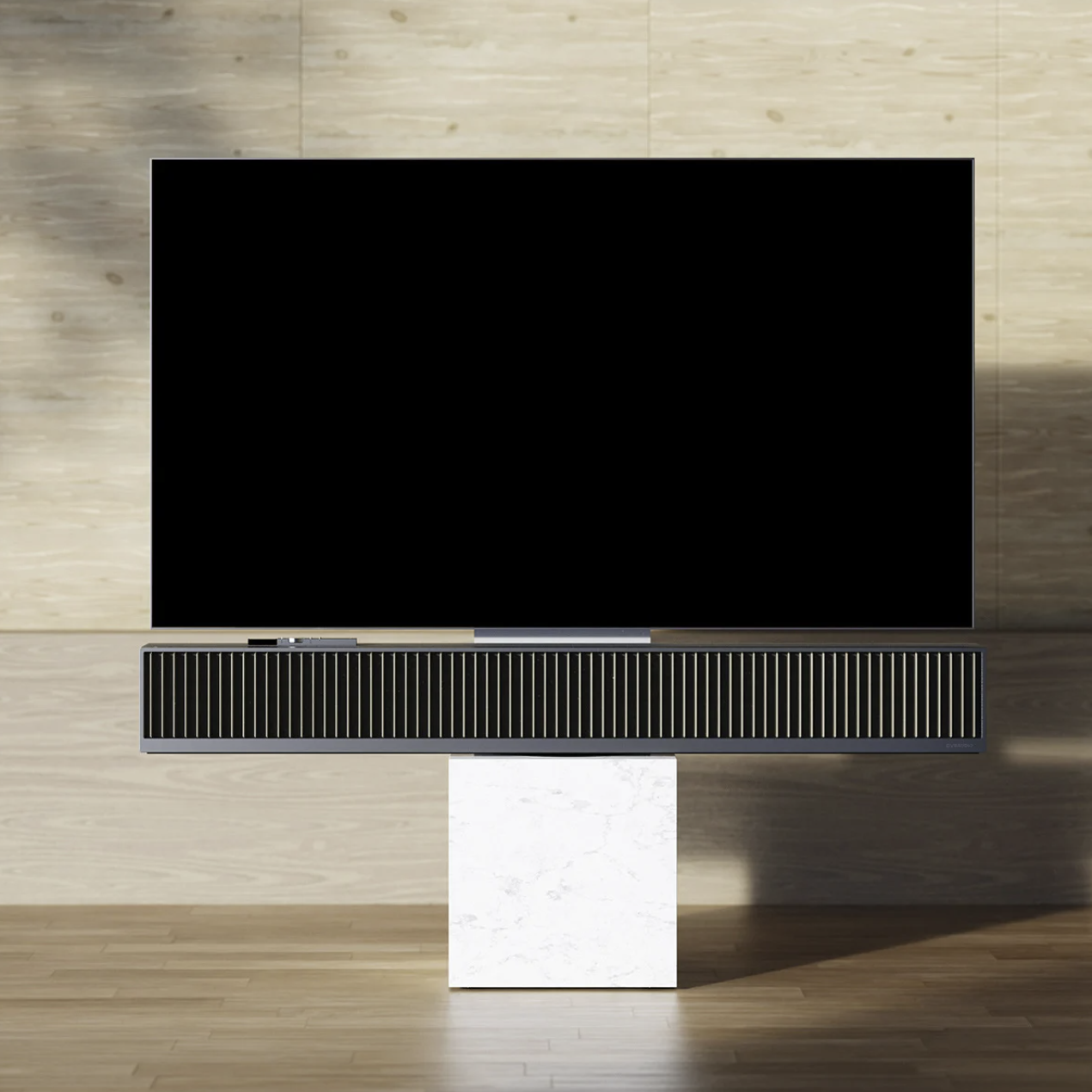
A soundbar is not essential to a luxury home audio system. In some rooms, it is the most elegant and practical answer. In others—especially dedicated theaters and performance-driven media rooms—separate speakers will create a more convincing experience.
The right choice begins with the room, its architecture, and how the homeowner will use it. A well-designed audio and video system should respond to those priorities, rather than begin with a predetermined product.

When Does a High-End Soundbar Make Sense?
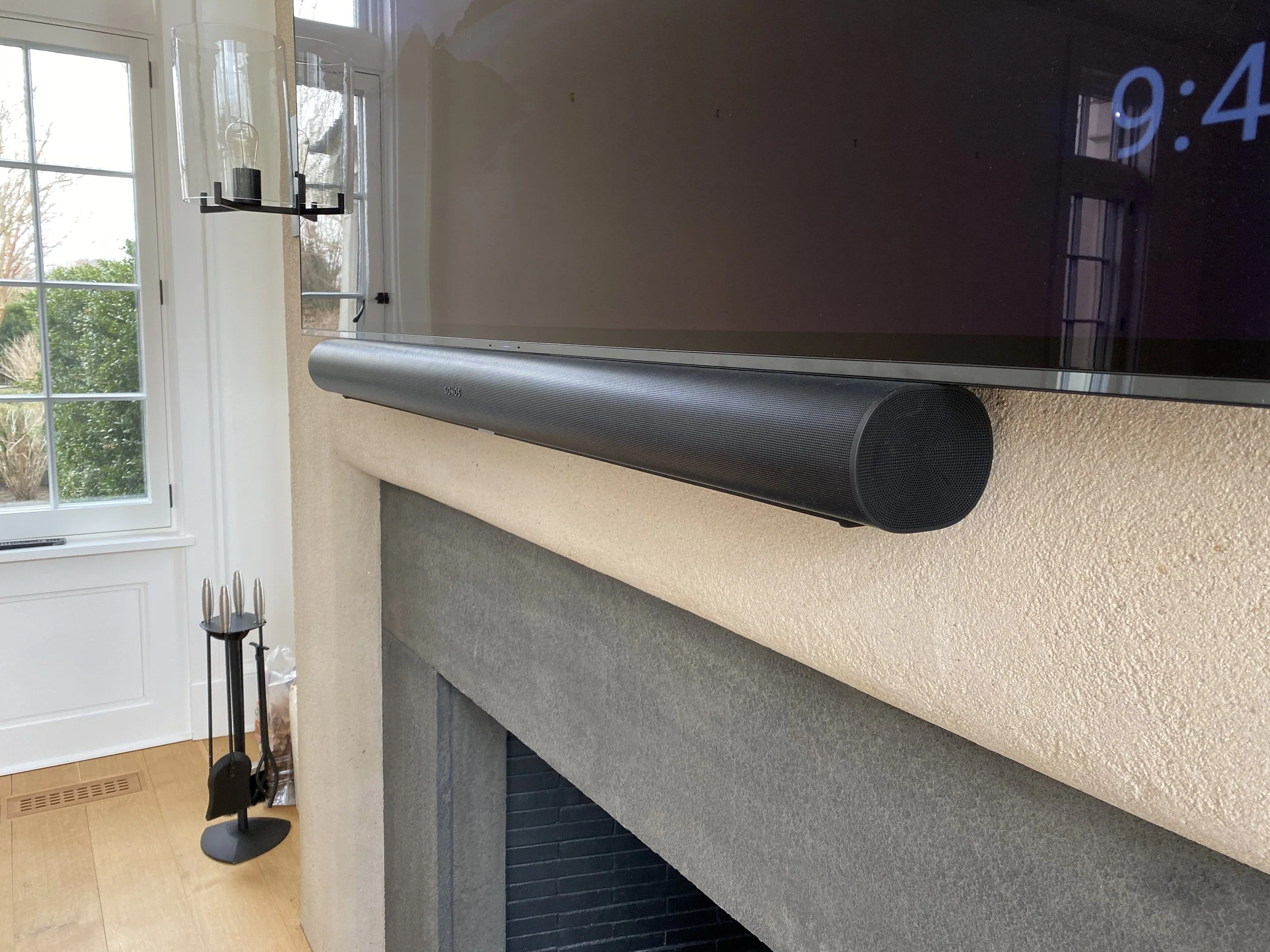
A premium soundbar is often a strong fit when simplicity and minimal visual impact matter more than theater-level performance. It can improve dialogue, music, and everyday television viewing without introducing several visible speakers into the room.
Soundbars are often appropriate for:
- Bedrooms and primary suites
- Casual family rooms
- Kitchen television areas
- Home gyms
- Open-concept living spaces
- Rooms with limited speaker-placement options
In these settings, a premium soundbar—sometimes paired with a discreet subwoofer—can deliver clean, enjoyable sound while keeping the room visually quiet. It can also be the thoughtful retrofit answer when construction is complete and new wiring would mean unnecessary disruption.
When Are Separate Speakers the Better Choice?
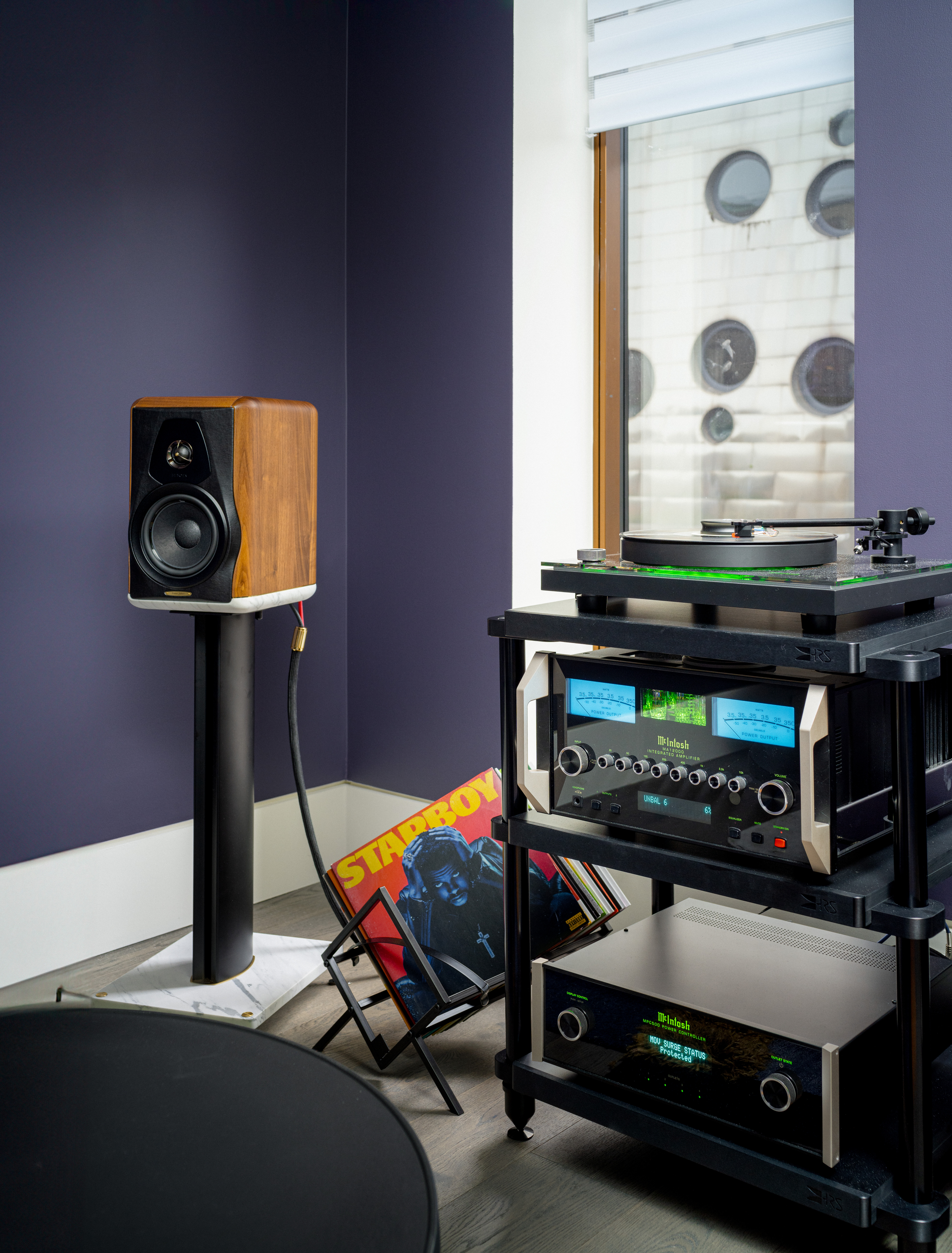
For a dedicated home theater or media room, HTE will generally recommend separate left, center, and right speakers—commonly called dedicated LCR speakers. Unlike a soundbar, an LCR system allows each front channel to be selected and positioned for the room.
That design flexibility typically provides:
- Clearer, more natural dialogue
- A wider, more immersive soundstage
- More precise placement of voices and effects
- Greater output and dynamic range
- Better integration with surround and overhead speakers
The difference becomes most noticeable in larger rooms, at higher listening levels, and with films or concerts that have detailed soundtracks. It also gives the system designer more control over speaker size, amplification, acoustics, and seating position as one coordinated plan. For a deeper look at performance-first theater design, see our guide to reference-level audio/video systems.
Can Better Sound Still Be Discreet?
Absolutely. High-performance audio does not need to compete with the architecture. Architectural speakers can sit flush with ceilings or walls, while invisible speakers can be concealed beneath the finished surface. In a dedicated theater, speakers may be placed behind an acoustically transparent screen so dialogue appears to come directly from the image.
Custom millwork can provide another option, although ventilation, vibration, and sound dispersion need to be considered carefully. Simply hiding a speaker inside cabinetry does not guarantee good performance. The goal is audio you hear, not equipment you notice.
That outcome relies on coordination among the technology integrator, architect, interior designer, builder, and other trades—ideally before walls and ceilings are closed. Our overview of speaker brands HTE partners with explains why different form factors suit different rooms.
Luxury is not defined by the number of speakers in a room.
A carefully chosen soundbar may be exactly right for a space where the homeowner wants better television sound, simple operation, and almost no visible technology. A more elaborate system can add cost and complexity without improving how that particular room is used.
What Should Be Planned Before Choosing a Soundbar?
Before equipment is selected, define the priorities for the space.
- How often the room will be used for movies, music, or casual television
- Whether convenience, sound quality, or both are the priority
- The size and layout of the room
- Television or projection-screen placement
- Available wiring and construction access
- Acceptable speaker visibility
- Integration with the home’s control system
- Long-term service and support
These decisions are easier—and the result is usually better—when audio is discussed early in a renovation or new-home project. Early planning protects the interior design, reduces compromises, and creates more options for discreet placement. It also lets audio work naturally with motorized shades, lighting scenes, and a room’s overall media experience.
Schedule an Audio Consultation
The Bottom Line
A soundbar can be part of a luxury home audio system, but it is not a requirement. It is most valuable when simplicity, appearance, and convenience are the leading priorities. For a room intended to deliver a more immersive experience, dedicated LCR speakers, architectural speakers, invisible speakers, or a properly designed surround system will usually offer greater performance and flexibility.
HTE designs audio around the home and the people living in it—not around a fixed equipment package. From a discreet bedroom soundbar to a fully integrated theater, every recommendation is planned to respect the architecture and remain reliable and serviceable over time.
Frequently Asked Questions About Luxury Home Audio Systems
Is a soundbar necessary in a luxury home audio system?
No. A soundbar is an optional solution that works best when simplicity, limited visual impact, and improved television sound are the main priorities. Dedicated speakers are generally better suited to high-performance media rooms and home theaters.
Is a high-end soundbar better than built-in speakers?
It depends on the room and the intended experience. A high-end soundbar can be excellent for casual viewing, while properly designed architectural speakers generally provide a wider soundstage, greater output, and more flexibility.
What are dedicated LCR speakers?
LCR refers to separate left, center, and right speakers placed at the front of a room. They create clearer dialogue, more accurate sound placement, and a more immersive listening experience than most soundbars.
Can speakers be hidden in a luxury home?
Yes. Architectural speakers can sit flush with walls or ceilings, invisible speakers can be concealed beneath a finished surface, and theater speakers can be placed behind an acoustically transparent screen.
Should audio be planned during a renovation or new-home build?
Yes. Planning before walls and ceilings are closed creates more options for wiring and discreet placement, while allowing the technology team to coordinate with the architect, designer, builder, and other trades.
Can one home use both soundbars and architectural speakers?
Yes. Different rooms often call for different solutions: a soundbar in a bedroom, architectural speakers in a family room, and a dedicated surround system in a theater.