
Westhampton Beach | Coastal Home Technology
A summer house should feel welcoming the moment you arrive and reassuring after the last guest leaves. For homes in Westhampton Beach, integrated security connects the details that matter, from the driveway and front entrance to ocean-facing decks, service doors and the systems you check when you are away.
Good security design does not begin with a wall of camera feeds. It begins with understanding how a property is used, which areas need attention, and what a homeowner should be able to see or control without navigating several disconnected apps.
What is integrated home security?
Integrated home security brings compatible surveillance cameras, intrusion detection, entry communication, locks and selected home controls into a coordinated experience. A dedicated alarm panel still performs its alarm functions. The video recorder manages footage. A home-control platform may make supported features easier to access, while lighting and other systems can be programmed to respond in appropriate, verified ways.
For a Westhampton Beach residence, the right goal is not to make every device part of one brand. It is to make the system intuitive, dependable and well suited to the house. See how Home Technology Experts approaches residential surveillance camera systems as one part of a more considered plan.
Why Westhampton Beach properties need a coastal approach
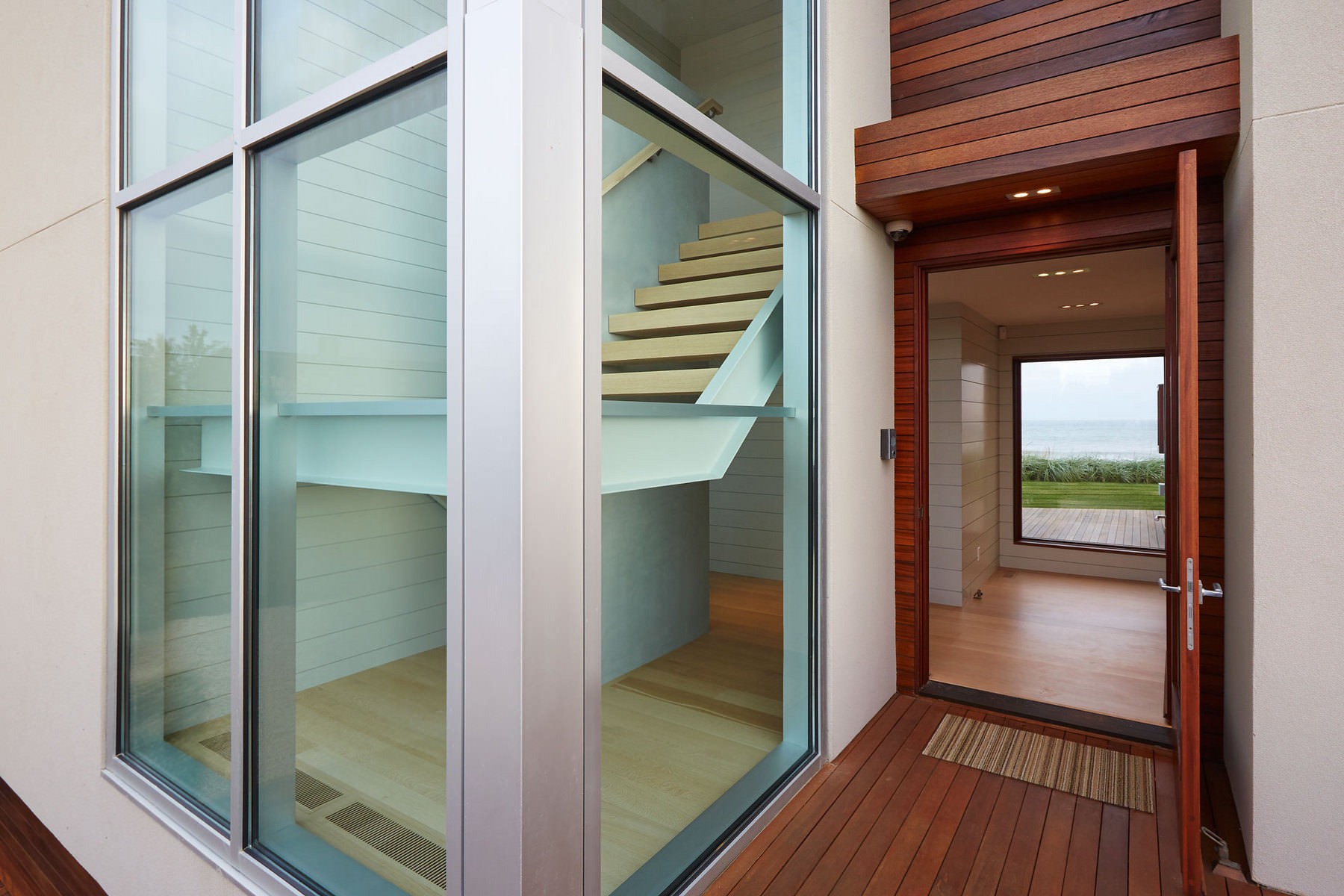
Westhampton Beach includes village residences, quiet residential streets, and homes oriented toward the bays and Atlantic shoreline. Along the barrier beach, an arrival sequence may involve raised living levels, steps, decks, dune access and outdoor spaces exposed to weather. These details affect where technology can be placed and how it must be maintained.
- Salt air and wind: select outdoor-rated equipment, corrosion-conscious hardware and appropriate mounting and sealing practices for the exposure.
- Waterfront light: consider backlighting, reflected sun and nighttime glare when positioning and aiming cameras.
- Elevated or layered access: include stair landings, side doors, ground-level storage and entry routes without compromising aesthetics.
- Seasonal occupancy: support useful remote viewing, alert management and a clear process for responding when nobody is home.
- Storm readiness: evaluate power, network, equipment placement and recovery procedures for local flood and outage risks.
A camera specified for a protected inland porch may not be the right choice for an exposed ocean-facing corner. Placement, durability and service access are part of the design, not afterthoughts.
Arrival, entry and guest access without friction
A well-integrated entry system helps homeowners know who has arrived and decide what happens next. A video door station or intercom may connect to compatible access hardware so visitors, deliveries, household staff and invited guests can be managed through a deliberate process.
For a beach residence, that could mean a clearly placed entry station at the principal arrival point, supported lock control for approved users, and a separate plan for service access. The exact functions depend on compatible equipment and a considered permission structure.
Smarter surveillance with AI event recognition
Traditional motion detection can report almost anything that moves. On a coastal property, that may include windblown dune grass, shifting tree branches and changes in light. AI-enabled cameras or recorders can, when supported, distinguish people from vehicles and provide more useful event search or alert filtering.
For example, a homeowner may want to know when a person approaches a rear deck after hours, but not every time ornamental grasses move beside the walkway. At a larger property, identifying a vehicle entering the drive can be more useful than a generic motion alert.
What AI does and does not do: Classification occurs in the compatible camera or recording system. Which events appear in a home-control app, how notifications work and whether an action can be triggered depend on the specific integration. Sun glare, rain, fog, low light and camera placement can affect accuracy. AI detection helps prioritize information; it does not replace a monitored alarm service or human judgment.
Monitoring a seasonal home when you are away
Security needs change when a residence is occupied intermittently. Homeowners may want a simple way to check the main entrance, review relevant camera events and understand whether a supported alarm system is armed. The most effective setup also defines who receives notifications, who can respond locally and what should happen when internet service is interrupted.
For homes occupied mainly during summer weekends, winterization and shoulder-season checks should include camera lenses and housings, access hardware, remote connectivity, backup power and the recording system itself. Read more about how HTE approaches smart home security planning.
Lighting, cameras and alarms should work together thoughtfully
When systems are compatible, exterior lighting can support camera visibility and a more comfortable arrival. Well-placed lighting can illuminate a route to the house without flooding the beach-facing landscape with unnecessary brightness. An intrusion event might trigger a carefully chosen response, but routines should be tested to avoid confusing alerts or unintended actions.
The objective is a quiet, coordinated experience. Camera views should be useful, nighttime lighting should respect the architecture and neighboring properties, and the alarm system should remain independently reliable.
Designing for service, privacy and changing technology
Integration should be designed for the years after installation. That means documenting system relationships, keeping access permissions current, protecting connected devices with sound network practices and choosing equipment that can be serviced without disturbing finished interiors or landscaping.
In established Westhampton Beach homes, an assessment may reveal that some cameras, locks or alarm components can be retained. Other devices may need replacement because their capabilities or integration pathways are limited. The assessment should determine the scope before a product is proposed.
Homeowners considering broader improvements can also explore smart home technology in Westhampton Beach to see how the security conversation fits into a wider connected-home plan.
Frequently asked questions
Can different security brands be integrated in one Westhampton Beach home?
Often, yes, if the cameras, recorder, alarm panel, locks and home-control system have supported integration paths. Not every feature is shared across brands, so compatibility should be checked before equipment is selected.
Can AI security cameras distinguish people from vehicles?
Some compatible AI-enabled cameras and recorders classify people and vehicles. Available event types, accuracy and notification options vary by equipment and installation conditions.
What matters most for security cameras near the ocean?
Corrosion resistance, weather rating, appropriate mounting, glare control, reliable connectivity, maintenance access and the property's actual exposure should all guide selection.
Can I check a seasonal home remotely?
Remote access is possible with supported systems and functioning power, internet, devices and account permissions. A local response plan remains important for situations that cannot be solved through an app.
Does integrated security replace professional alarm monitoring?
No. A home-control interface may provide convenient status and commands, but professional monitoring is a separate service that must be arranged and verified for the installed alarm system.
A more considered approach to coastal home security
Home Technology Experts can help assess the surveillance, entry, alarm and control needs of a Westhampton Beach property, with attention to the coastal environment and the way the home is occupied.
Discuss Your Home's Security Integration