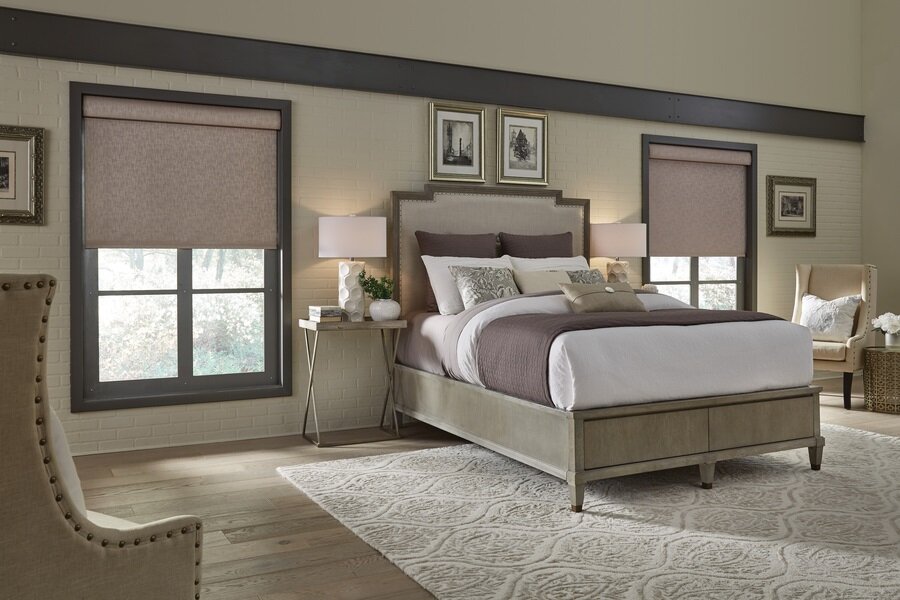
Motorized Shade Selection Checklist: What to Decide Before You Buy
The right motorized shades should feel effortless, complement your interiors, and manage daylight and privacy exactly as you need. Use this checklist to organize the important decisions before choosing fabrics, motors, and controls.
Motorized shades can become one of the most appreciated features of a thoughtfully designed home. They allow daylight to fill a room when it is welcome, soften glare when it becomes uncomfortable, and provide privacy without constant manual adjustment.
But selecting the right system involves more than finding a fabric you like or choosing a recognizable brand.
Window dimensions, mounting conditions, power availability, privacy requirements, fabric characteristics, and control preferences all affect the final result.
This planning checklist is designed to help homeowners, architects, and interior designers prepare for a professional window treatment consultation.
Before You Begin
Walk through the home and consider each window as part of its room rather than treating every opening the same.
- Identify the rooms where automated shading is needed.
- Think about how daylight changes throughout the day.
- Consider privacy after sunset, not just during daylight.
- Note architectural details that may affect installation.
- Record the functions that would make the home easier to enjoy.
Define the Purpose of Each Window Treatment
The first decision is not which shade to purchase. It is what the treatment needs to accomplish.
A bedroom may require substantial room darkening, while a living room with expansive windows may prioritize preserving views and reducing glare.
A home office needs comfortable working conditions throughout the day. A media room may require a more controlled lighting environment.
Different windows within the same home may therefore need different fabrics or even different types of treatments.
Room Function Checklist
For a broader look at the everyday advantages of automated shading, explore HTE's article on comfort, privacy, and effortless living with motorized window treatments.
Evaluate Fabric, Openness, and Light Control
Fabric selection affects much more than color and texture.
It influences how much daylight enters the space, how well the treatment manages glare, and whether the homeowner can see through it.
Solar shade fabrics are often described by their openness factor, which refers to the proportion of open area in the weave.
A lower openness factor generally provides greater screening, while a higher openness factor usually allows more light and outward visibility. Actual performance also depends on fabric color, weave, and the lighting conditions on either side of the window.
Importantly, solar shades should not automatically be considered nighttime privacy treatments.
When interiors are illuminated after dark, visibility through a solar fabric can differ substantially from daytime conditions.
Consider Layered Treatments
In some rooms, a single fabric cannot satisfy every requirement.
A dual-shade system may combine a solar fabric for daytime glare management with a more opaque treatment for privacy or room darkening.
Motorized draperies can also provide a softer architectural expression where fabric panels are preferred over roller shades.
Fabric Selection Checklist
Important: Blackout fabric does not necessarily mean a completely dark room. Light can enter around the edges of a shade. True room-darkening performance depends on the entire assembly, including side channels, top details, mounting, and surrounding conditions.
Document Window Dimensions and Architectural Conditions
Window dimensions influence motor selection, fabric compatibility, mounting hardware, and installation details.
Large or unusually shaped windows may require specialized solutions.
Recessed shade pockets, concealed fascia, custom brackets, and integrated architectural detailing should be considered before finishes are completed.
For existing homes, it is also important to examine available mounting surfaces and whether there is sufficient clearance for the chosen treatment.
Window and Installation Checklist
Preliminary measurements help with planning, but final ordering should be based on measurements and mounting requirements confirmed by the installation professional.
Choose a Suitable Power Strategy
Power is one of the most important technical decisions to address early.
Motorized window treatments may use hardwired power, replaceable batteries, rechargeable batteries, or other manufacturer-supported configurations.
Hardwired systems can be especially attractive in new construction and major renovations, where wiring can be planned before walls and ceilings are finished.
Battery-powered systems may offer a practical option for existing residences where opening walls is undesirable.
Neither approach is universally best. The decision depends on window size, number of treatments, service access, installation conditions, and long-term maintenance expectations.
Power Planning Checklist
For more detailed guidance, see Wired vs. Battery-Powered Motorized Shades.
Plan How the Shades Will Be Controlled
Motorization should make the home simpler to operate.
Individual shades may be controlled through compatible keypads, remotes, apps, or integration with a broader smart home system.
Homeowners may also want grouped controls for multiple windows or rooms.
When supported by the selected system, automated schedules can respond to daily routines, sunrise and sunset, or other programmed conditions.
Consider how the system should operate for family members and guests, not just the person who uses the smartphone app.
Control Checklist
For homeowners using integrated smart home technology, shades may be coordinated with lighting control systems to make room transitions more intuitive.
Consider Quiet Operation and Visual Integration
A sophisticated window treatment should complement the room rather than distract from it.
The appearance of the hardware, the shade's movement, and the sound of its motor all contribute to the experience.
In bedrooms and quiet living spaces, operating noise may be particularly important.
For formal interiors, decorative draperies may offer a better visual result than a minimal roller shade.
A residence with contemporary architecture might instead benefit from discreet shade pockets and carefully coordinated finishes.
Design Integration Checklist
Evaluate Maintenance and Long-Term Support
Window treatments are used frequently, often every day.
Serviceability therefore deserves attention alongside appearance and convenience.
Homeowners should understand how the system will be maintained, what happens if adjustments are needed, and how replacement parts or fabric changes may be handled.
In larger residences, documenting treatment locations, motor assignments, and control settings can make future maintenance easier.
Ownership Checklist
Review the Complete Project Scope and Budget
The total investment in motorized window treatments involves more than the cost of fabric.
Project pricing may be influenced by motor type, treatment dimensions, fabric selection, hardware, wiring, controls, integration, installation, and any necessary architectural preparation.
A practical planning discussion should distinguish the elements that are essential from those that are optional.
Project Planning Checklist
Room-by-Room Motorized Shade Planning Guide
Use this overview to establish priorities before a detailed design consultation.
| Room | Primary Priority | Considerations |
|---|---|---|
| Primary Bedroom | Privacy and room darkening | Blackout strategy, edge light leakage, quiet operation, convenient bedside controls |
| Living Room | Daylight and views | Solar fabric, openness, architectural integration, evening privacy |
| Kitchen | Glare and practicality | Easy-clean materials, solar exposure, heat and moisture considerations |
| Home Office | Screen comfort | Glare reduction, outward visibility, accessible controls |
| Media Room | Controlled daylight | Room-darkening design, light leakage, entertainment-scene integration |
| Guest Bedroom | Simple operation | Privacy, intuitive keypad or remote, comfortable sleeping conditions |
| Great Room | Multiple-window coordination | Large openings, grouped movement, solar exposure, visible hardware |
Final Motorized Shade Consultation Checklist
Before meeting with a window treatment professional, gather the information below. It will help clarify the design goals and identify potential installation constraints.
Bring These Details to Your Consultation
Helpful tip: This checklist is a planning tool, not a substitute for professional measurements, fabric evaluation, or technical specification. A qualified integrator should confirm compatibility and installation requirements before products are ordered.
Why Early Planning Matters
Selecting automated window treatments is easier when the decisions are made in the right order.
Begin with the room's needs. Then determine the appropriate fabric, treatment style, physical details, power strategy, and controls.
For new construction and significant renovations, early coordination with architects, designers, electrical contractors, and technology professionals helps preserve more installation options.
Existing homes can also benefit from thoughtful planning, particularly when power access or architectural detailing limits what can be installed.
For additional product and design considerations, explore HTE's guide to choosing motorized window treatments.
How HTE Helps Simplify the Selection Process
Home Technology Experts approaches motorized window treatments as part of the overall residential design.
We help homeowners and project teams evaluate window conditions, daylight and privacy requirements, integration preferences, and the infrastructure needed to support a dependable system.
Whether the project involves a new Hamptons residence, a Manhattan apartment renovation, or a targeted upgrade to an established Long Island home, the objective is the same.
Window treatments should complement the architecture, support daily routines, and remain easy to operate and maintain.
Plan Your Window Treatments With Confidence
The right motorized shades begin with understanding your windows, your rooms, and how you want to live.
Home Technology Experts can help translate your priorities into a thoughtful shading and control plan.
Discuss Your Window Treatment ProjectFrequently Asked Questions
What should I decide before choosing motorized shades?
Identify the purpose of each treatment, desired privacy and light control, window dimensions, fabric preferences, power options, control requirements, and installation constraints. These decisions help determine which systems are appropriate.
What openness factor should I choose for motorized shades?
The appropriate openness factor depends on glare, views, solar exposure, and privacy needs. Lower openness typically means tighter screening, but color and weave also influence the result. Evaluate physical samples under realistic conditions.
Are wired or battery-powered motorized shades better?
Neither is universally better. Wired solutions are often attractive in new construction, while battery-powered products can simplify certain retrofits. Treatment dimensions, access, maintenance, and system compatibility should guide the choice.
Can motorized shades provide complete blackout?
Blackout fabrics block light through the fabric, but light may still enter around the treatment. For stronger room darkening, the complete installation may require side channels, appropriate mounting details, and additional light-control measures.
Can different rooms use different types of automated window treatments?
Yes. A home may combine solar roller shades, blackout treatments, cellular shades, and motorized draperies, provided the selected products and controls support the desired operation.
Should motorized shades be planned before construction?
Ideally, yes. Early planning allows the team to coordinate concealed wiring, shade pockets, power supplies, mounting conditions, and controls before finishes are installed.