
AV PROPOSALS | SMART HOME PLANNING | HOMEOWNER GUIDE
How to Read an AV Proposal: What Are You Actually Paying For?
An AV proposal should explain the finished experience, the work behind it, and the responsibilities that continue after installation. Two estimates can look similar on the surface yet describe very different results. Here is how to compare them with confidence.
Consider two hypothetical proposals for a Manhattan renovation or Hamptons residence. Both include whole-home audio, televisions, Wi-Fi, and centralized control. One totals $80,000 and the other $105,000. These figures are illustrative, not HTE pricing. The difference does not establish which proposal is better: the scopes, finishing details, responsibilities, and support may not be equivalent.

What is an AV proposal? An audiovisual (AV) proposal is a written description of the equipment, design, installation, programming, testing, exclusions, and service terms intended for a home. A useful proposal makes clear what the finished system will do, who will provide each part, and when costs may change.
Start with the finished experience, not the total
To compare AV proposals fairly, both need to describe the same intended outcome. One may include a neatly recessed display with concealed wiring, properly designed whole-home networking, and straightforward control. Another may assume a standard wall bracket, the existing router, and a separate remote for each room.
Review the scope room by room and ask:
- Which spaces receive audio, video, Wi-Fi, lighting control, shades, or surveillance?
- What will a family member actually press to start music or watch television?
- Are outdoor entertaining areas and guest spaces included?
- Where will equipment live, and how accessible will it remain for service?
- What finished details, such as visible speakers, keypads, mounts, and wall plates, have been agreed upon?
The difference between installing individual products and coordinating the whole-home experience is worth understanding. Our guide to AV installers versus AV integrators explains when each approach is appropriate.
Understand what the equipment price does not explain
A model number makes comparison easy, but the same television can produce different results depending on the mount, backing, sightlines, cable routing, ventilation, and millwork. Likewise, a premium speaker placed poorly is not necessarily a better choice than a more modest speaker placed correctly.
Consider a television mount quoted at $200 versus a specialized mounting solution quoted at $1,500. Both figures are illustrative. The first might be a standard fixed bracket. The second might involve recessed hardware, articulation, close-to-wall positioning, custom coordination, or improved access for servicing. The relevant question is not which bracket costs less. It is whether both deliver the finish you expect.
When comparing equipment, ask whether the selected products represent what the dealer genuinely intends to install or entry-level choices likely to be upgraded later. For a wider view of how these choices fit together, see what a residential AV integrator does and HTE's home network design services.
What does a miscellaneous allowance actually cover?
A miscellaneous allowance is not automatically a warning sign. What matters is how it is defined and managed.
Known materials should be part of the original design
Mounting hardware, connectors, patch panels, rack accessories, power distribution, cable termination, and other predictable components should be considered during engineering. A loosely defined allowance should not take the place of estimating work that can reasonably be planned in advance.
A true contingency covers reasonable uncertainty
Even a carefully detailed residential project can encounter unexpected cable routing, field conditions, a revised cabinet detail, or a specialty adapter. A controlled allowance can keep small changes moving without opening a formal change order for every unexpected minor part.
Ask for the rules of the allowance: What is covered? How was the amount determined? How will costs be recorded? What happens to unused funds, and when does an overage require approval?
An AV integrator should account for predictable materials during project planning. Any allowance should be defined in the written proposal, including its reconciliation and approval process. Confirm the applicable terms with the integrator before signing.
Read exclusions as closely as inclusions
A proposal may appear less expensive because work has been assigned to someone else. That is not inherently a problem, as long as the homeowner understands the division of responsibility.
Confirm who is responsible for:
- Electrical work, outlets, dedicated circuits, and power protection
- Blocking, framing, drywall repair, painting, and wall finishes
- Cabinetry, millwork modifications, and ventilation
- Internet subscriptions, provider equipment, and third-party licenses
- Owner-supplied equipment and compatibility concerns
- After-hours visits, commissioning, client training, and later programming revisions
When a project involves construction, the pre-construction technology planning checklist provides useful context for decisions that should be resolved before walls close.
Programming, commissioning, and networking need their own questions
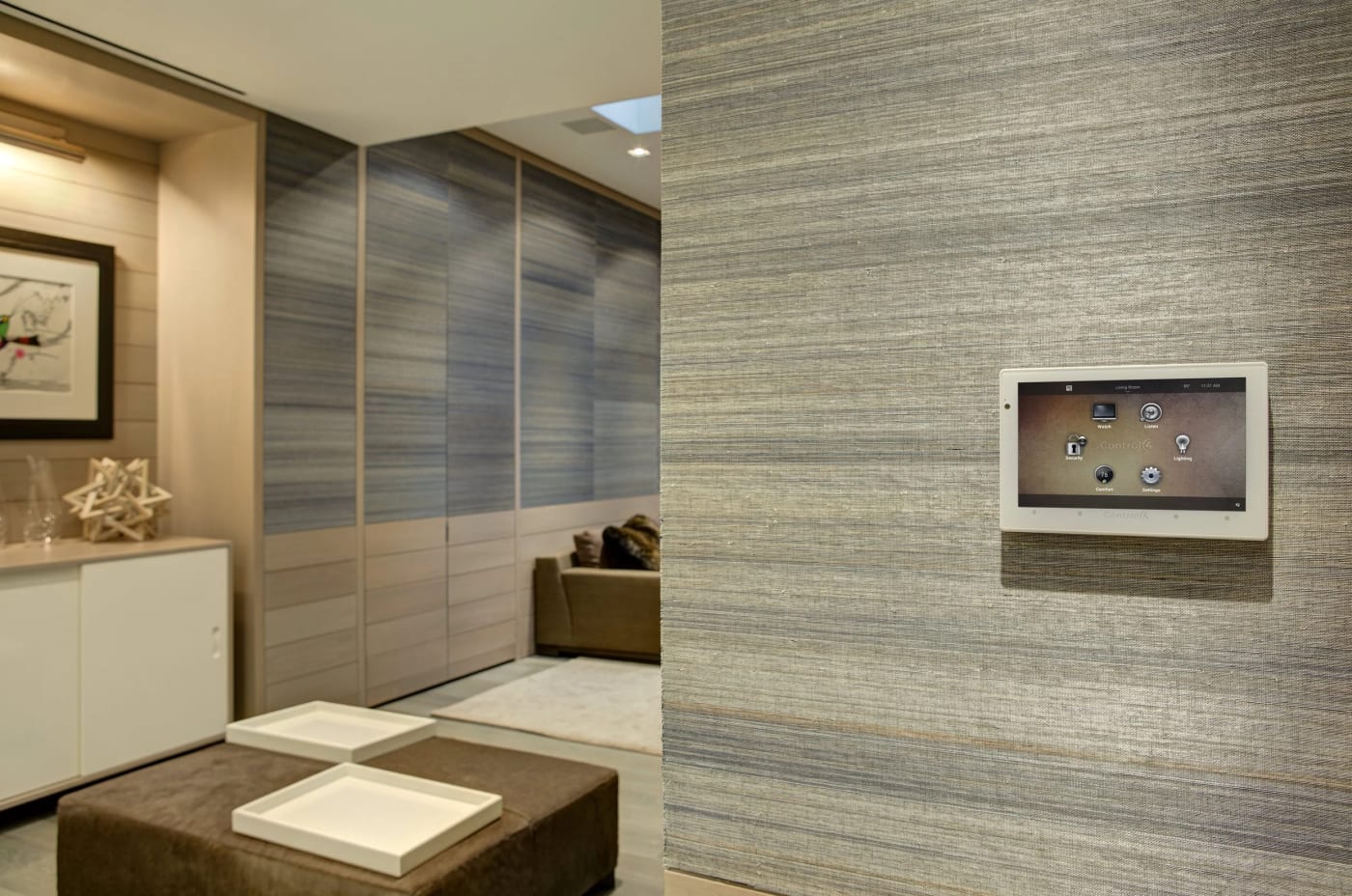
Equipment installation and system programming are different work. A proposal stating that programming is included should make clear whether it covers source selection, custom scenes, room groups, automation, homeowner permissions, final adjustments, and revisions after the family begins using the system.
Commissioning also deserves definition. Will the team test network coverage, verify connected devices, calibrate audio and video, document wiring, label the rack, demonstrate the system, and resolve punch-list items?
Connectivity is foundational. Streaming, surveillance, remote support, and integrated controls can depend on stable wired and wireless infrastructure. Ask how the proposed network and Wi-Fi design will support the full property rather than relying on a simple count of access points.
Separate fixed prices, estimates, and allowances
These terms carry different implications. A fixed price generally applies to a defined scope. An estimate anticipates cost that may change. An allowance reserves money for an item or condition not yet fully determined. None of those structures is automatically wrong. What matters is knowing which amounts can change and under what circumstances.
Changes may be reasonable if a homeowner adds a room, revises a finish, or encounters unforeseen construction conditions. Repeated upgrades to products that were always likely to be needed raise a different question: did the initial proposal describe the expected final installation?
The difference between planned additions and uncontrolled growth is explored in why smart home projects expand beyond the original scope.
How to compare two AV proposals side by side
| Do not compare only | Compare this instead |
|---|---|
| Total price | Same rooms, functions, finish level, exclusions, and agreed result |
| Television price | Display, mount, sightlines, backing, wiring, concealment, and controls |
| Speaker model | Placement, amplification, coverage, calibration, and installation |
| Wi-Fi device count | Coverage plan, wired backbone, configuration, outdoor spaces, and support |
| Programming included | Defined scenes, interfaces, testing, training, and revision process |
| Miscellaneous line | Defined purpose, documentation, reconciliation, and approval rules |
| Warranty | Product coverage, labor terms, service response, and documentation |
Can you judge an AV proposal by its labor percentage?
Only to a limited extent. Labor depends on installation complexity, programming, finishing requirements, existing infrastructure, and the price mix of materials. A labor-to-material percentage may help prompt a conversation, but it cannot establish fairness on its own.
For example, an unusually expensive pair of loudspeakers can increase the equipment total without requiring a proportionate increase in installation hours. A retrofit with difficult access can produce the opposite result.
Rather than treating a single percentage as an industry rule, read our separate article about why professional labor costs matter in an AV proposal. Its focus is the skilled work behind a reliable system. Here, the more immediate question is whether the entire scope has been represented honestly and completely.
Twelve questions to ask before signing an AV proposal
- Are the rooms, functions, and intended finished results fully documented?
- Which amounts are fixed, estimated, or allowances?
- What is included in the miscellaneous allowance, and how is it reconciled?
- Which equipment specifications are provisional or likely to be upgraded?
- Are mounts, racks, cabling, power products, and predictable accessories included?
- What programming, scenes, user training, and revisions are included?
- Who is responsible for property-wide networking and Wi-Fi performance?
- What will the electrician, builder, millworker, or internet provider need to supply?
- What circumstances require a change order, and who approves one?
- Are subscriptions, licensing, or ongoing service costs expected?
- What commissioning, documentation, warranty, and support are provided?
- Can the integrator explain the differences between proposals objectively, without dismissing competitors?
What happens after installation matters too
A home technology system is not finished forever on handover day. Software changes, devices are replaced, and the ways households use rooms evolve. Ask who owns documentation, how remote support works, what the labor warranty actually covers, and how the system can be maintained or expanded without starting from scratch.
The best proposal is not necessarily the longest or most expensive. It is the one that clearly establishes the experience being purchased, the work required, the conditions that can change costs, and the responsibilities that continue after installation.
Frequently asked questions about AV proposals
Why can two AV proposals be so different in price?
They may include different rooms, equipment, installation finishes, network infrastructure, programming, project coordination, exclusions, or support. Compare the complete scope and finished result before comparing totals.
What should a miscellaneous allowance cover?
A well-defined allowance can cover reasonable unforeseen field needs. Ask what is eligible, how spending is documented, and how unused funds and overages are handled. It should not replace the specification of reasonably predictable materials.
Should I choose the lowest AV bid?
Not automatically. A lower price can be good value when it delivers the same result. Confirm specifications, exclusions, finishes, programming, and potential upgrades before deciding.
Is programming usually included in an AV proposal?
It may be included as a separate line item or bundled into a larger scope. Request a written explanation of what programming, commissioning, training, and later revisions are covered.
Are AV change orders always a warning sign?
No. Homeowner decisions and construction conditions can change. The concern is when predictable products or requirements were excluded from the original proposal despite being necessary to achieve the stated result.
What should I check before approving an AV proposal for a Hamptons or Manhattan home?
Review architectural coordination, network and Wi-Fi coverage, concealed equipment, outdoor or secondary spaces where applicable, owner expectations for control, the scope of subcontractor work, and the long-term service plan.
Related reading: The real value hidden in an AV proposal; AV installer vs. AV integrator; Why smart home projects expand; and Pre-construction smart home planning.
A more confident decision begins with a clearer scope. For homes in the Hamptons, Manhattan, and surrounding service areas, HTE can help plan an integrated residential technology project around how the home will be used.
SCHEDULE A PROJECT CONVERSATION