
Epson Projection for Luxury Home Theaters and Media Rooms
Epson: Brilliant Projection for the Modern Luxury Home Theater
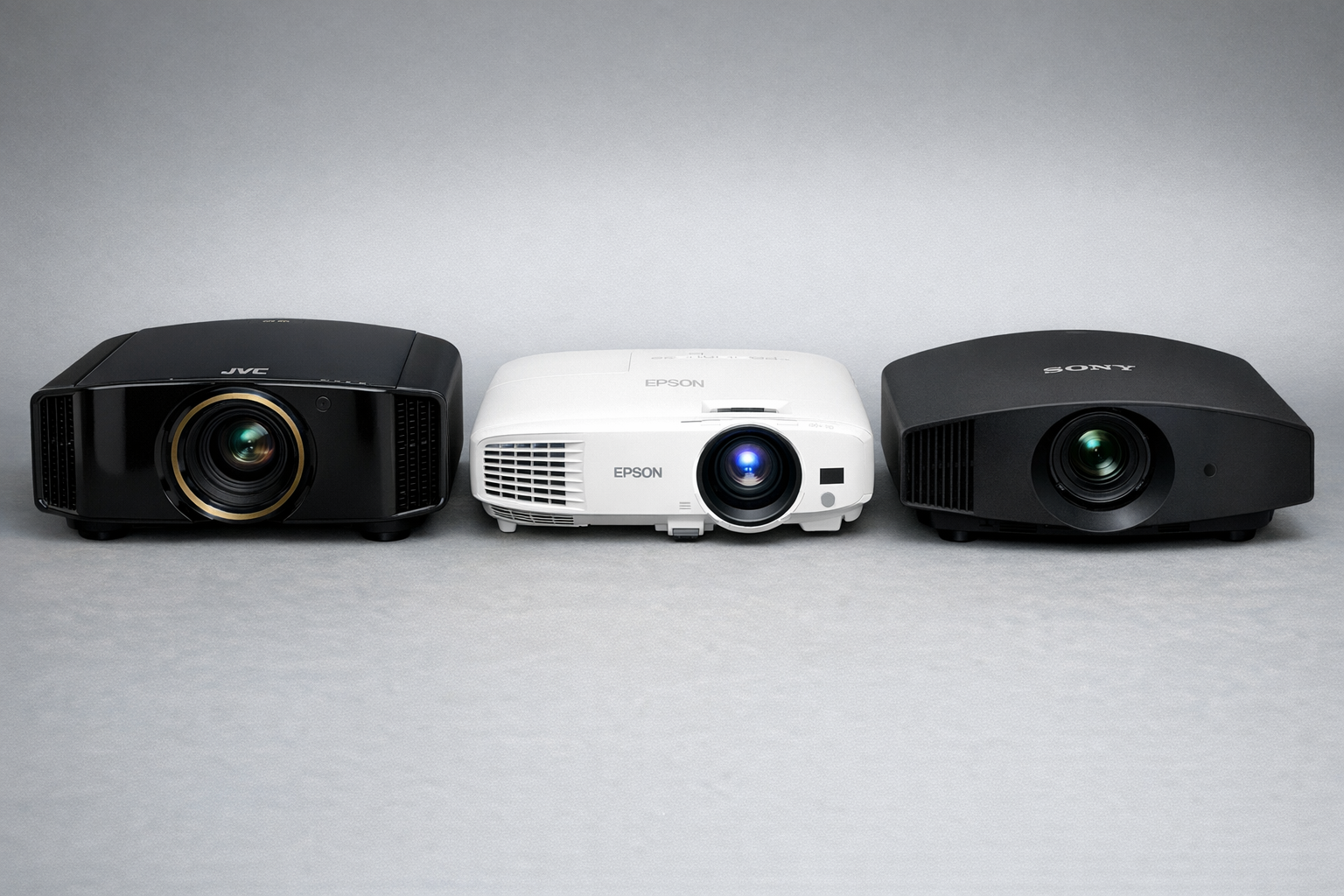
JVC, Epson, and Sony projectors
A great home theater is not defined by one piece of equipment.
It is defined by how the projector, screen, lighting, audio, seating, acoustics, wiring, ventilation, and control system work together. The projector matters, but it performs best when the entire room is planned around the viewing experience.
For many luxury homes, Epson projectors give Home Technology Experts a strong foundation: bright, reliable image performance, flexible installation options, and a range of laser projection models suited for dedicated cinemas, media rooms, gaming spaces, and multipurpose entertainment areas.
Whether you are building a new theater, upgrading an existing media room, or planning entertainment into a new construction project, Epson projection can deliver a large, immersive image when it is selected and installed as part of a complete home theater system.
Why Projector Selection Depends on the Room
The right projector is not chosen from specifications alone.
A dark dedicated theater, a bright media room, and a large multipurpose space all place different demands on brightness, contrast, screen material, throw distance, seating layout, and lighting control.
Before recommending a projector, HTE looks at how the room will actually be used.
Will the space be reserved for movie nights? Will it also be used for sports, gaming, and casual streaming? Will there be natural light during the day? Is the projector being mounted in the ceiling, placed in a rear shelf location, or hidden in a lift? Will the screen be acoustically transparent so speakers can be concealed behind it?
Those details matter.
Epson projectors are often a strong fit because they offer high brightness, flexible placement, strong image quality, and reliable performance across a variety of residential environments. But the best result comes from matching the projector to the room, not simply choosing the highest specification on paper.
The Strength of Epson 3LCD Projection
One of Epson’s key advantages is its 3-chip 3LCD imaging technology.
Unlike some single-chip projection systems, 3LCD uses separate chips for red, green, and blue light. This helps produce bright, balanced color without the color wheel artifacts that can create a “rainbow effect” for some viewers.
For homeowners, that can mean:
Rich, natural color
Smooth image quality
Strong color brightness
Accurate skin tones
Comfortable long-form viewing
A more film-like picture for movies and streaming
In a dedicated theater, this contributes to a warm and immersive image. In a media room, it helps the picture remain vivid and engaging even when the space is not completely dark.
Brightness That Works in Real Homes
Luxury homes are not all built like commercial cinemas.
Some theater rooms are designed for total light control. Others are open, flexible spaces where families watch sports, stream shows, play games, or entertain guests. Many media rooms have windows, reflective finishes, lighter interiors, or shared uses that make brightness a real factor.
This is where Epson often performs well.
Many Epson projectors are designed with strong brightness output, making them useful in both dedicated theaters and more casual viewing environments. When paired with the right screen and proper calibration, they can create a large, detailed image that holds up well in real-world conditions.
HTE also considers the lighting around the projector system. Motorized shades, dimmable lighting scenes, keypad control, and automation can help the room shift naturally from everyday living to serious viewing.
The projector should not have to fight the room. The room should support the projector.
Why the Screen Matters as Much as the Projector
A projector is only one half of the image system.
The screen has a major effect on brightness, contrast, viewing angle, black levels, and overall picture quality. Screen size, gain, material, ambient light rejection, and acoustic transparency all need to be selected carefully.
For example, a dedicated theater may benefit from an acoustically transparent screen that allows speakers to be hidden behind the image, creating a cleaner and more cinematic layout. A brighter multipurpose room may need a screen material that helps preserve contrast when some ambient light is present.
HTE designs the projector and screen together so the final image fits the room, the seating layout, the audio design, and the way the family will use the space.
Epson Laser Projection for Long-Term Performance
Epson’s laser projectors are especially useful for homeowners who want strong performance with less maintenance over time.
Laser projection offers several practical advantages:
Fast startup and shutdown
Long light-source life
Consistent brightness over time
Strong color performance
Reduced maintenance compared with traditional lamp-based systems
For a home theater or media room that will be used regularly, those benefits matter. Families want the system to be ready when they are. They do not want to think about warm-up time, fading lamps, or whether the room will perform consistently from one season to the next.
Laser projection also pairs well with integrated control systems. A single command can lower the shades, dim the lights, activate the projector, set the audio, and prepare the room for movie night, sports, gaming, or everyday viewing.
Flexible Installation for Custom Theater Design
Every home places different demands on projector installation.
Ceiling height, throw distance, projector location, ventilation, equipment access, screen size, seating position, and interior design all affect the final plan. In luxury homes, the installation also needs to respect the architecture of the space.
Epson projectors offer features that help with custom residential design, including wide lens shift, motorized lens controls, zoom and focus adjustments, quiet operation, and lens memory on select models.
These features can be especially valuable when designing for:
Dedicated home theaters
Media rooms
Scope screens
Concealed projector locations
Rear shelf installations
Rooms with challenging ceiling or seating conditions
HTE coordinates these details early so wiring, ventilation, projector placement, screen location, and control requirements are addressed before the room is finished.
That planning is especially important in new construction and major renovations. It is much easier to prepare the room correctly before ceilings are closed, millwork is completed, and finished surfaces are in place.
Built for Movies, Sports, Gaming, and Everyday Entertainment
Modern home theaters are rarely used for movies alone.
Families want one space that can support a wide range of entertainment: streaming, sports, gaming, concerts, presentations, and casual weeknight viewing. Epson projectors are a strong option for many of these environments because they combine large-scale image performance with brightness, color, and installation flexibility.
For gaming, low input lag and smooth motion are important. For sports, brightness and motion handling matter. For movies, contrast, color accuracy, screen selection, and room lighting become more important.
HTE designs around those different uses so the system feels easy to enjoy, not complicated to operate.
Where Epson Fits in an HTE Theater Design
HTE recommends Epson when it is the right fit for the room, the client, and the performance goals.
Epson is often a strong choice when a project calls for:
A large cinematic image
High brightness for real residential environments
Reliable laser projection
Strong color performance
Flexible installation
Good long-term value
Support for movies, sports, streaming, and gaming
But Epson is only one part of the complete theater experience.
HTE also plans the screen, audio system, acoustic approach, lighting control, shading, wiring, equipment location, ventilation, remote access, and control interface. The goal is not simply to install a projector. The goal is to create a room that looks right, sounds right, works reliably, and feels natural to use.
Experience Epson Projection With HTE
If you are building a home theater or upgrading a media room, Epson projection can be a brilliant foundation for immersive entertainment.
With HTE’s design and engineering, the projector becomes part of a complete cinematic environment — one that accounts for the room, the screen, the lighting, the audio, and the way your family actually lives.
Planning a home theater or media room? Contact Home Technology Experts to schedule a theater consultation and explore the right Epson projection system for your home.
Frequently Asked Questions
Is Epson a good projector brand for home theaters?
Yes. Epson is a strong projector option for many home theaters and media rooms because of its brightness, color performance, installation flexibility, and reliable laser projection options. The right model depends on the room, screen size, lighting conditions, viewing habits, and performance goals.
What is 3LCD projection?
3LCD is Epson’s three-chip projection technology. It uses separate red, green, and blue LCD chips to create the image. This helps produce bright, balanced color and avoids the color wheel artifacts that can appear in some single-chip projection systems.
Are Epson laser projectors better than lamp projectors?
For many homeowners, laser projectors offer practical advantages over traditional lamp-based projectors. They typically provide faster startup, long light-source life, consistent brightness, and reduced maintenance. Lamp projectors can still make sense in some situations, but laser projection is often preferred for new theater and media room designs.
Can an Epson projector work in a room with ambient light?
Yes, depending on the projector, screen, and room conditions. Epson projectors are often known for strong brightness, which can make them suitable for media rooms and multipurpose spaces. However, ambient light still affects image quality. HTE may recommend lighting control, motorized shades, or specific screen materials to improve performance.
Do I need a special screen for an Epson projector?
The screen should be selected based on the projector, room, seating layout, lighting conditions, and desired image size. In some rooms, an acoustically transparent screen may be ideal because it allows speakers to be placed behind the image. In brighter rooms, a screen designed to manage ambient light may be a better fit.
Is a projector better than a large TV for a home theater?
For a true cinematic experience, a projector can create a much larger image than most televisions. This is especially valuable in dedicated theaters and larger media rooms. A TV may be better for very bright rooms or casual everyday spaces. HTE helps determine which display approach fits the room and how it will be used.
What should be planned before installing a projector?
Projector installation should account for screen size, throw distance, mounting location, wiring, ventilation, lighting control, seating, audio placement, network access, equipment location, and control system integration. These details are much easier to address during design, construction, or renovation than after the room is finished.
Why should HTE design the projector, screen, lighting, and audio together?
A home theater works best when every system is planned as part of one experience. The projector affects the screen choice. The screen affects the speaker layout. Lighting affects picture quality. Seating affects sightlines and sound. Control affects how easy the room is to use. HTE coordinates those details so the finished space feels simple, reliable, and enjoyable.