
Lighting that considers the entire property
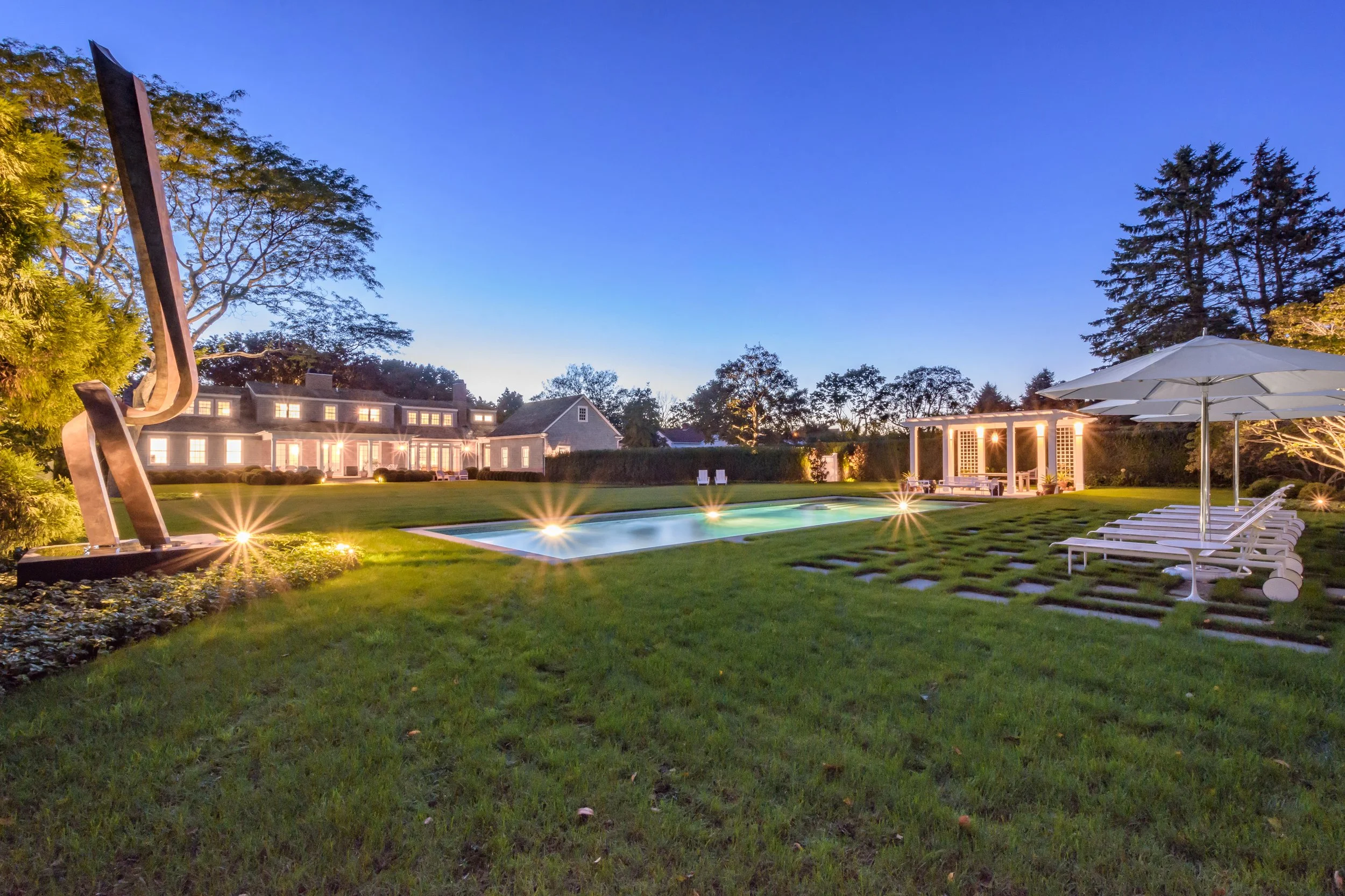
A large estate is not simply a larger house. It is a collection of places, pathways, buildings and routines that should feel connected after sunset. Estate lighting automation brings the main residence, guest accommodations, landscape and arrival areas into a coordinated plan, without asking homeowners or staff to manage dozens of unrelated controls.
For properties in the Hamptons, North Fork and across Long Island, the best starting point is not a particular keypad or app. It is understanding how the estate is used, which areas need independent control and where a shared scene makes life easier.
What makes estate lighting different from ordinary home lighting control?
In a single residence, lighting may be organized by room. Across an estate, the design must consider distance, separate structures, outdoor environments, different occupants and changing schedules. A coordinated system can bring compatible lighting controls together while retaining the independence each area needs.
Main residence
Layer architectural and decorative lighting into clear scenes for daily life, entertaining and evenings at home.
Guest houses and outbuildings
Give guests intuitive local control while allowing authorized property staff to manage shared schedules and unoccupied spaces.
Grounds and outdoor rooms
Coordinate terraces, gardens, pathways and outdoor kitchens without treating every exterior fixture as one giant lighting zone.
Arrival and circulation
Consider gates, driveways, motor courts, entries and walking routes as one sequence of arrival, not isolated fixtures.
One property. Different lighting moments.
Scenes should be designed around people and activities rather than simply turning every circuit on at once. Each example below depends on the installed equipment and approved programming.
Driveway, gate and entry illumination can welcome residents as selected pathways and interior arrival areas become ready for use.
Terraces, steps, dining areas and landscape accents can settle into a coordinated composition while service routes remain practical.
Guest-house lighting can operate independently for comfort and privacy, with sensible common-area schedules.
Circulation lighting can remain useful without making the entire estate excessively bright. Appropriate visibility and local lighting rules still matter.
Selected schedules and remote controls can support seasonal oversight without suggesting that lighting replaces a surveillance or alarm system.
How indoor and outdoor lighting work together
Interior architectural lighting, landscape fixtures and pathway illumination may use different drivers, power supplies and control technologies. The goal is a consistent experience, not the assumption that every fixture uses identical hardware.
Buildings, pathways, gardens, terraces and arrival areas.
Lighting controls, interfaces, cabling and power needs.
Local controls, shared events, schedules and access permissions.
Commission, document and adjust the system over time.
Conceptual planning sequence, not a wiring diagram. Technical architecture and available integrations are project-specific.
HTE's lighting control systems page explains the broader platform options. Its lighting design page explores fixture and illumination design. This guide focuses on how those disciplines come together across an estate.
Remote management for seasonal and second homes
A seasonal property has different needs from a full-time residence. Owners may want to confirm that arrival lighting is ready before a visit, update schedules as sunset changes, or grant designated staff access without sharing a master account.
Thoughtful permissions
Separate access for owners, household members, guests and estate managers where the chosen system supports it.
Seasonal schedules
Review astronomic schedules, entertaining routines and landscape illumination as daylight and the property's use change.
Clear control
Use consistent keypads and compatible apps so common actions are understandable without a detailed instruction manual.
Realistic resilience
Remote features rely on network and power availability. During an outage, behavior depends on system design and backup provisions.
Reliable lighting begins before installation
Lighting automation is easiest to maintain when the underlying decisions are made early. For new construction or significant renovation, architects, landscape designers, electricians, builders and the technology integrator should agree on scope and ownership before finishes conceal the pathways.
- Zone planning: Decide what should respond together and what must remain independently controllable.
- Power and wiring: Coordinate lighting circuits, control locations, low-voltage equipment and access for future service.
- Between-building connectivity: Assess the distances and infrastructure needed for dependable communication across the property.
- Exterior conditions: Match equipment and installation methods to moisture, salt exposure and changing seasons where relevant.
- Commissioning: Test scenes in the actual spaces, including dusk and nighttime conditions, rather than assuming settings will look right on paper.
Not necessarily. A well-designed estate may use compatible subsystems with local control and selected shared functions. Integration should simplify operation without creating unnecessary dependencies.
For design and construction teams, HTE's technology design support resource explains how early coordination can protect architectural intent and construction sequencing.
What to ask before upgrading an existing estate
A property does not always need a complete replacement to improve how its lighting operates. Start with an inventory of controls, fixtures, schedules, wiring and network dependencies, then identify which experiences are currently frustrating.
- Are interior and outdoor systems controlled separately for a good reason, or simply because they were installed at different times?
- Can household and estate staff operate the right areas without excessive access?
- Are scenes practical after dark, including at gates, steps and outdoor routes?
- Can existing equipment be retained safely and reliably within an updated design?
- Who will document, maintain and adjust the system as the landscape and household evolve?
The right next step is an assessment, followed by a clear plan for integration, selective upgrades or replacement where truly warranted.
Make the entire estate feel considered.
Whether you are planning a new residence, coordinating multiple buildings or refining an existing system, HTE can help assess the property's lighting needs and the next decisions to make.
Estate Lighting Automation by Home Technology Experts