Better sound. Beautiful picture. Nothing out of place.
Exceptional entertainment experiences for Manhattan apartments, thoughtfully designed around the architecture and the way you live.
Great audio and video in a Manhattan apartment requires more than selecting an impressive television or an expensive pair of speakers. The room itself plays an equally important role.
Limited floor space, expansive windows, reflective surfaces, shared walls, and carefully designed interiors all influence how a system should perform and where its components belong.
The best AV solutions for Manhattan apartments begin by understanding those conditions, then designing technology around the residence rather than asking the residence to accommodate the technology.
At Home Technology Experts (HTE), we design audio and video systems for apartments, penthouses, and townhouses with an equal respect for performance, architecture, and everyday simplicity.
Why exceptional AV design is more complicated in the city
A Manhattan residence may offer dramatic views and beautiful architecture, but it rarely offers unlimited freedom to place speakers, displays, and supporting equipment wherever they might perform best.
Space is valuable
Living rooms often serve several purposes. Equipment, furniture, and speaker placement must work together without sacrificing comfort or circulation.
Acoustics are unpredictable
Glass, stone, hardwood, and open layouts can produce reflections that reduce dialogue clarity and make music sound less balanced.
Architecture sets boundaries
Structural walls, ceiling conditions, historic details, and building rules can limit mounting, wiring, and equipment locations.
Discretion is essential
Beautiful interiors should not be overwhelmed by exposed cables, visible components, equipment cabinets, or oversized speakers.
Start with the room, not the speakers
The way a room sounds is influenced by its shape, finishes, furnishings, and the distance between listeners and speakers.
Manhattan interiors frequently combine hardwood floors, glass walls, stone surfaces, and open kitchens. These materials may be visually beautiful, but their reflective properties can make music harsh or conversation difficult to distinguish from television dialogue.
Speaker placement matters more than speaker count
A pair of properly positioned speakers can deliver a more convincing listening experience than a collection of poorly placed speakers.
For television audio, the goal is to anchor sound to the picture while maintaining clear dialogue across the main seating area. Surround effects should add immersion without making the space feel crowded by equipment.
Architectural speakers can preserve the interior
In-wall and in-ceiling speakers, carefully integrated soundbars, and compact freestanding speakers all have a place in Manhattan AV design.
The appropriate solution depends on room geometry, construction conditions, desired sound quality, and the visual priorities of the homeowner and interior designer.
Ceiling speakers, for example, can work beautifully for ambient music, but they are not automatically the best choice for every channel in a surround system. Placement and application matter.
Good acoustics do not require an acoustically treated room
Rugs, upholstered furnishings, draperies, and carefully selected acoustic treatments can help manage reflections without giving the apartment the appearance of a recording studio.
An experienced integrator considers these elements alongside the speaker design, working with the interior designer whenever possible.
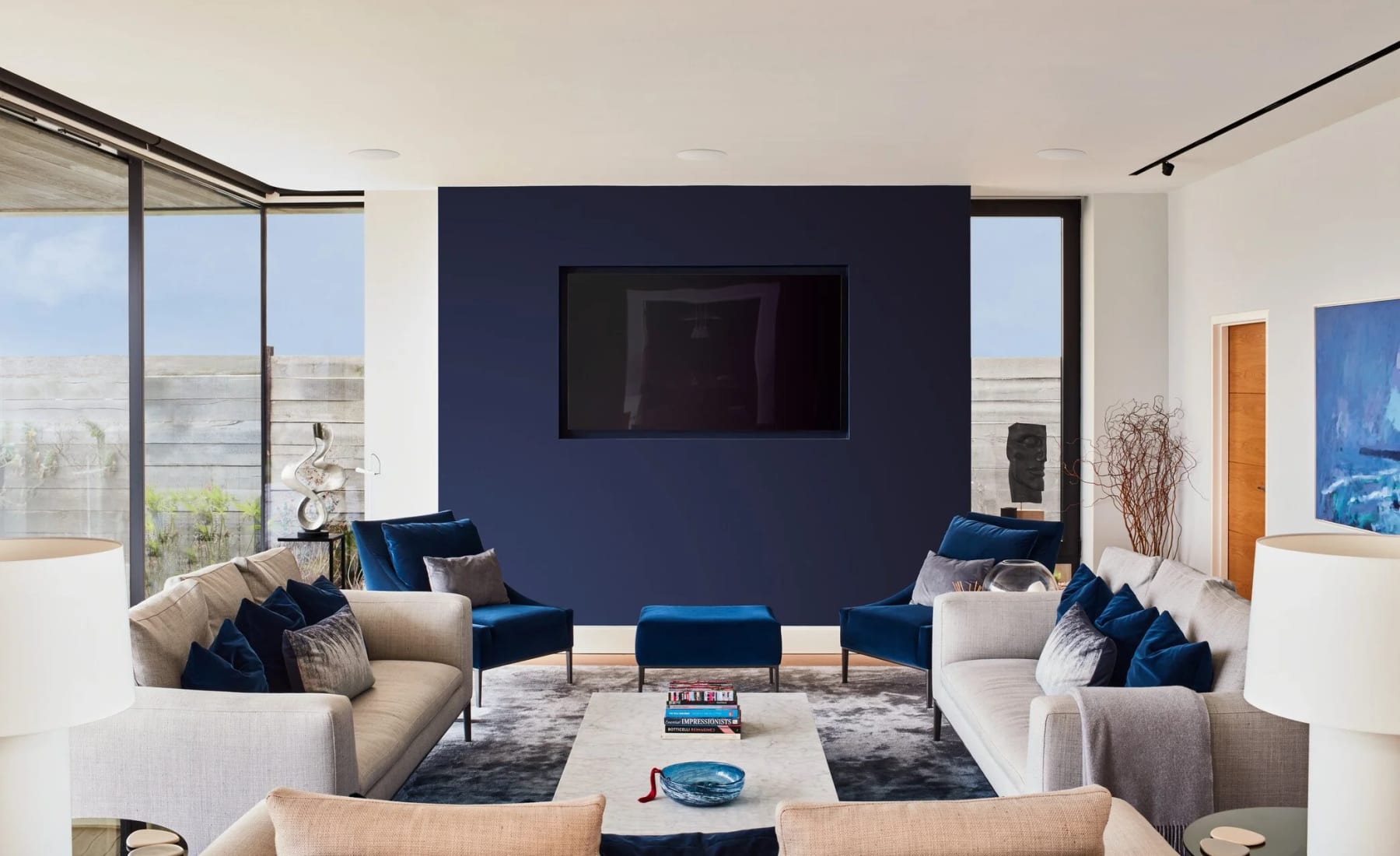
A beautiful television installation starts with the viewing position
The largest display is not necessarily the right display for a Manhattan living room.
Screen size, seating distance, viewing angles, ambient light, and mounting height all influence picture comfort and quality.
A thoughtfully positioned display should be comfortable for extended viewing and integrated with the room's proportions.
It should also remain functional when the apartment is filled with daylight, not only after dark.
Managing daylight, glare, and picture quality
Expansive Manhattan windows create extraordinary views, but they can also introduce reflections and glare that interfere with daytime viewing.
Choosing the right television technology and positioning the screen away from problematic reflections are important first steps.
Motorized window treatments can also become part of the viewing experience, adjusting daylight when a movie begins or providing greater privacy after sunset.
When integrated with intelligent lighting control, shading and lighting scenes can create a comfortable viewing environment without making the room feel permanently dark.
When should a display be concealed?
Some homeowners prefer the television to remain part of the room. Others would rather it disappear when not in use.
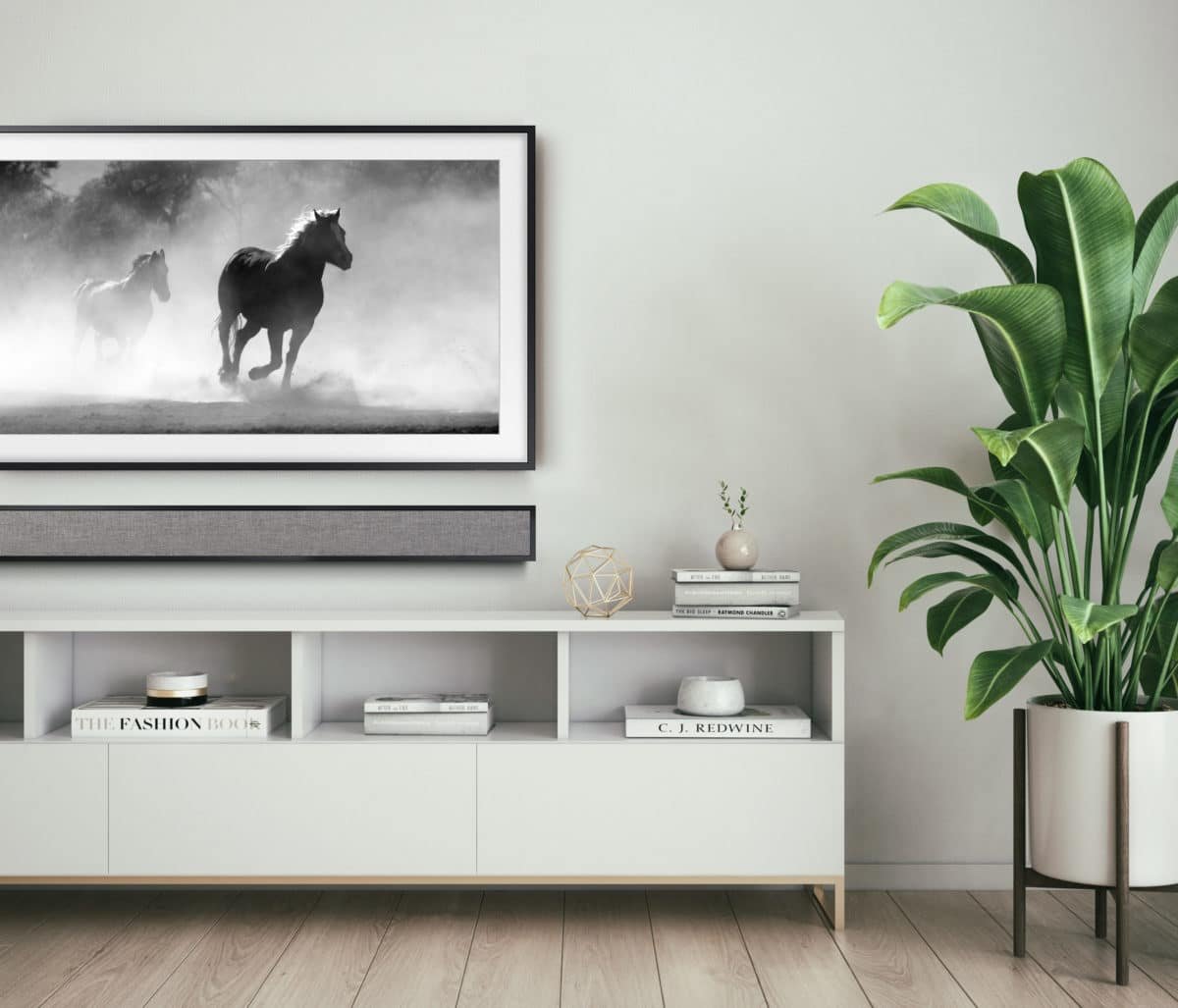
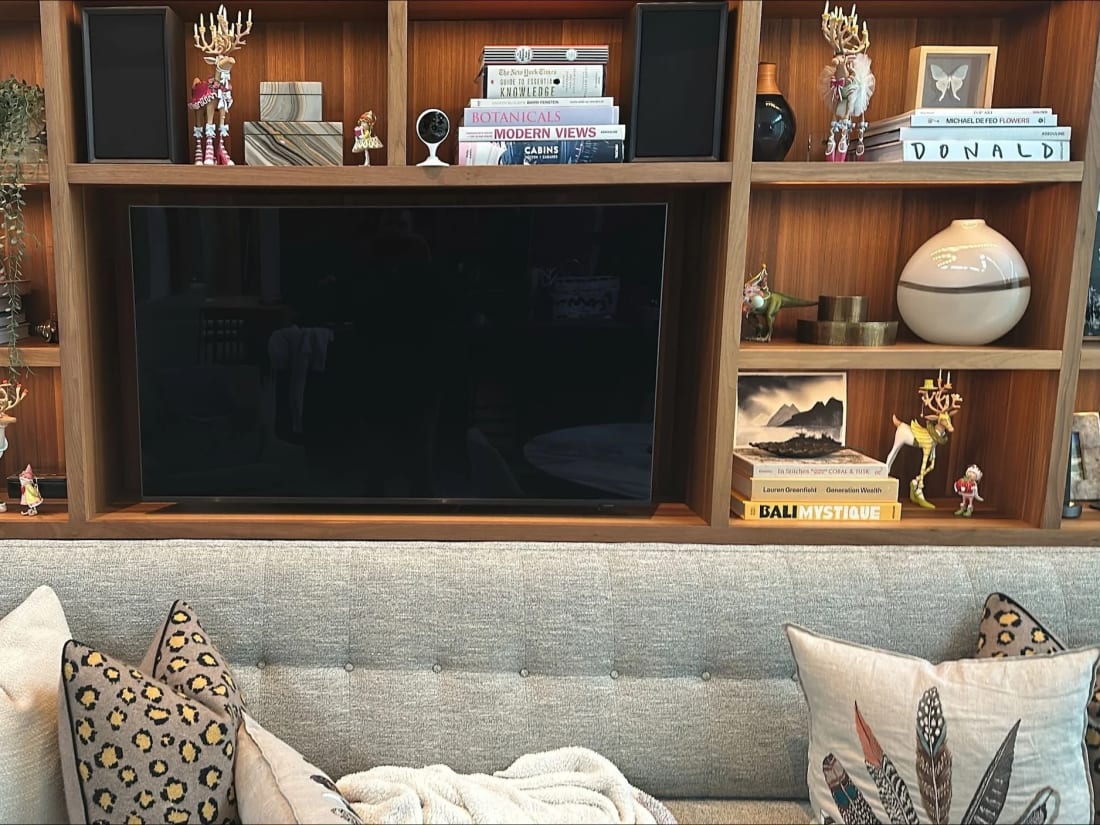
Depending on the architectural conditions, options may include art-style displays, discreet wall installations, custom cabinetry, or motorized concealment systems.
Each option introduces different considerations for access, heat management, viewing position, and long-term service.
The equipment you do not see still needs thoughtful design
Concealing electronics is only successful when those components remain accessible, properly ventilated, and easy to maintain.
Find the right location
Equipment may be distributed between cabinetry, a dedicated closet, or a compact rack. Location should account for cable pathways, available power, equipment depth, and future access.
Keep components comfortable
Amplifiers, processors, and networking equipment generate heat. Ventilation and manufacturer clearances matter, particularly inside tightly enclosed millwork.
Plan beyond installation
Accessible wiring, documented connections, reliable networks, and sensible equipment organization make service and future upgrades considerably easier.
Enjoy immersive sound while respecting shared walls
Apartment sound design is not only about improving the listening experience inside the residence. It also involves considering how sound and vibration may travel into neighboring spaces.
Powerful bass can transfer through floors, structural connections, and partitions even when the system sounds reasonable to the person listening.
Subwoofer placement, vibration isolation, appropriate output levels, and system calibration can help manage these effects. They cannot guarantee complete sound isolation, which may require architectural construction.
For many Manhattan homeowners, clear dialogue, balanced music, and controlled bass provide a more satisfying everyday experience than simply maximizing volume.

One beautifully designed room can do several things well
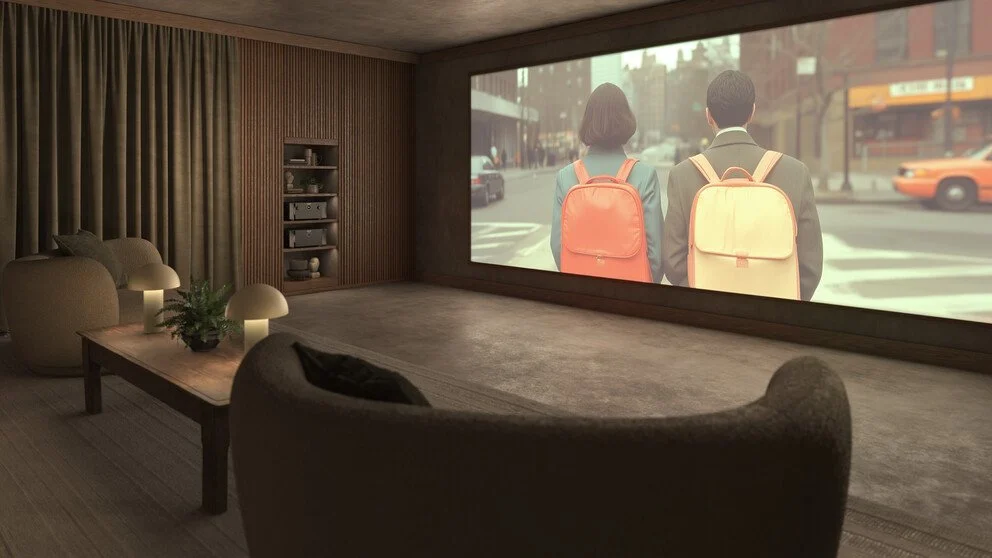
Not every Manhattan apartment has space for a dedicated home theater, nor does every homeowner want one.
A well-designed living room or multipurpose media room can provide engaging movie nights, excellent music, and comfortable everyday television viewing.
The system should suit the way the residence is actually used, from quiet evenings to entertaining friends.
Explore HTE's approach to home theater and media room design.
Whole-apartment audio without a collection of separate systems
Music can move naturally from the living room to the kitchen, bedroom, or other spaces when the system is planned as a coordinated whole.
That does not mean every room needs the same speakers or the same level of performance.
A primary listening area may benefit from a dedicated stereo system, while bedrooms and secondary rooms may be better served by discreet architectural speakers.
Thoughtful audio and video integration allows these experiences to work together without requiring the homeowner to manage unrelated devices and applications.
Simple control makes sophisticated technology enjoyable
A beautiful system loses much of its appeal when enjoying a movie requires several remotes and a sequence of complicated steps.
Integrated control can coordinate television, music, lighting, and shades around familiar activities such as watching a film, listening to music, or entertaining.
The experience should be intuitive for homeowners, guests, and anyone else using the residence.
Why Manhattan AV projects benefit from early coordination
In a renovation, the right time to plan audio and video is before walls are closed, cabinetry is finalized, and electrical locations are fixed.
HTE works with homeowners, architects, interior designers, contractors, and building management to coordinate the technology with the surrounding project.
Before construction
Establish display locations, speaker positions, cable pathways, equipment space, power requirements, and control expectations.
During design development
Coordinate architectural speaker details, millwork openings, ventilation, mounting requirements, lighting, and shading.
During installation
Account for building access, permitted work hours, protection of finished surfaces, and the applicable building approval process.
After installation
Calibrate the system, simplify operation, document essential infrastructure, and establish a practical plan for service.
Existing apartments can also benefit from a carefully planned retrofit. The possibilities depend on access to wiring routes, available infrastructure, and the building's requirements.
For projects that extend beyond AV, learn about HTE's approach to integrated home automation in New York City.
What makes a Manhattan apartment AV system successful?
Success is not measured by the number of components installed or the complexity of the system behind the scenes.
It is measured by clear dialogue, engaging music, comfortable viewing, thoughtful integration, dependable operation, and the freedom to enjoy the residence without technology becoming a distraction.
HTE begins with the room, the homeowner's priorities, and the architectural conditions. Equipment selection follows those decisions, rather than determining them.
Whether the project involves improving television sound in an existing apartment or designing an integrated entertainment experience for a new penthouse, the objective remains the same: exceptional performance with a restrained visual presence.