AV Installer vs. AV Integrator: What’s the Difference?
AV Installer vs. AV Integrator
The terms AV installer and AV integrator are often used interchangeably, but they describe two different approaches to residential technology solutions.
An AV installer typically completes a defined equipment-based task. An AV integrator designs how technology should function within the space, support the homeowner’s needs, coordinate with the rest of the home, and remain reliable over time.
The distinction is not simply the size of the project.
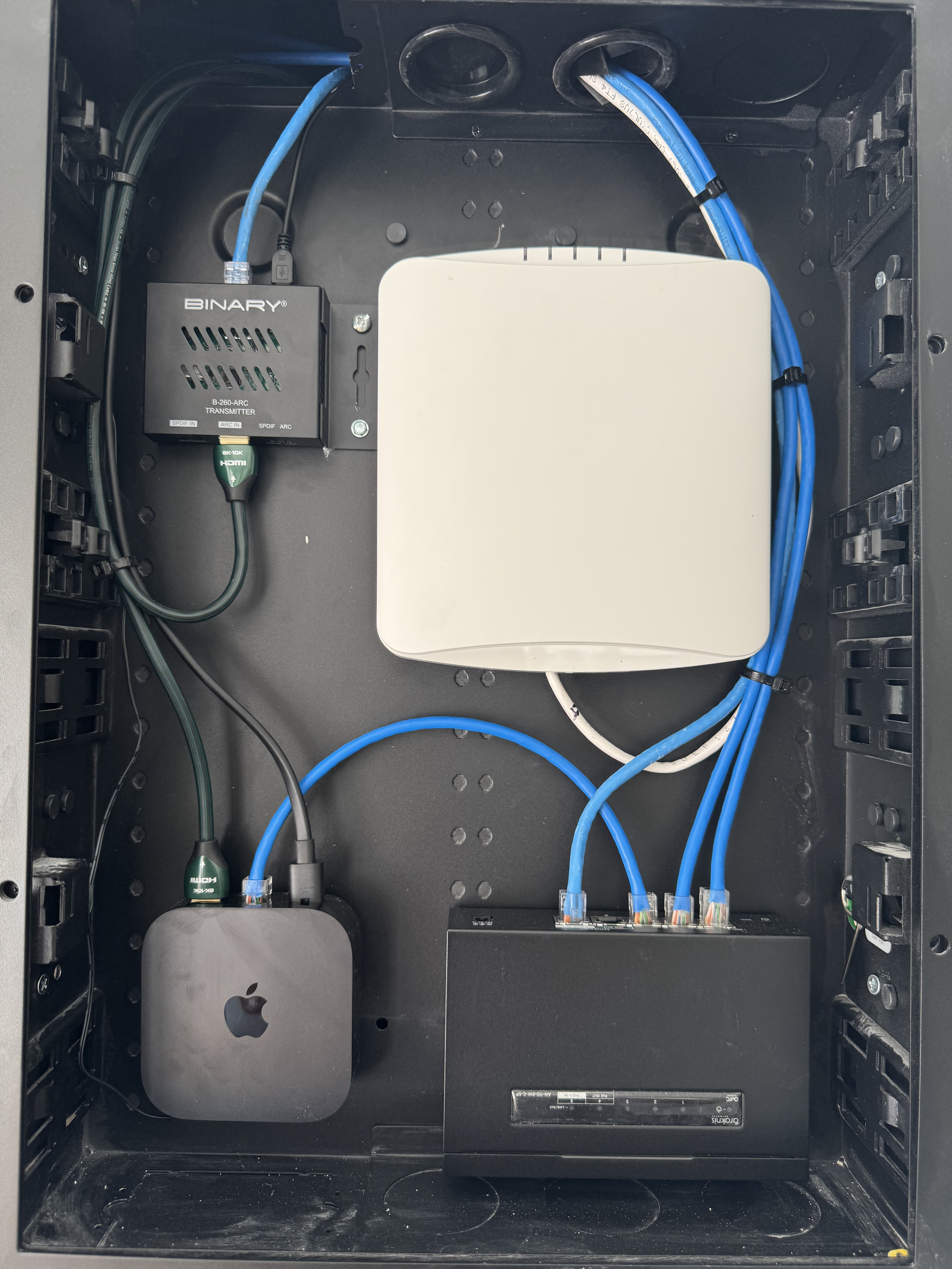
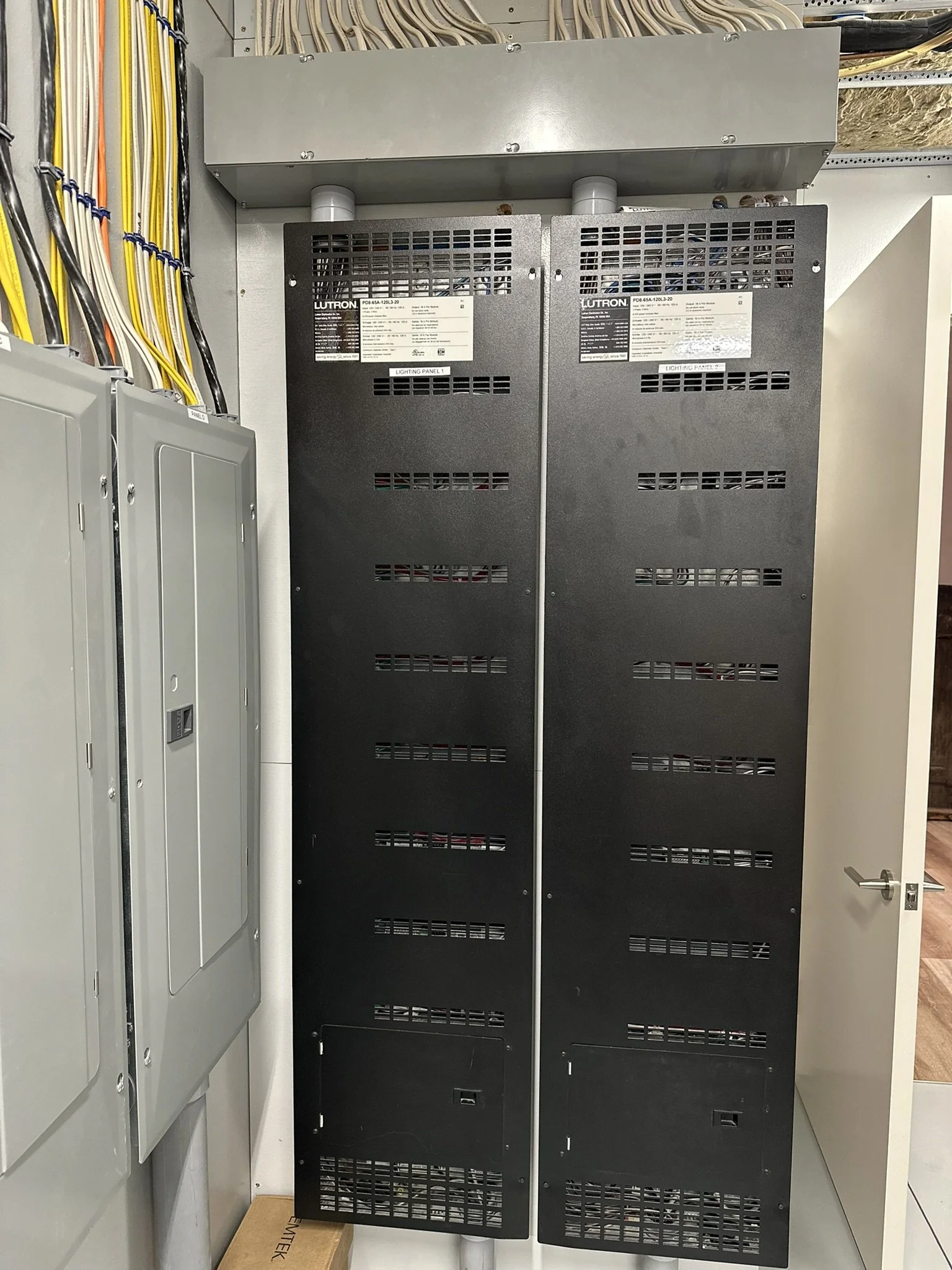
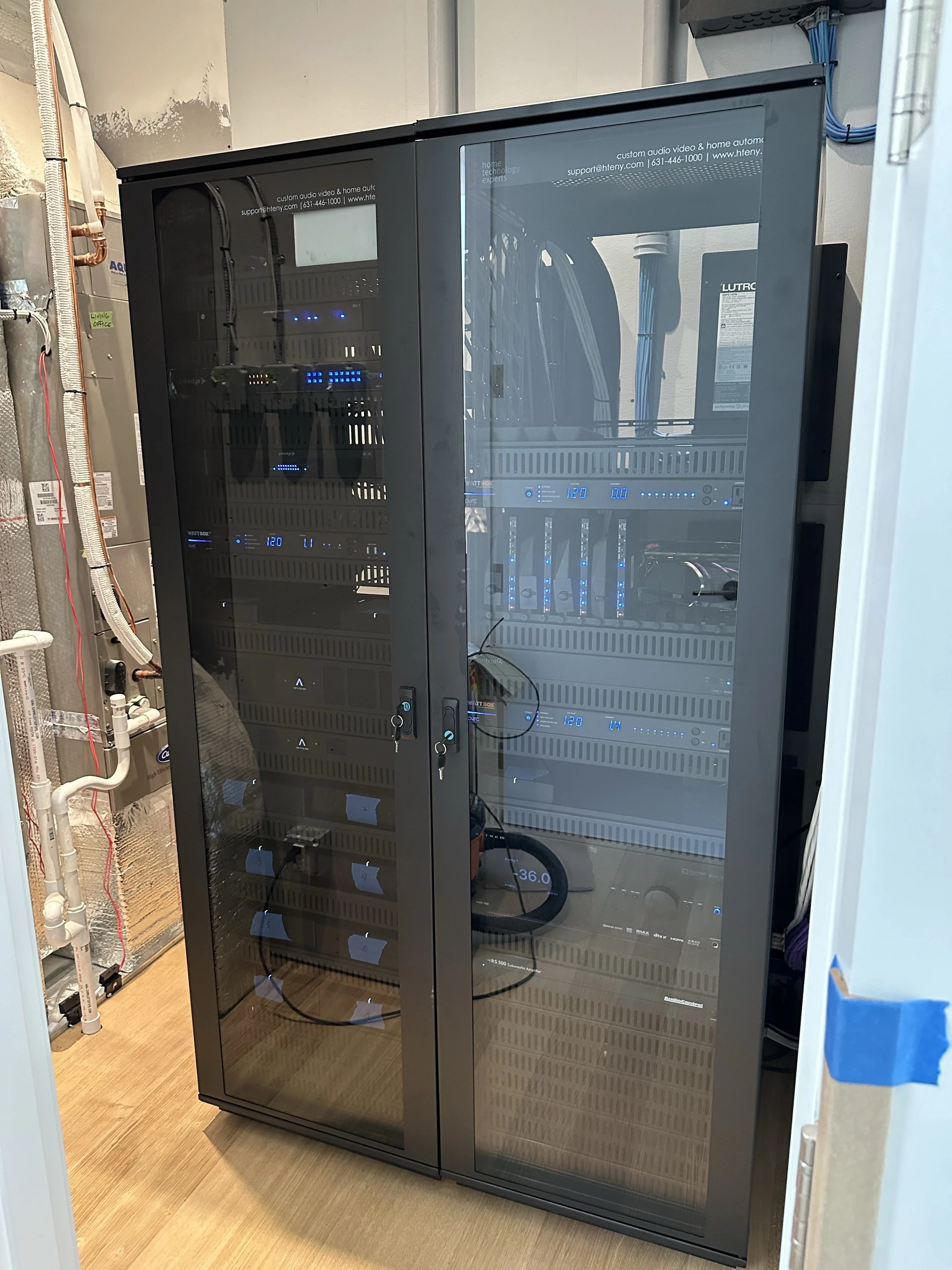
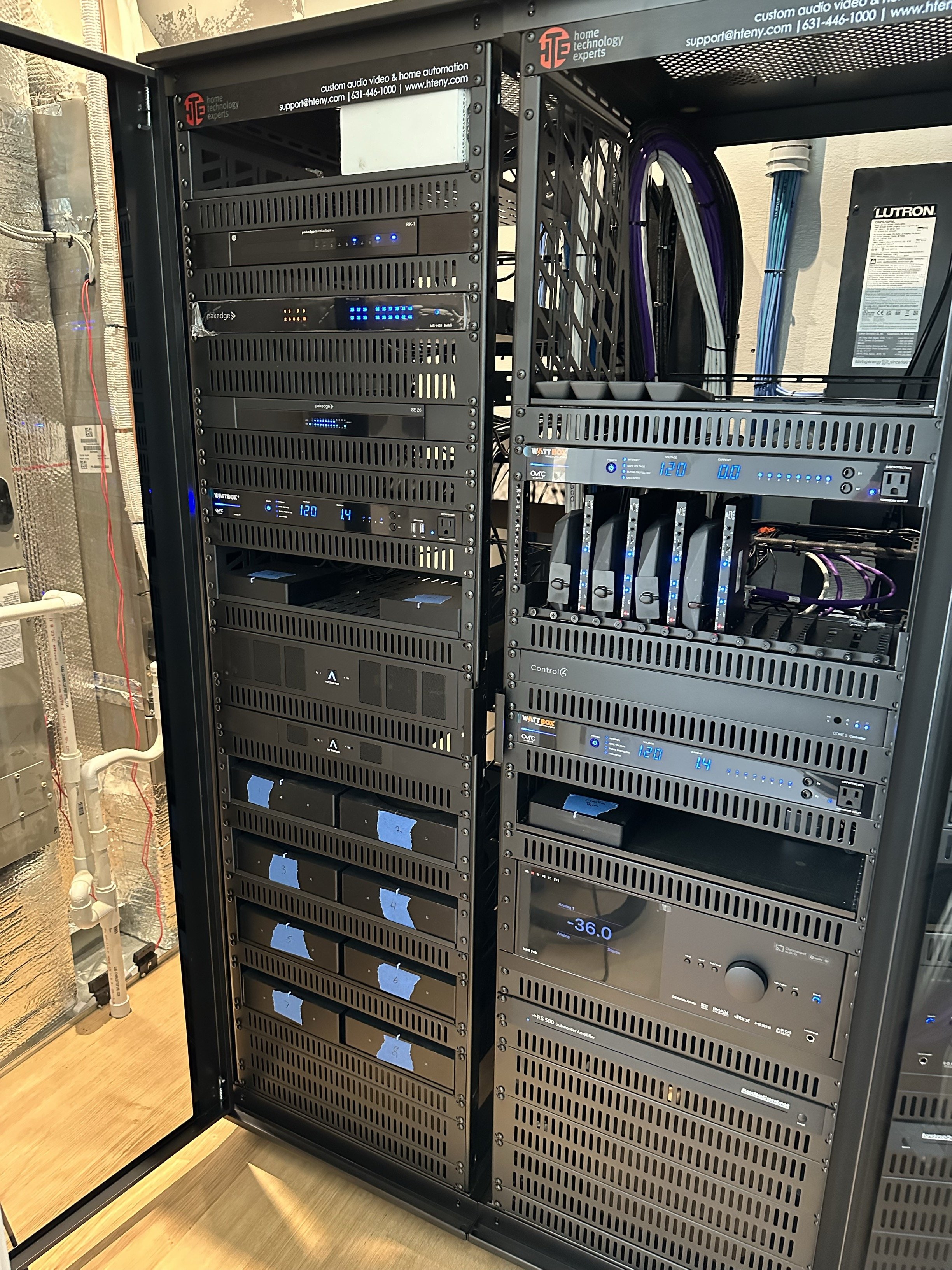
AV equipment behind wall mounted tv
Installation is task-based. Integration is experience- and system-based.
What Does an AV Installer Do?
An AV installer generally focuses on placing, connecting, or replacing equipment. Typical tasks may include:
Mounting a television or display
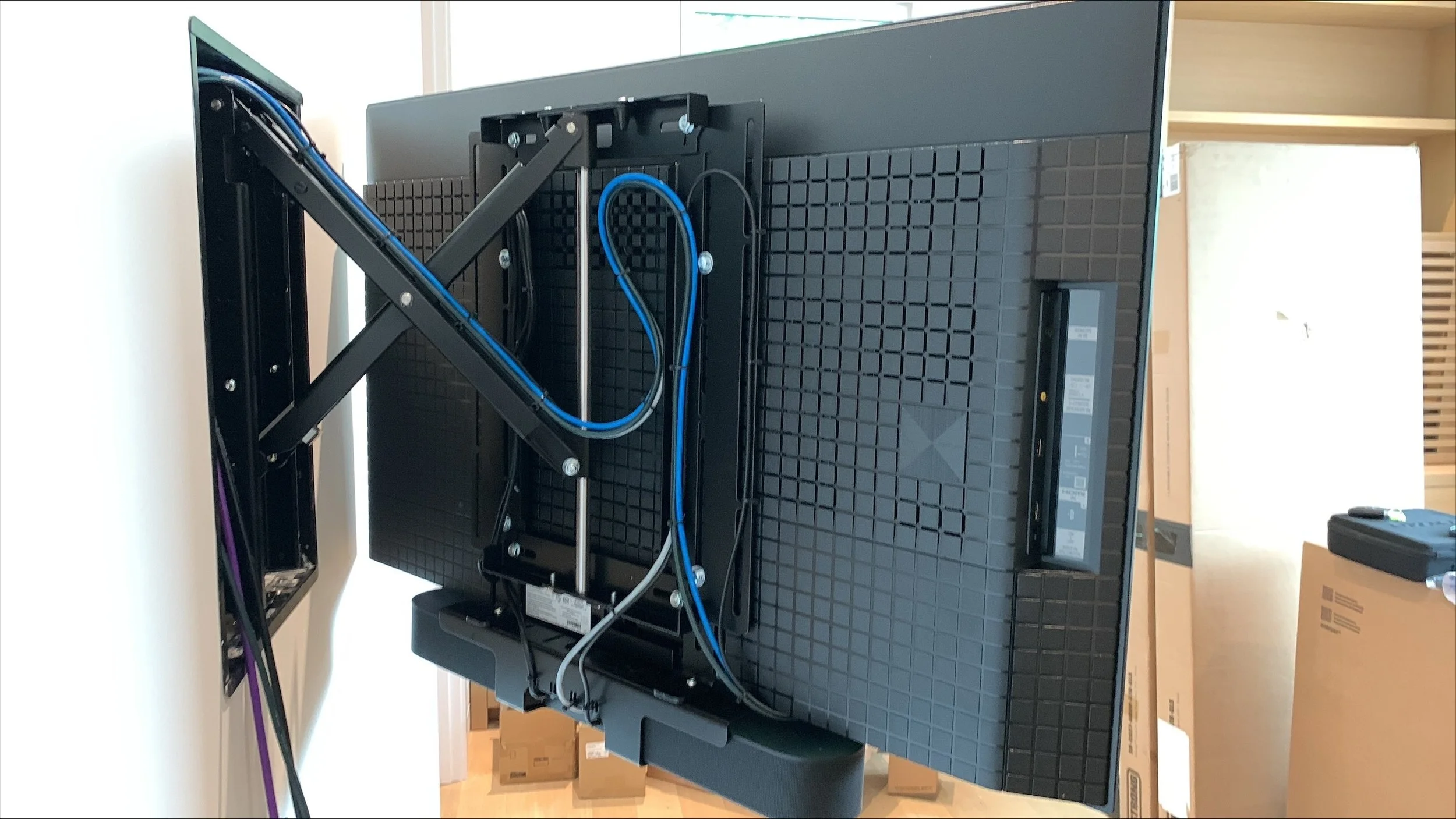
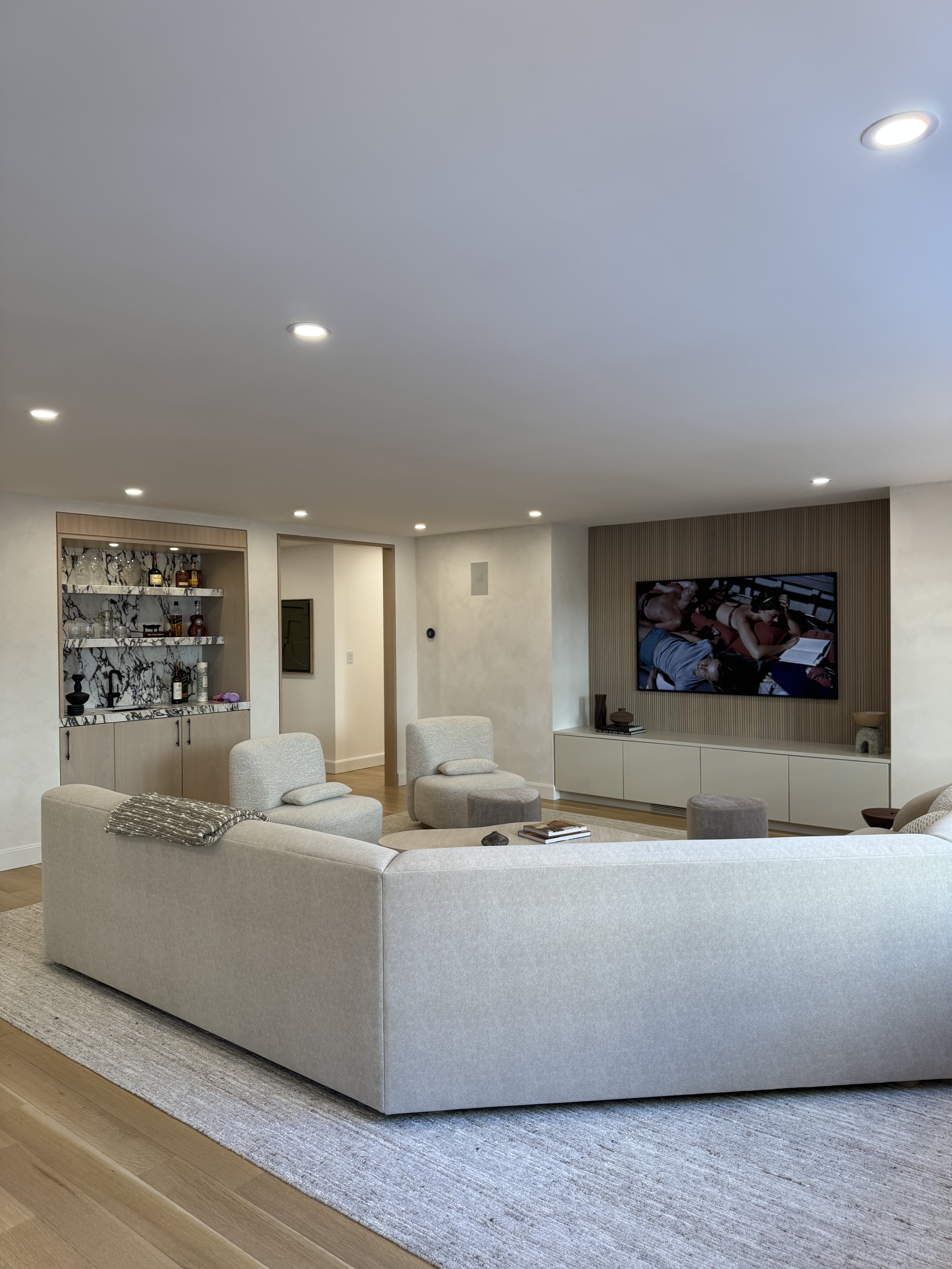
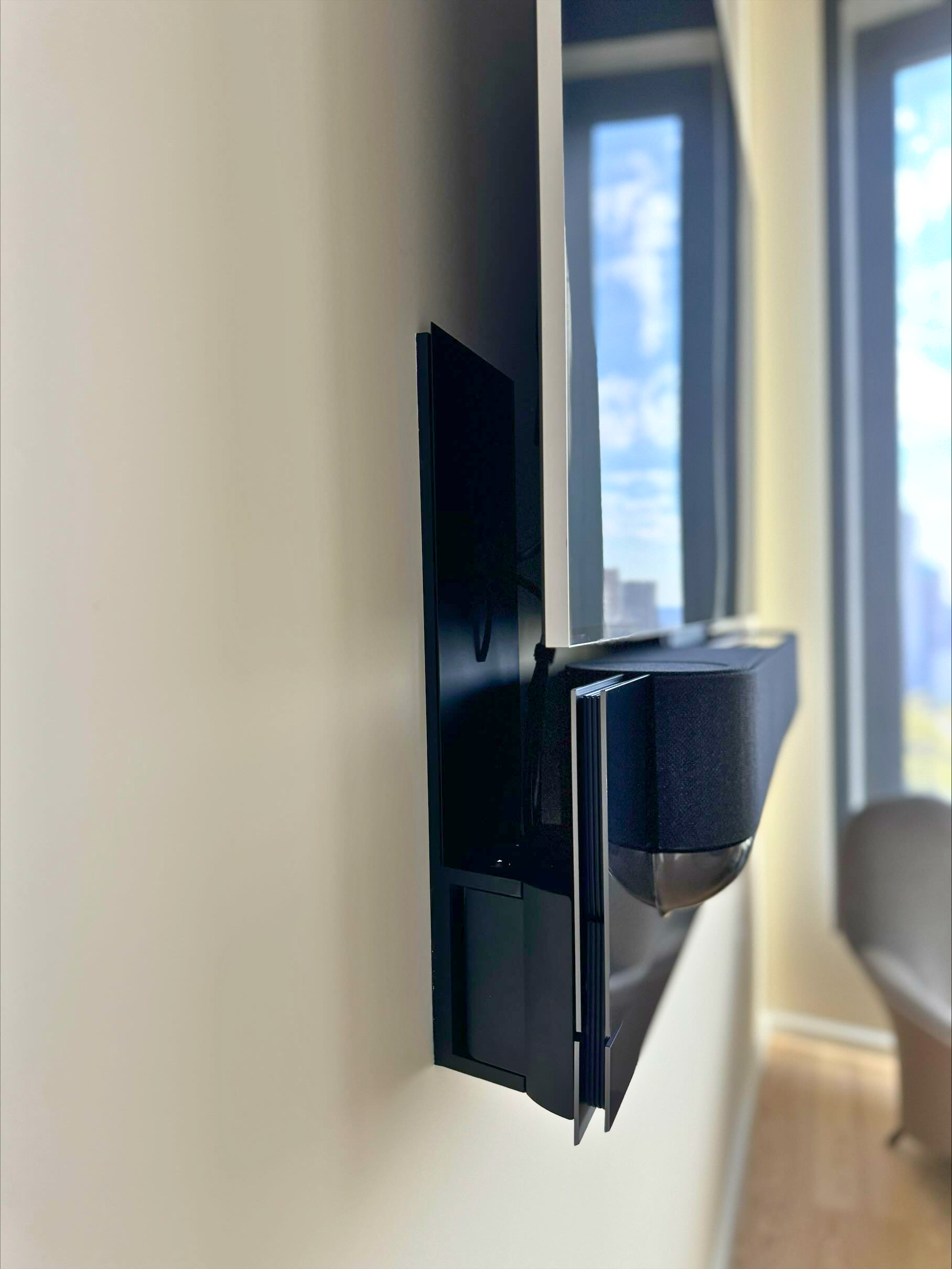
Wall mounted tv
Running basic audio, video, or network cabling
Replacing an individual piece of equipment
This work can be entirely appropriate for a limited project. If the goal is simply to hang a television or add a pair of speakers, a straightforward installation may be all that is needed.
The installer is usually responsible for completing that specific scope. The work may not include evaluating how the room will be used, how the equipment should interact with other systems, or how the installation affects the rest of the home.
What Does an AV Integrator Do?
An AV integrator starts with the homeowner and the space, not the equipment list.
Before designing a system, the integrator needs to understand how the homeowner wants to live with the technology. How should the room behave when someone watches television, listens to music, entertains guests, or leaves the property? Which controls should be visible? What should remain concealed? Which functions should happen automatically, and which should remain under direct control?
Those conversations shape the design.
Even a single room may require integration. The television may need to play through architectural speakers. Multiple source devices may need to operate from one remote. Equipment may need to be concealed in millwork or located in another room. Lighting and motorized shades may need to respond appropriately for daytime viewing, evening entertainment, or everyday use.
An integrator designs that complete experience rather than treating each product as an isolated device.
Integration Requires a Team
Residential integration is rarely the work of one person.
A professional integration company may include system designers, engineers, project managers, programmers, installers, service technicians, and client-facing consultants. Each team member brings a different level of experience across audio, video, networking, lighting control, motorized shading, surveillance, access control, and automation.
The best solution comes from combining that knowledge.
A designer may define the homeowner experience and equipment strategy. An engineer may develop the system architecture and documentation. A project manager coordinates schedules, materials, and trades. Technicians install and test the system. Programmers refine how the controls, scenes, and automated functions behave.
Integration is the result of that team working toward one outcome.
The Home Must Be Considered as a Complete System
An installer may look at a television, speaker pair, or equipment replacement as a discrete scope.
An integrator considers how that work affects the rest of the residence.
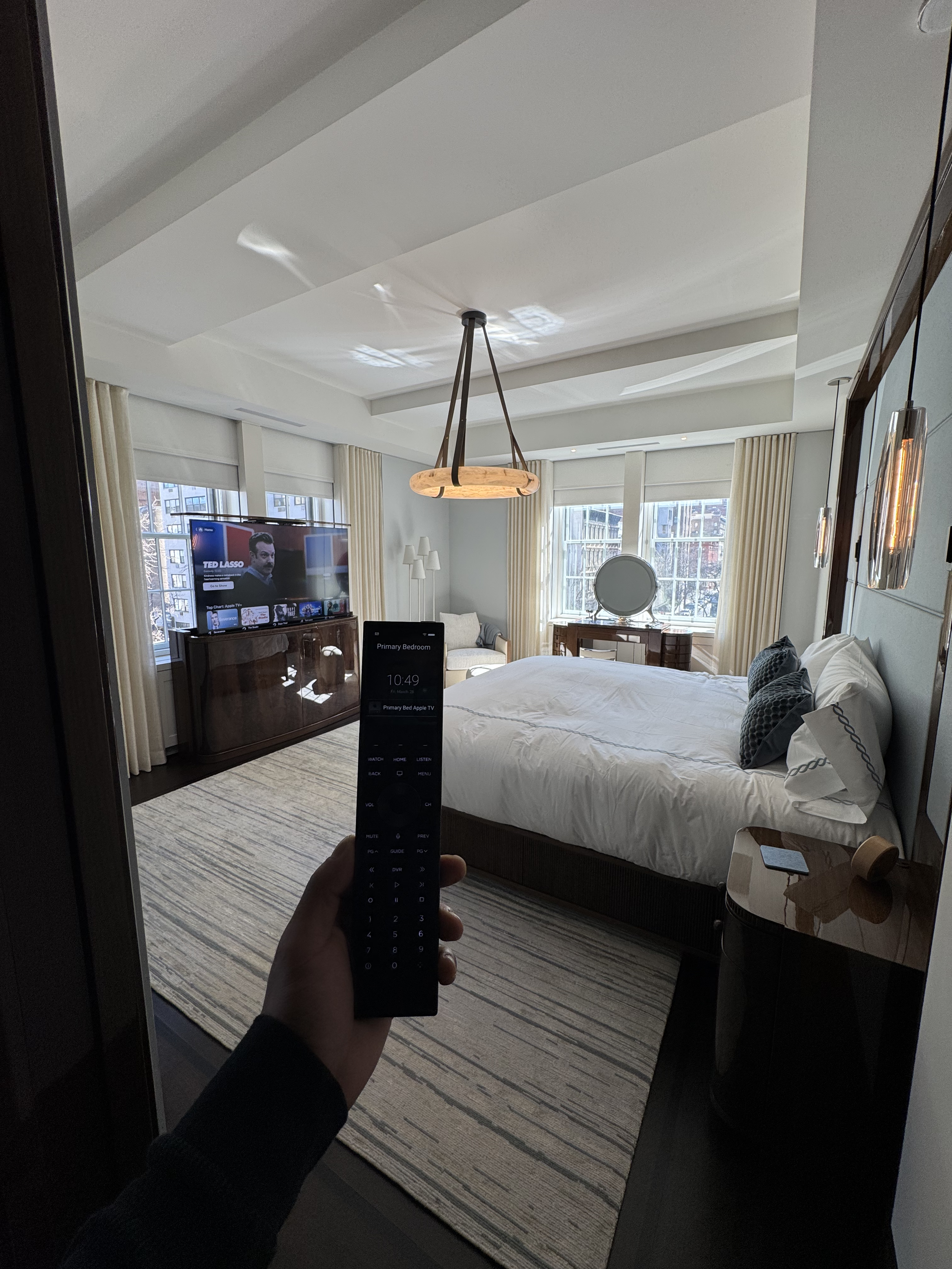
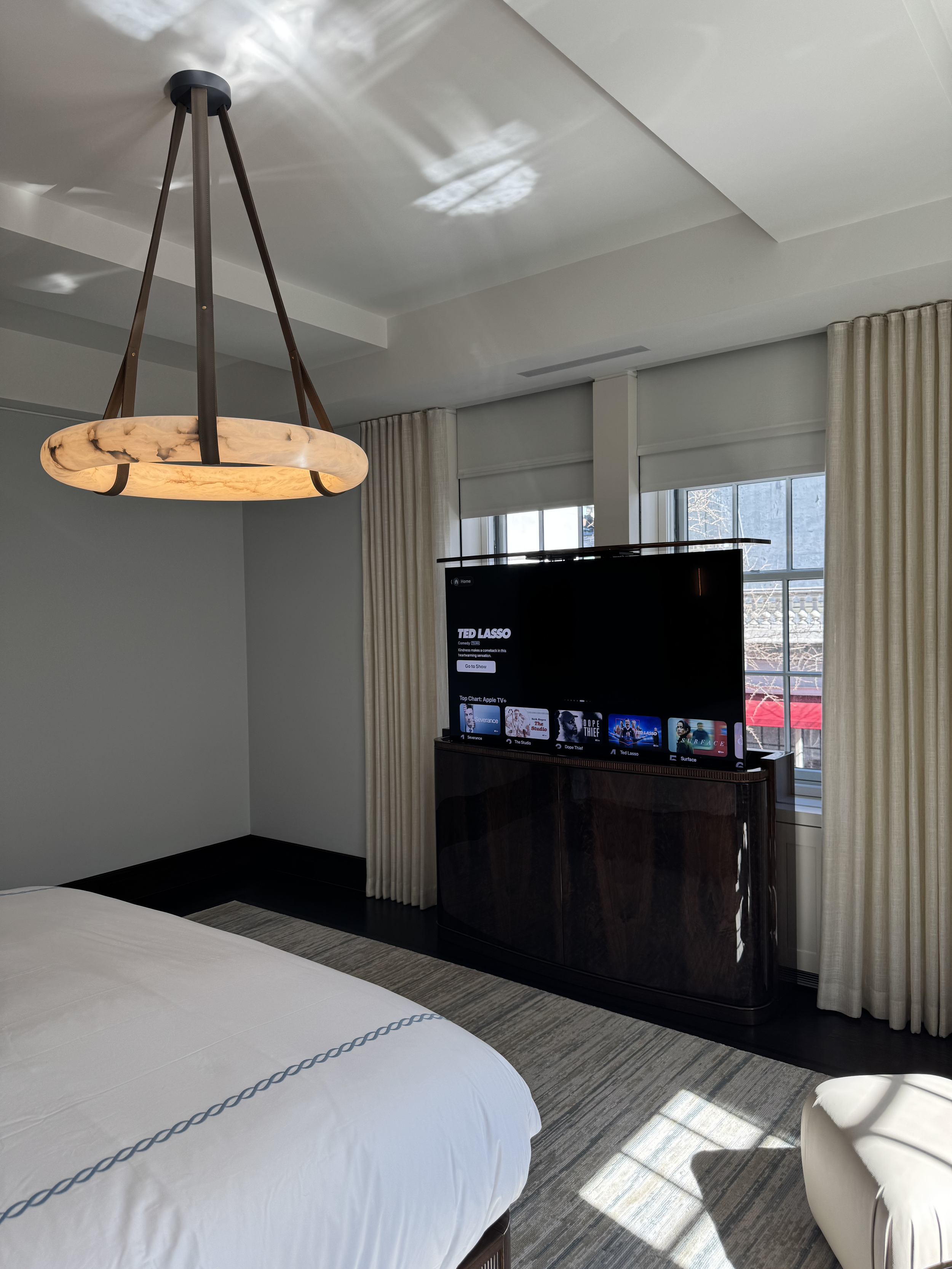
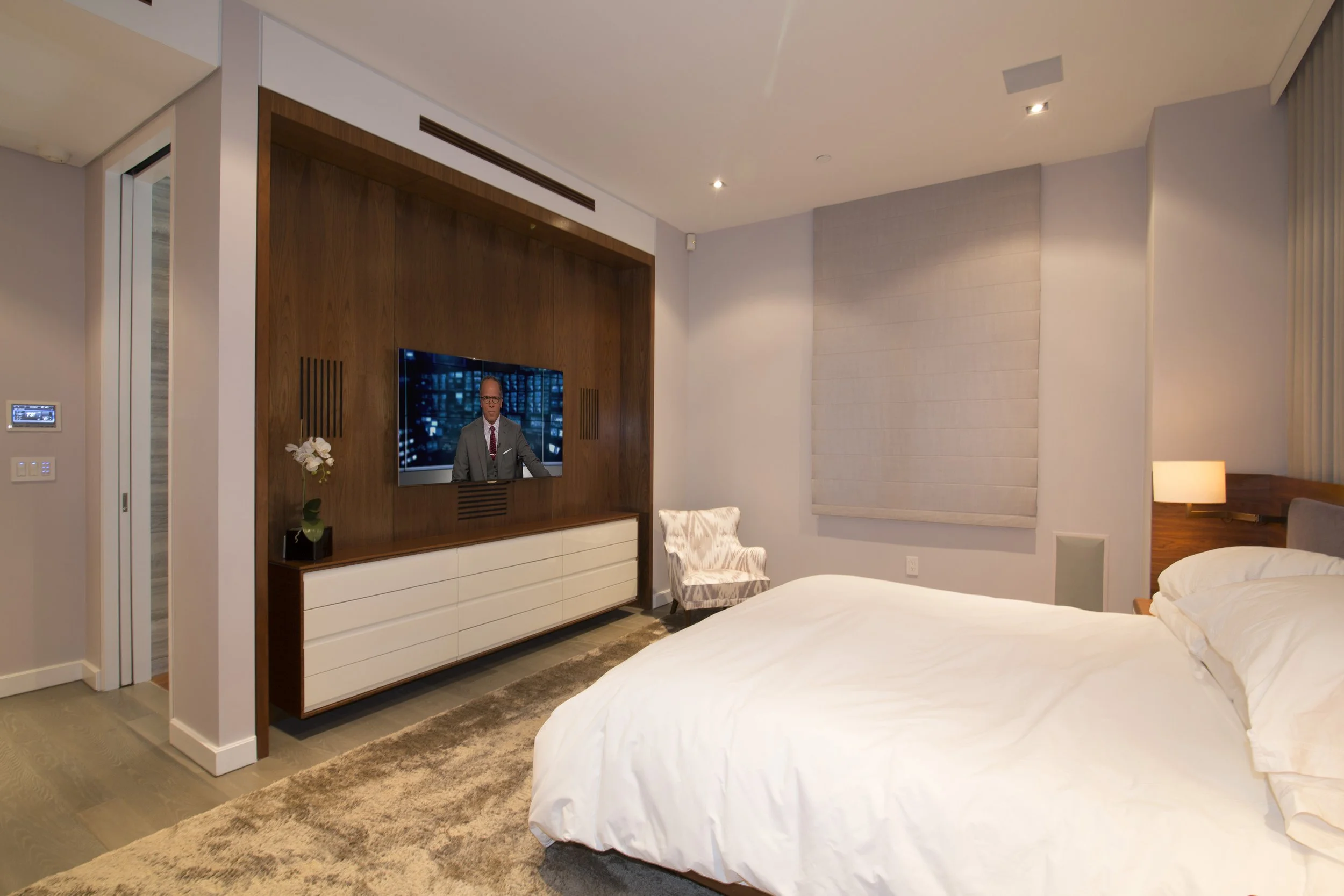
Retractable TV, Motozed shades, Lutron lighting - all the components make up the master bedroom smart home system. An AV integrator considers each system and coordinates their functining together.
Modern home technology depends on interconnected systems. Audio and video rely on the network. Control interfaces depend on reliable communication between processors, remotes, displays, lighting devices, shades, and source equipment. Surveillance may depend on network bandwidth, remote access, storage, and power protection.
The decisions made in one room can affect performance elsewhere in the home.
An integrator must understand not only where devices connect, but also how they communicate. Wi-Fi, Ethernet, Zigbee, Bluetooth, HDMI-CEC, infrared, serial control, relays, and manufacturer-specific protocols all behave differently. Some are dependable for a particular application; others introduce limitations or conflicts.
Understanding those differences helps the integrator choose the right control method rather than relying on whatever connection is easiest to make.
Trade Coordination Is Part of the Work
Technology in a luxury residence touches almost every part of the project.
Display locations may affect framing and millwork. Speaker placement must coordinate with lighting, HVAC, ceiling details, and interior design. Motorized shades may require recessed pockets, electrical feeds, fabric selections, and coordination with window conditions. Equipment rooms need sufficient space, power, ventilation, and service access. Outdoor systems may require trenching, drainage planning, masonry work, landscaping coordination, and weather-resistant infrastructure.
Because of this, integrators regularly communicate with:
Homeowners and property managers
Architects and interior designers
General contractors
Electricians
HVAC contractors
Millworkers
Lighting designers
Security providers
Internet service providers
Landscape architects and outdoor contractors
The integrator’s role is not limited to installing the final equipment. It includes designing, documenting, and communicating what each party needs to provide so the complete system can work as intended.
The Network Is Part of the AV System
Modern AV depends on the network.
Streaming services, control systems, lighting processors, motorized shades, surveillance cameras, wireless devices, remote support tools, whole-home audio, and video distribution all require stable connectivity.
An installer may connect a device to the existing network.
An integrator evaluates whether the network can support the system being designed.
That may include planning equipment locations, wired connections, wireless access point placement, outdoor coverage, remote buildings, network segmentation, power protection, service access, and future expansion.
A room can contain excellent speakers and displays and still provide a poor experience if streaming buffers, controls lag, devices fall offline, or coverage disappears in key areas.
The network is no longer separate from the AV system. It is the infrastructure the system runs on.
Commissioning Completes the Integration Process
Installation asks whether the equipment is connected.
Commissioning asks whether the system performs correctly in real use.
During commissioning, the integrator tests and refines the complete system. This may include confirming audio performance, video sources, control behavior, network reliability, lighting scenes, shade operation, remote access, permissions, labeling, documentation, and service readiness.
It also includes evaluating the homeowner experience.
Are the controls understandable? Do the scenes match how the rooms are actually used? Are commonly used functions easy to reach? Does the system recover properly after a power or internet outage? Can a service technician understand the system later without starting from scratch?
A system can be technically operational and still be poorly integrated. Commissioning closes that gap.
Integration Creates Long-Term Accountability
An installer may consider the project complete when the equipment has been installed and tested.
An integrator expects to remain responsible for the system after the installation.
That means documenting the work, supporting the homeowner, maintaining remote access, responding to service needs, updating programming, and helping the system adapt as technology and the homeowner’s needs change.
Professional integrators view the spaces they work in as a representation of their design, workmanship, and judgment—not simply as jobs to be completed.
That creates a different kind of client relationship. The goal is not just to finish the installation. It is to become a reliable technology resource for the home.
Why Integration Matters in Luxury Homes
Luxury residences are often larger, more design-sensitive, and more technically interconnected than basic AV projects.
A homeowner may want whole-home audio without visible equipment. An interior designer may need speakers, keypads, displays, and shades to align with the design. An architect may want technology incorporated without disrupting proportions, finishes, or sightlines. A builder needs wiring, power, equipment locations, and infrastructure coordinated before walls and ceilings are closed.
Without early integration, compromises tend to appear later.
Displays may end up in awkward locations. Speakers may conflict with lighting or ceiling details. Equipment may be placed in closets without ventilation or service access. Wi-Fi may perform poorly in completed spaces. Outdoor entertainment areas may become difficult to connect. Homeowners may be left with too many remotes, too many apps, and no clear way to operate the home.
Integration helps prevent those problems before they become expensive or visible.
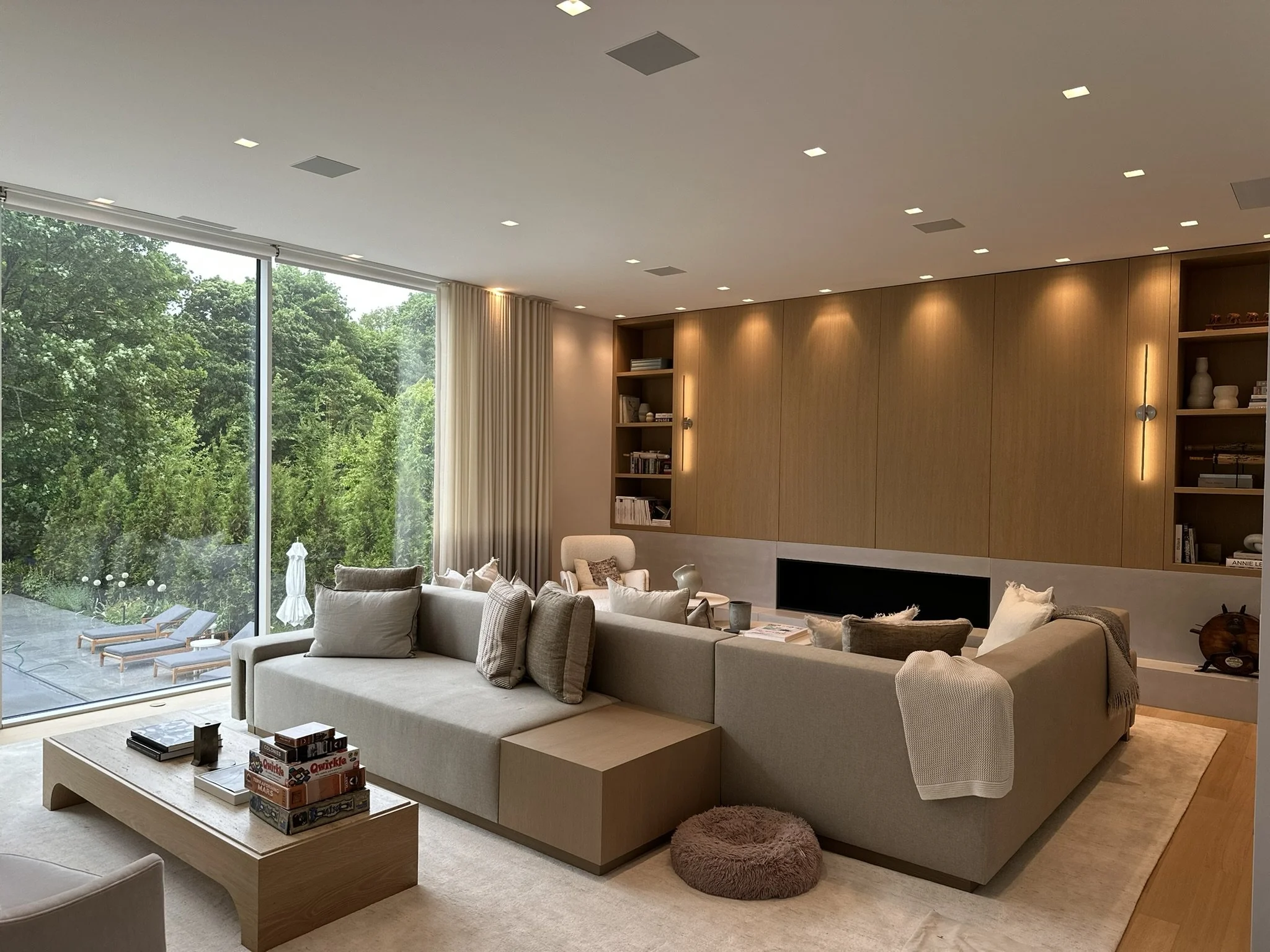
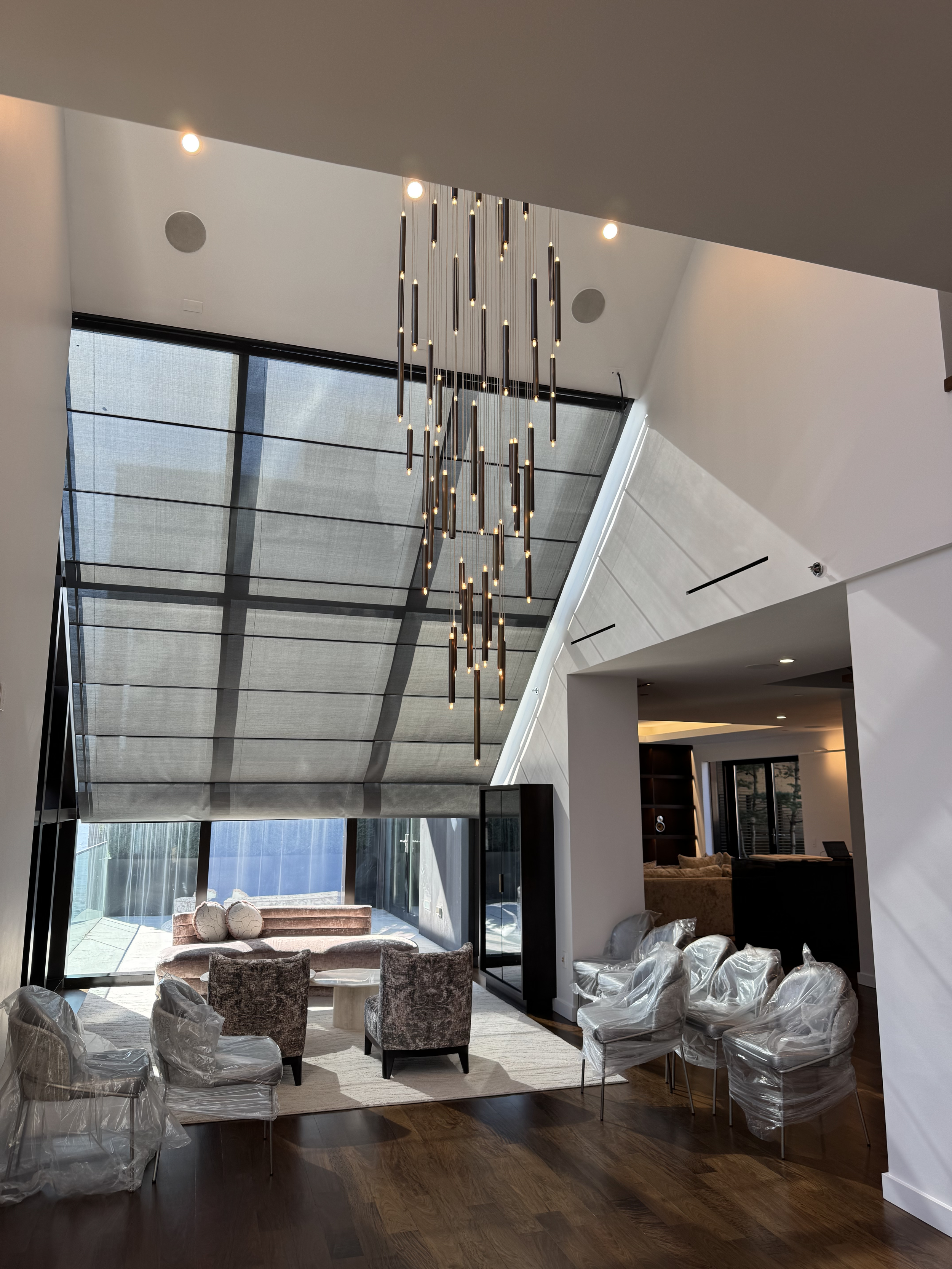
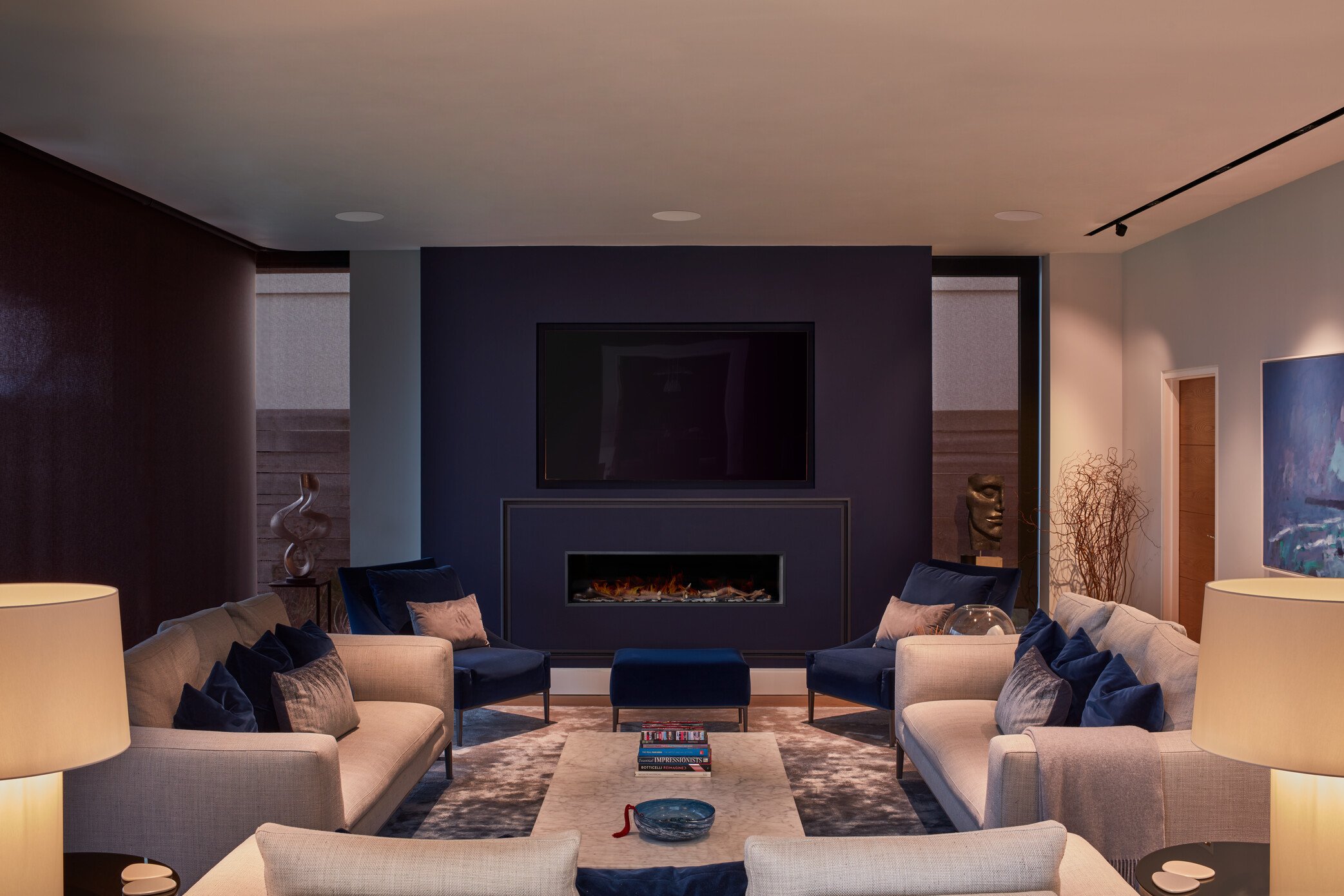
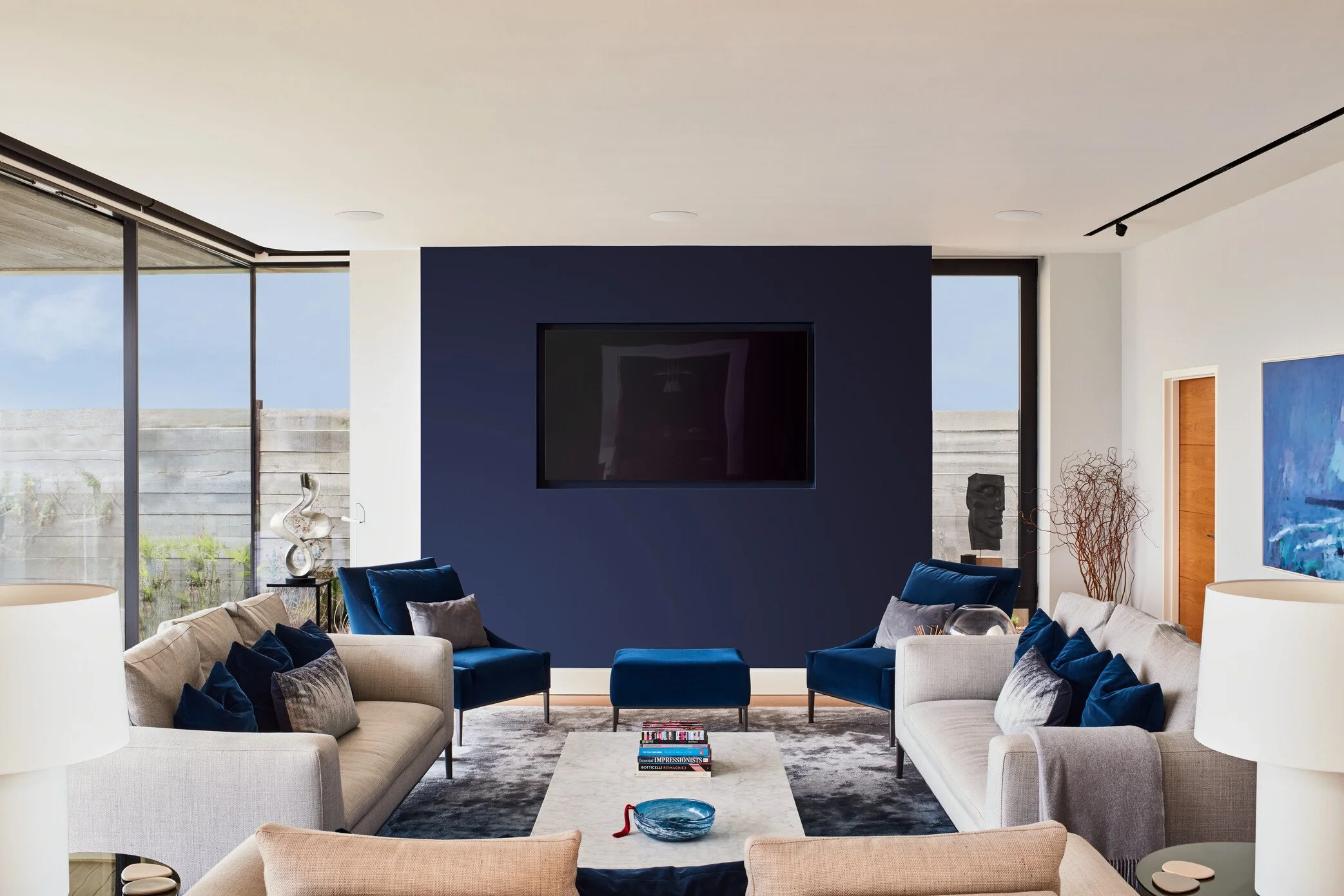
Recess lighting and speakers, motorized blinds, architectural wall lighting - all come together to create an integrated AV experience.
The Simple Difference
An AV installer installs or replaces equipment.
An AV integrator designs the homeowner experience, coordinates the technology with the home, manages communication between systems, commissions the finished result, and supports it over time.
For a limited equipment task, installation may be enough.
For a luxury residence where audio, video, networking, lighting, shading, security, control, and architecture need to work together, integration matters.
Plan AV Integration for Your Manhattan or Hamptons Home
Home Technology Experts designs and integrates residential technology systems for luxury homes in Manhattan, the Hamptons, and surrounding New York markets.
Our team includes design consultants, engineers, project managers, programmers, and technicians who work together to create systems around the homeowner, the architecture, and the way each space will be used.
Our work includes audio and video, home theaters, media rooms, networking, lighting control, motorized shading, surveillance, access control, outdoor entertainment, commissioning, and long-term support.
For a new build, renovation, estate upgrade, or luxury spec home, involving an integrator early can protect the design, improve coordination, and create a home that is easier to use and support.
Contact Home Technology Experts to begin planning a residential technology system designed for the way you live.
FAQs
What is the difference between an AV installer and an AV integrator?
An AV installer usually focuses on installing and connecting equipment. An AV integrator designs the full system, including audio, video, networking, control, lighting, shading, wiring, programming, commissioning, and long-term support. The installer might mount the screen, projector and speakers for your home theater. The integrator designs a comprehensive system that works together.
Do I need an AV integrator for a luxury home?
In most luxury homes, yes. Larger residences often require coordinated planning for whole-home audio, media rooms, Wi-Fi, lighting control, motorized shades, security, hidden equipment, outdoor entertainment, and future service access. An AV integrator helps those systems work together.
Is AV integration only for home theaters?
No. AV integration can include home theaters, media rooms, whole-home audio, outdoor audio and video, networking, lighting control, motorized shades, surveillance, access control, and smart home control systems.
Why should AV integration be planned before construction?
Early planning allows wiring, speaker locations, equipment rooms, rack locations, display placement, network coverage, keypad locations, and concealed technology to be coordinated before walls, ceilings, millwork, and finishes are complete. This helps reduce costly changes later.
Why is the network important for AV systems?
Modern AV systems rely on the network for streaming, control, audio distribution, video systems, wireless devices, remote access, and service support. If the network is weak, the AV system may feel unreliable even when the equipment itself is high quality.
What does commissioning mean in AV integration?
Commissioning is the process of testing, refining, labeling, documenting, and confirming that the system works properly for daily use. It helps ensure the installed technology performs reliably and is ready for the homeowner and support team.
Does Home Technology Experts provide AV integration in Manhattan and the Hamptons?
Yes. Home Technology Experts provides AV integration, smart home technology planning, networking, lighting control, shading, surveillance, outdoor entertainment, and long-term support for luxury residences in Manhattan, the Hamptons, and surrounding New York markets.