
Long Island Smart Home Design, Installation & Support
Thoughtfully integrated lighting, shades, entertainment, networking and home control, designed for how you live and supported long after installation. One team from planning through ownership.
What is a professionally integrated Long Island smart home?
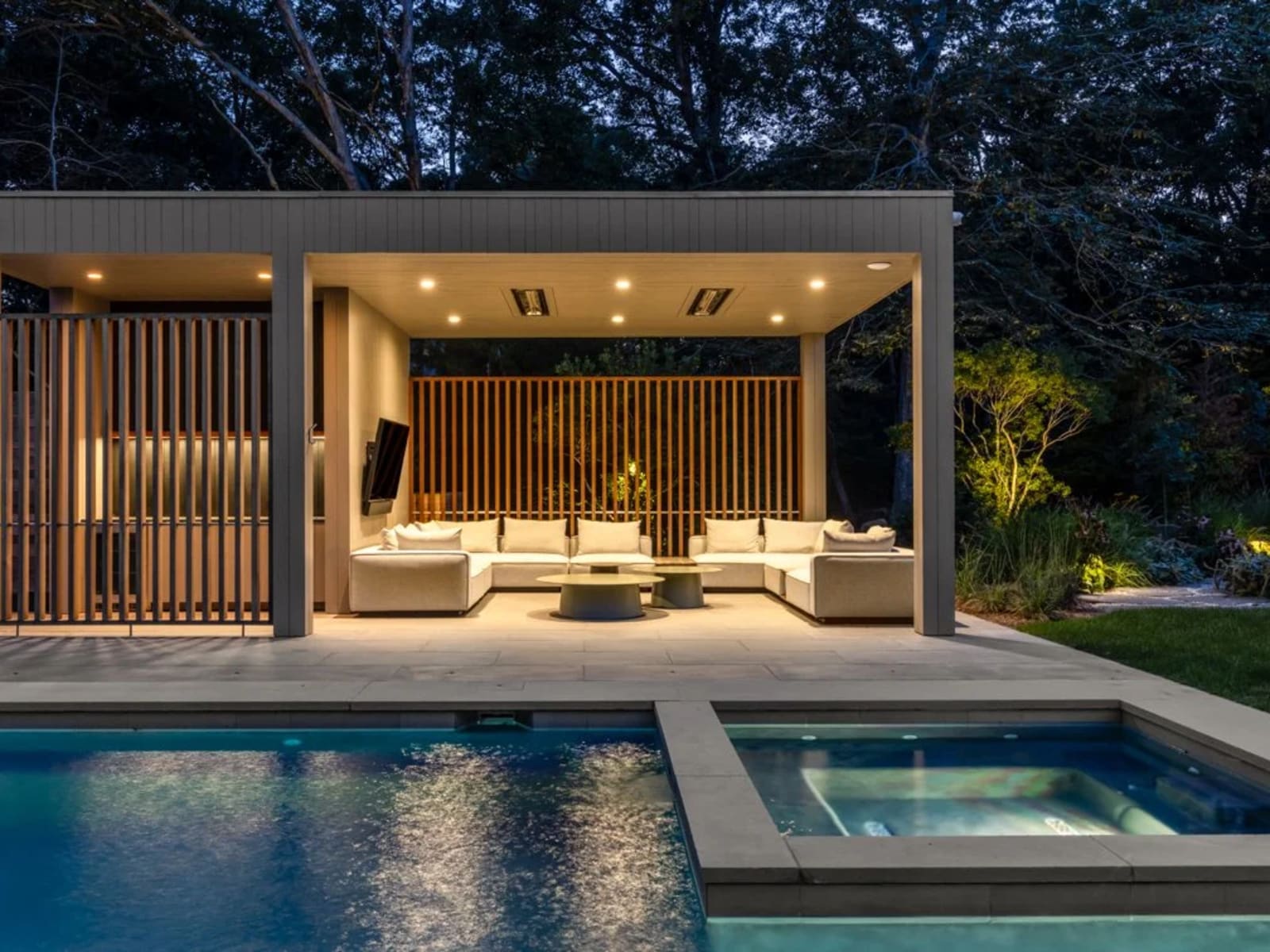
A professionally integrated smart home brings the systems you use every day into a clear, dependable experience. Lighting scenes, motorized shades, climate settings, music, television and selected surveillance and entry functions can work together, with a network and service plan designed to support them. The result should feel simpler to live with, not more complicated.
HTE designs and supports technology for new construction, major renovations, focused improvements and existing systems that need a new service partner. Whether the residence is a year-round Nassau County home or a seasonal Hamptons estate, the objective remains consistent: technology should be easy to understand, discreet in the design, resilient under real-world conditions, and built to be supported.
Reliability starts with a properly planned home network and extends through the visible experience. HTE coordinates with homeowners, architects, interior designers, builders, electricians, and property teams so infrastructure, controls, visible finishes and future service access are addressed before they become expensive changes.
Smart home services for Long Island homes
Choose the systems your residence needs. HTE coordinates them through a shared design, thoughtful installation, clear documentation and support after move-in.
Smart Home Control
Bring lighting, climate, shades, entertainment, surveillance, and selected outdoor systems into a consistent control experience built around the household.
Explore home controlIntelligent Lighting
Create intuitive scenes, reduce wall clutter, and coordinate architectural lighting with time of day, occupancy, entertaining, and the home's design intent.
Explore lighting controlMotorized Shades
Manage daylight, privacy, comfort, and material protection with quiet shading selected to complement the architecture and interior palette.
Explore motorized shadesHome Networks & Wi-Fi
Engineer stable wired and wireless coverage for the main residence, guest spaces, pool areas, landscape, and the connected systems that depend on it.
Explore home networksAudio, Video & Cinema
Design whole-home music, discreet displays, media rooms, and dedicated theaters that perform beautifully without allowing equipment to dominate the room.
Explore audio and videoExpertCare Support
Replace fragmented service with clear documentation, remote assistance, system monitoring, and coordinated onsite support suited to the residence.
Explore ongoing supportTechnology should feel effortless. Even when the home is complex.
It responds simply, operates reliably, and has a real team behind it when the residence or the technology changes.
Smart home expertise across Long Island and the Hamptons
A Long Island project may involve a historic North Shore home, a year-round Nassau County residence or a seasonal East End estate. Each setting brings different requirements for infrastructure, access, remote support and coordination. HTE begins with the way the property is built and used.
In the Hamptons, seasonal occupancy, guest houses, outdoor entertainment and pre-arrival reliability often shape the system. Farther west, year-round use, denser neighborhoods, renovation constraints, and tighter project schedules may take priority. The technology should reflect the property, not a standard package.
For a closer look at how property history, infrastructure and site conditions shape these decisions, read our Long Island residential technology planning perspective.
Nassau County
Integrated home technology for renovations, new homes, and established residences across Nassau County.
Nassau County smart homesThe Hamptons
Whole-home automation shaped for estates, seasonal residences, outdoor living, and dependable remote support.
Hamptons smart homesNew Construction
Early technology planning coordinated with the architect, builder, designer, electrical team, and project schedule.
New-construction planningExisting & Inherited Systems
Assessment, stabilization, documentation, selective modernization, and a clear path to ongoing service.
Explore system takeoverHow a Long Island smart home project moves forward
The process is built to create clarity before equipment is selected and continuity after the installation is complete.
Discover
Understand the residence, household priorities, project team, existing conditions, and the experience the technology should support.
Engineer
Define infrastructure, system architecture, equipment locations, interfaces, documentation, budgets, and coordination requirements.
Deliver
Install, program, test, commission, and refine the system with disciplined execution and clear responsibility across the project.
Support
Document the completed system, train the household, and establish the right long-term service relationship for the residence.
Smart home planning resources for Long Island homeowners and project teams
Good home technology decisions start with a clear understanding of the residence, the building process and how the system will be supported. These HTE articles offer practical guidance for homeowners and the professionals shaping the residence.
What smart home automation actually means
A plain-language introduction to coordinated home control in the Hamptons and Long Island, including the systems that can work together and the role of a professional integrator.
Read the smart home guidePlanning smart homes for the years ahead
Why pathways, power, network architecture, documentation, and service access matter more than trying to predict every device a homeowner may want years from now.
Read about future-ready designHow one weak network device can disrupt the home
A closer look at the infrastructure beneath smart home control; and why a single consumer-grade or poorly configured component can affect the experience throughout the residence.
Read the network articleWhy designers and integrators belong at the same table
The best projects align interior design, architecture, construction, and technology early enough to protect both the visual result and the performance of the completed home.
Read about project collaboration
Long Island smart home FAQs
A good first conversation should clarify the home's priorities, current conditions, project timing, and the level of coordination required. These are the questions that often come before that discussion.
What can a Long Island smart home system control?
A professionally designed system can coordinate lighting, motorized shades, climate, audio, video, surveillance, entry, networking, and selected outdoor systems. The goal is not to put every device into one app simply because it is possible. HTE determines which functions should work together, which should remain independent, and how the household can control the home without unnecessary complexity.
When should HTE become involved in a new home or renovation?
Ideally, HTE becomes involved during early planning, before electrical, millwork, ceiling details, equipment rooms, and window treatments are finalized. Early coordination gives the architect, designer, builder, and technology team time to align infrastructure, control locations, visible finishes, cooling, power, and service access. HTE can also enter later, but early decisions usually create a cleaner result and reduce avoidable changes.
Can HTE improve or take over an existing smart home?
Yes. HTE can assess an inherited, unsupported, or unreliable system and determine what is working, what is creating risk, and what information is available. The process may include documenting equipment and credentials, evaluating the network, stabilizing urgent failures, updating interfaces, and planning selective replacement. A takeover does not automatically mean rebuilding everything; the recommendation depends on the system and the owner's priorities.
Does every smart home need the same control platform?
No. HTE works with established platforms and selects an approach based on the residence, desired experience, existing equipment, custom requirements, project team, and long-term service needs. A smaller focused system and a multi-structure estate do not require the same architecture. The right platform is the one that can deliver the intended experience reliably and remain serviceable over time.
How does ongoing smart home support work?
Once the system is documented and brought to an agreed serviceable condition, HTE can provide ongoing support through an appropriate ExpertCare service relationship. Depending on the residence, that may include remote assistance, monitoring, coordinated onsite visits, and planning for future changes. The purpose is continuity: a known system, an accountable team, and a clear way to get help.
Plan a Long Island smart home that is built to work; and built to be supported.
Tell HTE what you are building, renovating, inheriting, or trying to improve. We will help define the right next step.