
Heated Driveways, Pathways, & Snow Melting Systems in NYC & Long Island
You Can Make Driveways and Pathways Less Treacherous
In New York winters, snow and ice are more than an inconvenience. Icy driveways, sidewalks, and walkways create real safety risks—especially in dense urban neighborhoods and along Long Island’s freeze–thaw coastline.
Not to mention that nationally 11,400 people seek emergency medical care due to heart-related issues WHILE shoveling snow.
For homeowners and property owners who want a dependable, hands-off approach, snow melting systems provide a practical way to keep outdoor surfaces clear throughout the winter.

What Is a Snow Melting System?
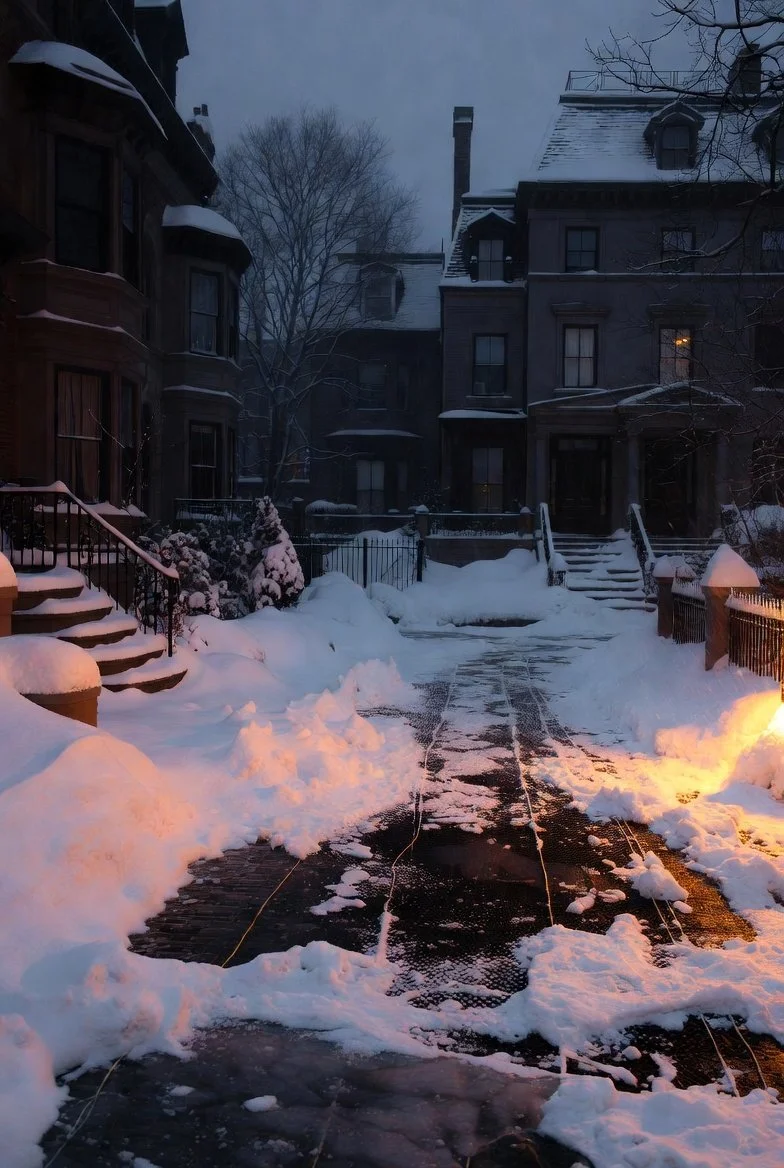
A snow melting system is installed beneath the surface of a driveway, sidewalk, steps, or ramp. When conditions require it, the system gently warms the surface to prevent snow and ice from accumulating.
The concept is similar to radiant floor heating indoors, but engineered for outdoor use and Northeast winter conditions. Rather than reacting after snow builds up, these systems are designed to maintain clear, usable surfaces during active storms.
Why Snow Melting Systems Make Sense in NYC & Long Island
These systems are increasingly common across the New York metro area due to regional realities:
Frequent freeze–thaw cycles that create persistent ice
Limited space for snow storage in urban settings
Slip-and-fall liability concerns for residential and multi-family properties
Damage caused by salt and chemical de-icers
Growing adoption of smart home and building automation
In both city and suburban environments, snow melting systems improve safety while reducing ongoing maintenance and manual labor.
Types of Snow Melting Systems
There are two primary system types used in NYC and Long Island properties.
Electric Cable & Mat Systems
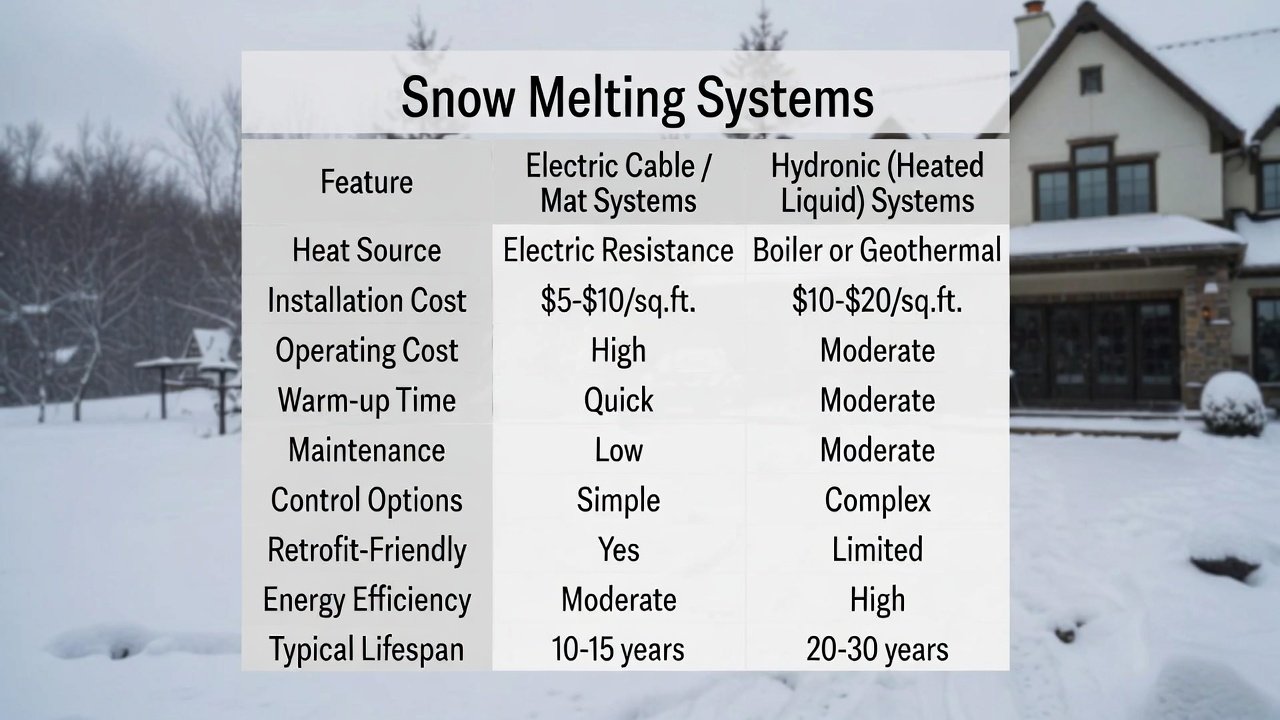
Electric systems use heating cables or pre-assembled mats installed beneath the surface.
Common applications and characteristics:
Residential driveways, walkways, stairs, and patios
Fast response when activated
Straightforward system design
Compatible with sensors and smart controls
Suitable for new construction and select retrofit projects
Electric systems are often used in townhomes, single-family homes, and urban properties with smaller surface areas.
Hydronic (Heated Liquid) Systems
Hydronic systems circulate a heated liquid—typically a water and glycol mixture—through tubing beneath the surface.
Common applications and characteristics:
Large driveways, shared access areas, and ramps
Even, consistent heat distribution
Designed for wide surface coverage
Typically integrated during new construction
Hydronic systems are most often chosen where larger areas require continuous snow prevention.
Installation Considerations for NYC & Long Island
New Construction vs. Retrofit
Snow melting systems are most effectively installed during:
New driveway construction
Full driveway replacement
Major resurfacing projects
Planning the system as part of construction allows for proper spacing, coverage, and long-term reliability.
Surface Materials
These systems can be installed beneath:
Concrete
Asphalt
Pavers
Stone or tile
Concrete and pavers are common choices in the New York region due to durability and heat retention.
System Design Matters
Effective snow melting depends on proper planning. Systems should be:
Evenly distributed for consistent coverage
Designed to prevent accumulation—not simply melt snow slowly
Paired with temperature and moisture sensors
Designed and installed by professionals
Local conditions, including coastal moisture and fluctuating winter temperatures, are critical design factors.
Smart Controls & Automation
Modern snow melting systems operate automatically based on real-time conditions.
Common features include:
Surface temperature sensing
Moisture detection
Weather-responsive controls
Integration with home or building automation systems
This ensures the system runs only when needed, improving efficiency and reliability during unpredictable winter weather.
Safety & Long-Term Benefits
Snow melting systems help:
Reduce slip-and-fall risks
Keep entrances, garages, and exits clear
Eliminate snow piles and refreezing runoff
Avoid damage caused by salt and chemical de-icers
For urban properties and multi-unit buildings, this added predictability can be especially valuable during extended storms.
Is a Snow Melting System Right for Your Property?
Snow melting systems are commonly installed in:
Snow Melting System Comparison
Residential driveways and walkways
Brownstones and townhomes
Multi-family buildings
Accessibility ramps and stairs
Commercial and mixed-use properties
If you own property in NYC or Long Island and regularly contend with snow, ice, or limited snow storage, a properly designed snow melting system can provide consistent winter safety with minimal ongoing effort.
Snow Melting Systems – Frequently Asked Questions
How does a snow melting system work?
A snow melting system is installed beneath the surface of a driveway, walkway, or stairs. When outdoor conditions require it, the system gently warms the surface to prevent snow and ice from accumulating. The goal is prevention—not melting large amounts of snow after it has already built up.
Does the system turn on automatically?
Yes. Most systems use temperature and moisture sensors to activate only when snow or ice conditions are present. This removes guesswork and ensures the system runs only when needed.
Is a snow melting system always running in winter?
No. Properly designed systems operate only when specific conditions are met—typically cold temperatures combined with moisture. When conditions are dry or temperatures rise, the system remains off.
Can snow melting systems be installed on existing driveways?
They are easiest to install during new construction, full driveway replacement, or major resurfacing projects. Some electric systems can be added during select retrofit scenarios, but performance and layout are best when the system is planned as part of construction.
What surfaces can be heated?
Snow melting systems can be installed beneath:
Concrete
Asphalt
Pavers
Stone or tile
Concrete and pavers are especially common in NYC and Long Island due to durability and heat retention.
What’s the difference between electric and hydronic systems?
Electric systems use heating cables or mats and are often used for smaller residential areas. Hydronic systems circulate heated liquid through tubing and are typically chosen for larger surfaces. The right option depends on surface size, construction timing, and long-term use.
Are snow melting systems expensive to operate?
Operating costs vary based on system type, surface area, and how often the system runs. Automated controls help limit operation to necessary conditions, improving efficiency and predictability.
Do snow melting systems replace plowing and shoveling completely?
When properly designed, these systems significantly reduce—or eliminate—the need for manual snow removal on the heated surfaces. Adjacent, non-heated areas may still require attention.
Are snow melting systems safe?
Yes. These systems improve safety by reducing icy conditions and eliminating refreeze caused by shoveled snow and meltwater. They are commonly used on walkways, steps, and accessibility ramps where traction is critical.
Do they damage concrete or pavers?
No. In fact, snow melting systems often reduce long-term surface damage by eliminating the need for salt and chemical de-icers, which can degrade concrete, stone, and surrounding landscaping.
How long do snow melting systems last?
With proper design and installation, snow melting systems are built for long-term use. Electric systems typically require minimal maintenance, while hydronic systems may need occasional system checks.
Are snow melting systems common in NYC and Long Island?
Yes. They are increasingly used in urban neighborhoods, suburban homes, multi-family buildings, and commercial properties where snow storage is limited and safety is a priority.
Is a snow melting system worth it?
For properties that experience frequent snow, ice buildup, or limited space for snow removal, a snow melting system offers predictable winter safety and reduced maintenance. The value is in consistency and peace of mind—not convenience alone.
A professional evaluation can help determine whether a snow melting system makes sense for your property and how it should be designed.
LEARN MORE: SPRING SMART HOME MAINTENANCE