
You’d Be Surprised What You Don’t Know About Outdoor Technology
What Homeowners Get Wrong About Outdoor Technology
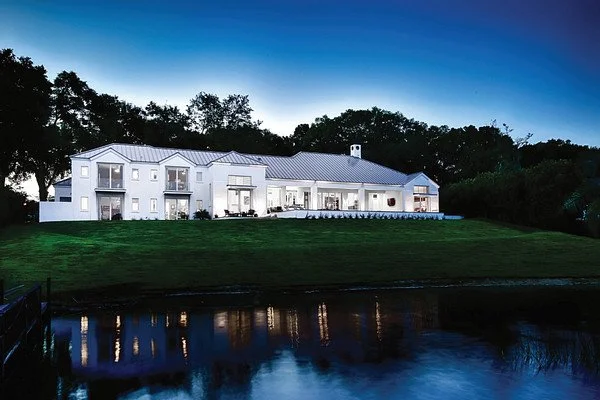
The Proper Role of Technology in Outdoor Living
Outdoor living, at its best, is not about activity.
It’s about permission—to linger longer, to move freely, to let time soften its edges.
In places like the Hamptons, where the outdoors functions as an extension of the home rather than an escape from it, technology plays a particular role. Not a starring one. Not even a visible one. Its purpose is to support the atmosphere without ever defining it.
When outdoor technology succeeds, it does not call attention to itself. It reinforces a feeling—of ease, continuity, and quiet confidence.
Technology as an Extension of Architecture, Not an Addition
The most successful outdoor environments are not assembled. They are composed.
Technology that feels “added on” disrupts that composition. Screens become visual punctuation marks. Speakers announce their presence. Lighting competes with landscape rather than complementing it.
In well-considered homes, technology aligns itself with architecture and landscape from the outset. It follows existing lines. It respects materials. It appears where it’s useful and disappears where it’s not.
The objective is never to showcase capability.
It is to preserve visual calm.
Designed for Exposure as a Matter of Principle
Outdoor spaces reveal intention over time.
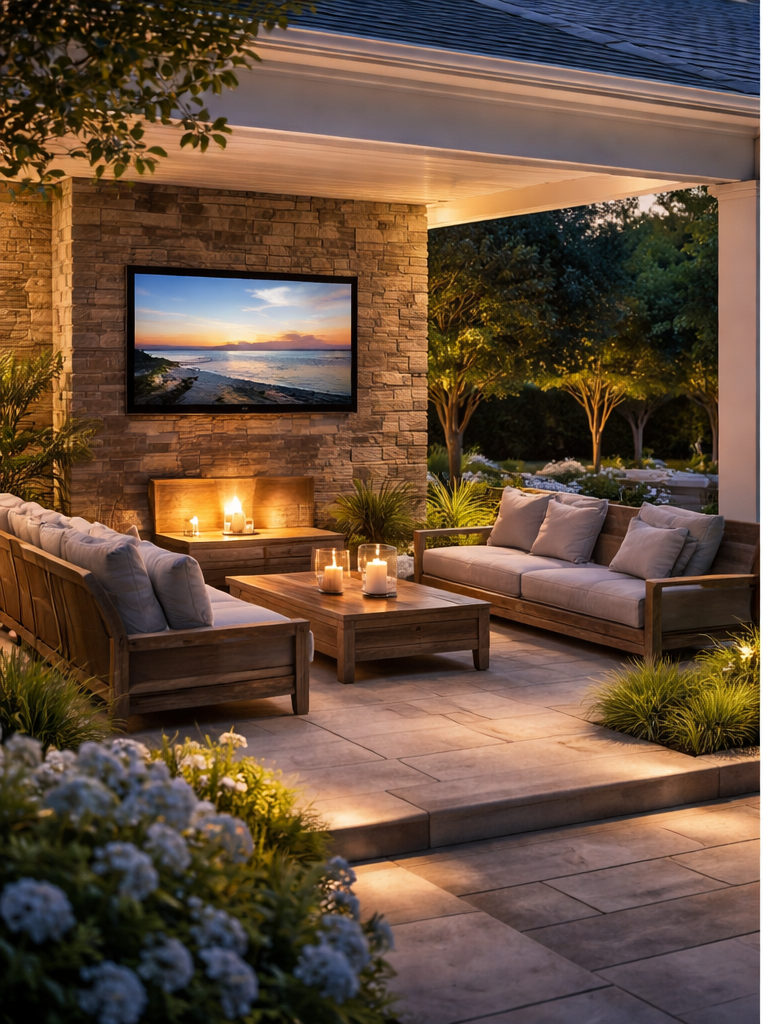
Salt air, sun, moisture, and seasonal change do not simply test durability—they expose shortcuts. Systems that were selected for convenience age visibly. Finishes degrade. Performance becomes inconsistent. The illusion of effortlessness dissolves.
Technology designed specifically for exterior environments behaves differently. It weathers without complaint. It maintains its presence without demanding attention. It becomes part of the home’s long-term rhythm rather than a maintenance concern.
Here, durability is not a technical consideration—it’s a philosophical one. It signals that the home is designed to endure, not impress briefly.
When Disciplines Move in Parallel
Outdoor environments of quality are rarely the result of a single vision. They emerge from collaboration—architecture, landscape design, hardscape, lighting, and technology all moving in parallel rather than in sequence.
When technology is introduced too late, it leaves a trace. Conduit becomes visible. Fixtures feel compromised. Speakers and lighting appear as afterthoughts rather than elements of the composition.
By contrast, when technology is coordinated early with landscape designers and builders, it disappears into the work itself. Pathways, planting, stonework, and sightlines are respected. Infrastructure is concealed. Nothing feels retrofitted.
The result is not technical success—it is visual authority.
Screens That Respect the Setting
When a television belongs outdoors, it should feel considered—not convenient.
Placement is less about where the screen fits and more about how it interacts with light, landscape, and sightlines throughout the day. Shade, orientation, and proportion matter as much as brightness or resolution.
In refined outdoor spaces, screens are positioned to be available, not dominant. They never interrupt a view or compete with the environment. They appear when wanted and recede when not.
This restraint communicates a simple truth: the setting itself is the primary experience.
Sound as Social Architecture
Music outdoors is not meant to perform—it is meant to connect.
Sound that feels directional or overly present changes behavior. Conversations shorten. People retreat. The space becomes less fluid. By contrast, evenly distributed, discreet audio allows guests to move naturally, speak comfortably, and remain engaged.
Achieving this requires intention: multiple speakers, carefully placed, working together to create atmosphere rather than emphasis. The result is sound that feels ambient, social, and unforced.
When done correctly, guests rarely comment on the audio. They simply stay longer.
Connectivity as Continuity
In many of the most private and desirable areas of the Hamptons—Sagaponack, Bridgehampton, parts of Water Mill—cellular reception is inconsistent at best. This is understood, accepted, and even part of the appeal.
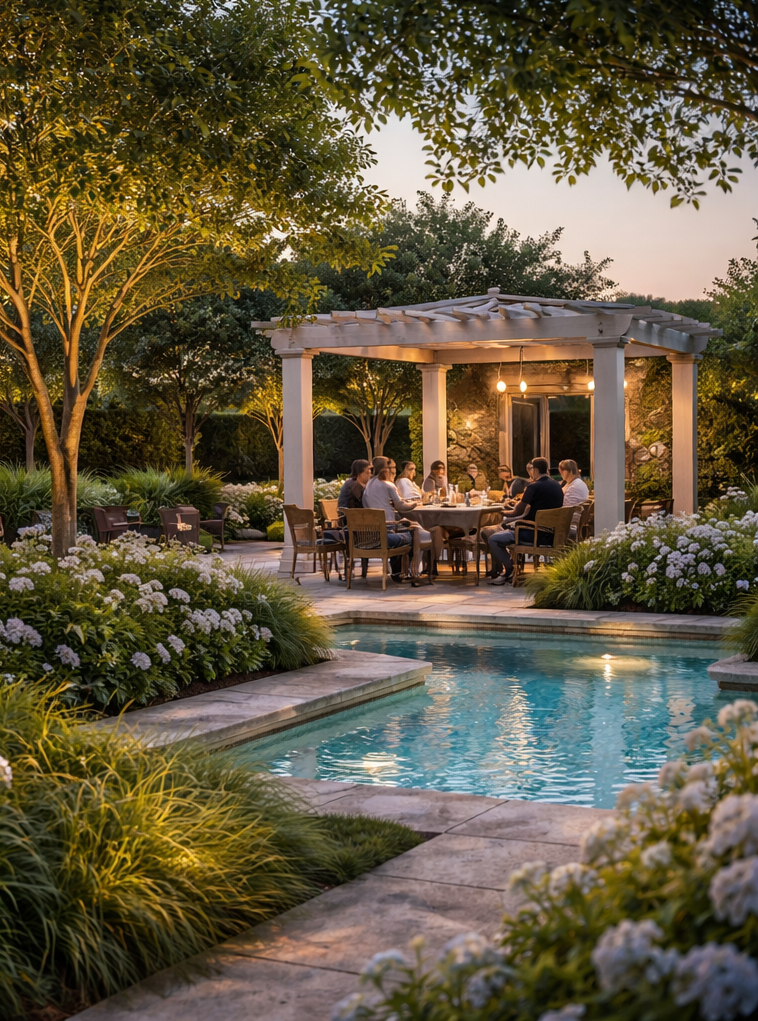
What matters is not strong cell service, but seamless continuity.
Outdoor spaces should allow the same freedom of movement and communication as the interior of the home. A phone call taken by the pool should not require hunting for signal. A message sent from the far edge of the property should feel unremarkable. Interacting with music, lighting, or the environment itself should never feel delayed or unreliable.
Thoughtful outdoor connectivity quietly removes friction. It allows technology to respond instantly, supports clear voice calls where reception falls short, and ensures that control remains intuitive wherever life happens to unfold.
When this layer is done properly, no one talks about it.
They simply experience the outdoors as uninterrupted.
Technology Designed Around Real Life
Outdoor living is often imagined in grand gestures. In reality, it unfolds in smaller moments—early mornings, informal gatherings, evenings that drift late without plan.
Technology should support this reality without requiring attention or explanation. Controls should be intuitive. Scenes should feel natural. Nothing should require instruction.
The most successful outdoor environments adapt effortlessly to mood and moment. They feel ready without feeling programmed.
This is where thoughtful design quietly separates itself from excess.
When Technology Knows Its Place
In the end, the role of technology in outdoor living is not to impress.
It is to disappear into use.
When systems are designed with intention—aligned with environment, architecture, and lifestyle—they become invisible contributors to the experience of the home.
At Home Technology Experts, we approach outdoor technology as part of the larger composition. We work in concert with architects, landscape designers, and builders to ensure that nothing feels forced, added, or compromised.
Because true outdoor luxury is not defined by what’s installed.
Rather by how effortlessly the space lives.
At Home Technology Experts, we design outdoor systems that support the experience without ever defining it—quietly integrated, thoughtfully coordinated, and built to last.
“Thoughtful outdoor technology should feel inevitable—present where needed, invisible where it’s not.”