Some outdoor spaces deserve more than conventional landscape illumination. A reflecting pool, architectural waterfall, sculptural feature, or waterfront terrace can become a remarkable nighttime focal point when lighting is considered as part of the design.
Specialty landscape lighting uses carefully selected equipment and lighting techniques to introduce reflection, movement, texture, and visual interest.
These features can transform Hamptons gardens, swimming pools, outdoor entertaining areas, and waterfront properties. But the most successful results are rarely defined by brightness or dramatic color alone.
They come from understanding the architecture, landscape, materials, viewing angles, and how each feature contributes to the property's complete nighttime composition.
Pool Lighting
Fiber-Optic Pool Lighting and Star-Floor Effects
A swimming pool can become a beautiful nighttime feature without relying exclusively on conventional underwater fixtures.
Fiber-optic pool lighting, sometimes described as galaxy pool lighting, uses distributed points of illumination to create a star-like effect across selected pool surfaces.
The visual result depends on the layout, spacing, pool finish, light source, and construction method. Some systems use fiber-optic components, while other decorative effects may rely on specialized LED technology.
These installations are particularly important to consider during pool design, construction, or major renovation because incorporating the necessary components into finished surfaces may require substantial work.
What to consider before installation
- Compatibility with the selected pool finish.
- Equipment access for future service.
- Appropriate underwater electrical protection.
- Lighting intensity and color preferences.
- Coordination with pool construction and controls.
A restrained star-floor effect can complement sophisticated architecture while preserving the pool's natural appearance during the day.
Illuminated Water
Waterfalls, Cascades, and Reflective Surfaces
Water has a unique relationship with light. A softly illuminated waterfall can create movement and subtle visual texture, while still water may reflect nearby trees, structures, and architectural lighting.
Illuminated waterfalls are often designed around a carefully positioned light source that highlights moving water without exposing the fixture.
Depending on the design, a waterfall may be illuminated from above, below, behind, or within a purpose-built assembly.
The effect should be considered from the primary viewing areas, including terraces, outdoor seating spaces, and interior rooms overlooking the feature.
Designing for the complete setting
An illuminated waterfall should feel connected to the surrounding landscape. If the pool, garden, and architectural lighting are designed independently, their brightness and color temperatures may compete.
Coordinating the different layers creates a more balanced nighttime experience.
Moving Water Features
Laminar Jets and Bubblers Add Movement
Specialty water features can create movement and visual interest around a pool or outdoor entertaining area.
Laminar jets
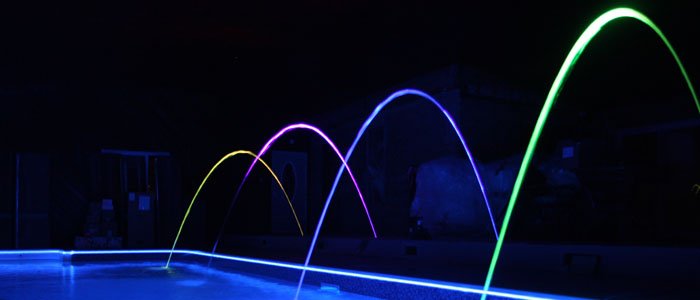
Laminar jets produce a controlled stream of water that can form a smooth, arching trajectory. When illuminated by a compatible lighting system, the stream becomes a distinctive visual element after dark.
These features may be appropriate for carefully planned pool terraces, formal gardens, or contemporary architectural environments.
The overall effect depends on water conditions, equipment selection, nozzle placement, and lighting configuration.
Illuminated bubblers
Bubblers create a different experience. Instead of a defined arc of water, they introduce a localized flow that adds movement, sound, and reflected light.
They are often considered for shallow pool areas, sun shelves, and other purpose-designed water features.
The scale and brightness should complement the pool rather than overwhelm it. Proper equipment selection, water depth, maintenance, and electrical safety must be resolved during design.
Design consideration: Moving-water features are most successful when the visual effect feels intentional. Color-changing capability may be useful for occasional entertaining, but it does not need to define the everyday appearance.
Decorative Accents
Illuminated Stone and Sculptural Features
Not every specialty lighting application needs to involve a swimming pool.
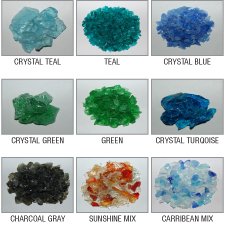
Illuminated decorative aggregates, translucent materials, and carefully integrated light sources can introduce subtle accents into landscape and architectural details.
Depending on the materials and installation method, lighting may be incorporated into stone features, sculptural elements, outdoor counters, or decorative garden areas.
The objective should be to complement the architecture and landscape rather than add visual effects simply because they are available.
Fire-and-water features
Features that combine moving water with firelight can create a compelling focal point for an outdoor living space.
Their design requires particularly careful coordination among the landscape designer, pool professional, appropriate licensed trades, and equipment manufacturer.
Safe separation, fuel systems, water management, ventilation, operating requirements, and maintenance access must all be addressed.
Professional design helps ensure the feature feels integrated into the property rather than becoming an isolated decorative object.
Waterfront Properties
Dock and Waterfront Lighting Requires a Different Approach
Waterfront properties present special opportunities and constraints for exterior lighting design.
Dock lighting can support visibility along walkways, steps, boarding areas, and transitions between the landscape and water.
The challenge is providing useful illumination while controlling glare and unwanted light spill.
Bright, exposed fixtures can make waterfront environments less comfortable and interfere with views across the water.
Thoughtful designs favor appropriate shielding, careful fixture placement, and illumination directed toward the intended surfaces.
Coastal conditions matter
Salt exposure, moisture, wind, changing water levels, and service access can all influence equipment selection.
Waterfront installations may also be subject to local environmental, marine, and lighting requirements.
These considerations should be evaluated before finalizing equipment or fixture locations.
Project Planning
When Should Specialty Outdoor Lighting Be Planned?
Specialty landscape lighting is most effective when considered early in the design process.
Certain pool and water features require embedded components, specialized electrical connections, equipment spaces, or coordination with water circulation systems.
Introducing these requirements after construction may limit design choices and increase the work needed to achieve the intended result.
A coordinated planning process can involve:
- The landscape architect and outdoor lighting designer.
- The pool builder and water-feature specialist.
- The electrician and relevant licensed trades.
- The smart home integrator and controls programmer.
- The architect or builder where infrastructure and finished surfaces are affected.
This collaboration helps align fixture locations, electrical infrastructure, equipment access, control requirements, and visual design.
Intelligent Integration
Bring Specialty Lighting Into a Coordinated Outdoor Experience
Specialty lighting becomes more convenient when compatible equipment can be coordinated with the property's broader lighting control system.
Rather than operating every feature separately, an appropriately designed system may bring together architectural lighting, landscape lighting, pool illumination, and selected water features.
For example, an evening entertaining scene might softly illuminate the terrace, highlight specimen trees, and activate compatible pool lighting to create a balanced visual composition.
A later nighttime setting could reduce decorative lighting while maintaining appropriate visibility around entrances and circulation areas.
Actual capabilities depend on equipment compatibility, controls infrastructure, manufacturer requirements, and professional programming. Safety-critical equipment must retain appropriate independent protections.
Home Technology Experts provides intelligent lighting integration and control programming. Explore our approach to architectural lighting and controls.
The Complete Design
Memorable Outdoor Lighting Is About More Than Special Effects
The best specialty lighting does not compete with the landscape. It reveals features that deserve attention while allowing the rest of the property to remain composed and comfortable.
A carefully illuminated pool, subtle waterfall, or thoughtfully designed dock may become a defining part of the nighttime environment.
Yet the design is only successful when its brightness, color, placement, and operation work harmoniously with the surrounding property.
For Hamptons residences, this requires consideration of architecture, landscape character, coastal exposure, nighttime views, and long-term maintenance.
The result should feel as thoughtful after sunset as it does during daylight.
Hamptons Landscape Lighting
Make Your Outdoor Spaces Distinctive After Dark
Specialty outdoor lighting begins with understanding the property, the desired experience, and the technical requirements behind each feature.
Our sister brand, Hamptons Landscape Lighting, specializes in professional exterior lighting design and installation.
If you are planning a new pool, waterfront improvement, or outdoor living environment, start with a conversation about how lighting can complement the complete design.
Discuss Your Outdoor Lighting Project