
Residential lighting control | Planning guide
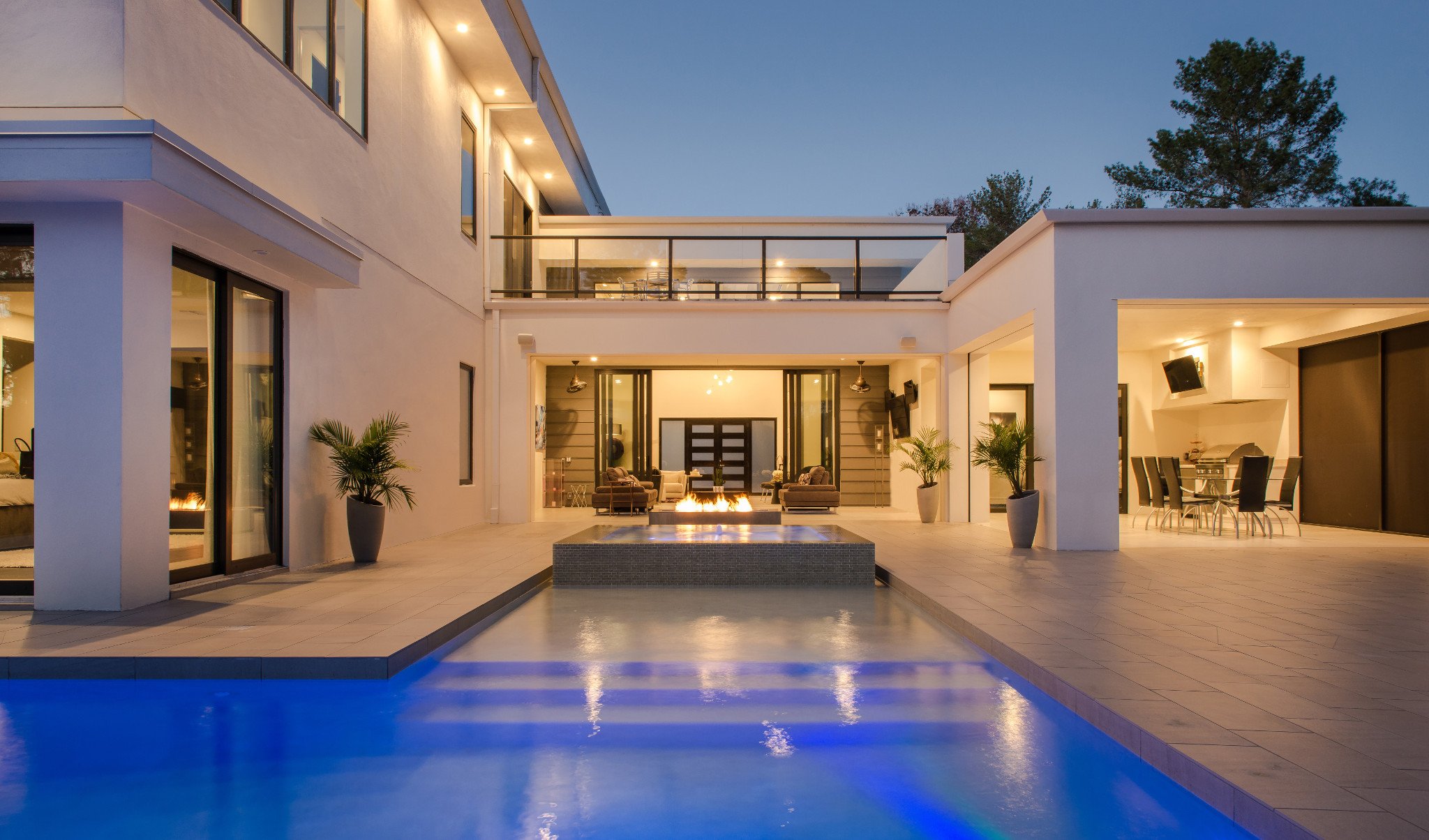
A large home should not require a complicated relationship with its lights. Across a main residence, guesthouse, pool house, terraces, gates, and landscape, intelligent lighting should feel coherent, even when the technology behind it is anything but simple.
Planning residential lighting control for a large home or estate means deciding how spaces will be used, how fixtures and controls will be organized, and how the system will remain dependable as the property evolves. The best time to make those decisions is before walls close, finishes are ordered, and electricians begin their final installations.
Home Technology Experts (HTE) brings 22 years of residential technology experience to that conversation. Our value is not simply knowing which dimmer or keypad to specify. It is understanding how hundreds of individual decisions affect the experience of living in a home, and helping homeowners, architects, interior designers, builders, and electricians resolve them in the right order.
Start with the property, not the product catalog
A primary residence used every day has different requirements from a seasonal estate that may welcome a full house one weekend and sit largely unoccupied the next. Before selecting a lighting platform, HTE considers the entire property and the people who use it.
- Which spaces are used daily, seasonally, or only for entertaining?
- Should a guesthouse, pool house, garage, or other outbuilding operate independently?
- What does arrival look like at the driveway, front door, and interior entry?
- Which rooms need simple local control, and which benefit from coordinated scenes?
- Who will use the system besides the owners, including guests, family, and household staff?
- How should the home behave during an internet outage, a power interruption, or an extended absence?
These answers shape the system architecture, the wiring strategy, and the controls the homeowner will see. They also help distinguish essential functionality from features that add complexity without improving daily life.
Map the lighting zones before construction decisions become permanent
Large properties can include an extraordinary number of lighting loads. Yet the number of circuits is not the number of controls a person should have to manage. A lighting plan should organize those circuits into logical rooms, pathways, and experiences.
For example, a great room may include architectural downlights, decorative pendants, art lights, and accent lighting. Those layers deserve individual design consideration but might be enjoyed through just a few thoughtfully programmed scenes, such as Welcome, Entertain, Relax, and Off.
Estate planning extends beyond interior rooms. Outdoor arrival sequences, covered terraces, landscape pathways, pool areas, and detached structures may need their own schedules, control zones, and operational boundaries. The goal is a system that feels unified without forcing every area of the property to behave identically.
Choose centralized, distributed, or hybrid controls based on the building
Centralized and distributed lighting systems are both useful, but they solve different planning problems. Neither approach is automatically right for every property.
| Approach | Where it can make sense | What to plan carefully |
|---|---|---|
| Centralized or panelized | New construction and major renovations where discreet wall controls and coordinated wiring are priorities | Panel locations, ventilation, dedicated space, electrical documentation, and future service access |
| Distributed or localized | Existing finished spaces, selective upgrades, or areas where major rewiring is impractical | Device compatibility, wireless communication, consistent keypad behavior, and serviceability |
| Hybrid | Estates with a mixture of new construction, renovated rooms, and existing outbuildings | A coherent user experience across different wiring and device arrangements |
HTE evaluates the project scope, existing electrical infrastructure, architectural requirements, desired control experience, and service strategy before recommending an approach. A panelized system can reduce visible wall clutter, but it requires appropriate space and planning. Distributed controls can be practical in finished areas, but device and network design still matter. Hybrid projects benefit from especially careful documentation and coordination.
For a broader introduction to the technologies, explore HTE's lighting control solutions and our guide to lighting control platform options.
Coordinate fixtures, dimming, and power before they are ordered
A beautiful lighting plan can disappoint if fixtures do not dim smoothly, flicker at low levels, or respond inconsistently. Compatibility is an early design requirement, not a final installation detail.
The project team should confirm fixture types, drivers, dimming protocols, load requirements, and control interfaces. Tunable-white or full-color lighting introduces additional questions about control compatibility, scene programming, and the expectations of the homeowner. Decorative fixtures, linear lighting, architectural downlights, and exterior fixtures may need different treatment within one overall system.
HTE's role is to coordinate lighting controls with the fixture and electrical design, identifying questions before a purchase order or construction milestone makes changes more difficult. The objective is both a beautiful lighting effect and dependable, repeatable performance.
Design the keypads around daily life
In a large home, more buttons rarely mean better control. Well-designed keypads reduce visual clutter and make commonly used actions understandable without an instruction manual. That matters particularly when guests or household staff may not know the system.
HTE considers keypad placement, sightlines, engraving, button hierarchy, finish selections, and consistency between rooms. A Welcome or All Off command at an entry should mean something predictable. Bedroom controls should be easy to operate at night. An entertaining scene should make sense to someone who has never used the home before.
Keypad decisions should happen before finished stone, specialty wall coverings, or millwork make changes costly. For deeper detail, read how lighting keypads have evolved and why engraving and labeling should be planned early.
Plan for the whole estate, including shades and occupancy
Lighting control is especially valuable when it works naturally with the rest of the home. Coordinated motorized shades can help manage daylight and privacy. Thoughtful scenes can support dining, entertaining, movie viewing, arrival, and departure. Schedules can help manage large areas of lighting without asking residents to operate dozens of individual switches.
Integrations should be purposeful. Not every function belongs on every keypad, and not every outdoor light should follow the same astronomical timer. The best design is selective: useful automation where it improves the experience, direct manual control where people expect it, and understandable overrides when plans change.
Plan for reliability, service, and future changes
A large property may have more than one electrical panel, separate buildings, network dependencies, and seasonal service requirements. These make the installation drawings and operating plan just as important as the visual design.
- Document the system. Keep accurate circuit schedules, keypad functions, panel locations, and programming records.
- Discuss failure behavior. Confirm which functions continue during network, processor, or power disruptions, based on the actual products selected.
- Keep equipment accessible. Plan sensible service access, electrical clearances, and organization for future troubleshooting.
- Allow for change. Consider how renovations, added structures, new fixtures, or evolving household routines could affect the design.
- Define ownership. Know who maintains schedules, updates scenes, addresses service requests, and orients new users.
Experienced integration matters here because a lighting system is not finished when the last keypad is mounted. It needs to make sense to the homeowner and remain understandable to the professionals who support it.
Commission the lighting after dark, not just on paper
Even a carefully designed scene needs to be experienced in the actual space. Commissioning should include verifying loads and controls, reviewing keypad behavior, adjusting brightness and transitions, and walking important rooms with the homeowner or design team. Evening review is especially useful for dining rooms, entertaining areas, arrival sequences, and exterior lighting.
The resulting changes can be subtle. A dining scene may feel better with less overhead light. A hallway may need a softer nighttime setting. A guest suite may need simpler controls. These refinements are where a technically functioning system becomes a comfortable one.
What 22 years of HTE experience brings to the planning table
HTE has worked in residential technology for 22 years. That history is valuable because the same broad lessons recur across generations of products and changing design preferences: decisions made early are less disruptive, understandable controls are used more often, and thoughtfully documented systems are easier to maintain.
For homeowners, this means guidance through choices that might otherwise be difficult to evaluate. For architects, interior designers, builders, and electricians, it means a technology partner who understands why coordination, finish details, construction sequencing, and clearly defined responsibilities matter.
We do not begin with a promise that one platform or one control philosophy fits every estate. We begin by understanding the home, then design the controls around how it should feel to live there. That is the difference between adding smart switches and planning intelligent lighting.
Questions to ask before approving an estate lighting-control plan
- Have we mapped all indoor, outdoor, and detached-building lighting zones?
- Is the centralized, distributed, or hybrid architecture appropriate for the property?
- Have fixture and driver compatibility been confirmed?
- Do keypad layouts and scene names make sense to residents and guests?
- Are lighting and shades coordinated where helpful, without unnecessary complexity?
- What will work during internet, network, or power interruptions?
- Who will commission the system, document changes, and support it after move-in?
Frequently asked questions
When should lighting control planning begin for a new estate?
During early design, before electrical rough-in and the final selection of architectural finishes. The earlier the integrator coordinates with the architect, lighting designer, builder, and electrician, the more options remain available.
Does a large home need a centralized lighting system?
Not necessarily. Centralized systems can suit new construction and streamlined wall controls, while distributed or hybrid designs can work well for renovation areas and existing buildings. The correct choice depends on the property and project scope.
Can a single lighting system control a main house and guesthouse?
Potentially, but each building's wiring, connectivity, operating needs, and desired independence must be reviewed. Some estates benefit from coordinated scenes with localized control for individual buildings.
What is the biggest mistake in residential lighting control planning?
Treating controls as a late-stage product selection instead of part of the architectural and electrical design. Early decisions affect wiring, keypad locations, scene behavior, fixture compatibility, and long-term support.
For more on lighting aesthetics and architectural coordination, visit HTE's lighting design overview. To understand our evaluation and planning approach, see how HTE designs intelligent lighting.
Plan the experience before the walls close.
Whether you are building a new estate or updating a home with multiple structures, HTE can help evaluate the lighting control decisions that matter before they become difficult to change.
Let's Talk About Your Lighting Plan