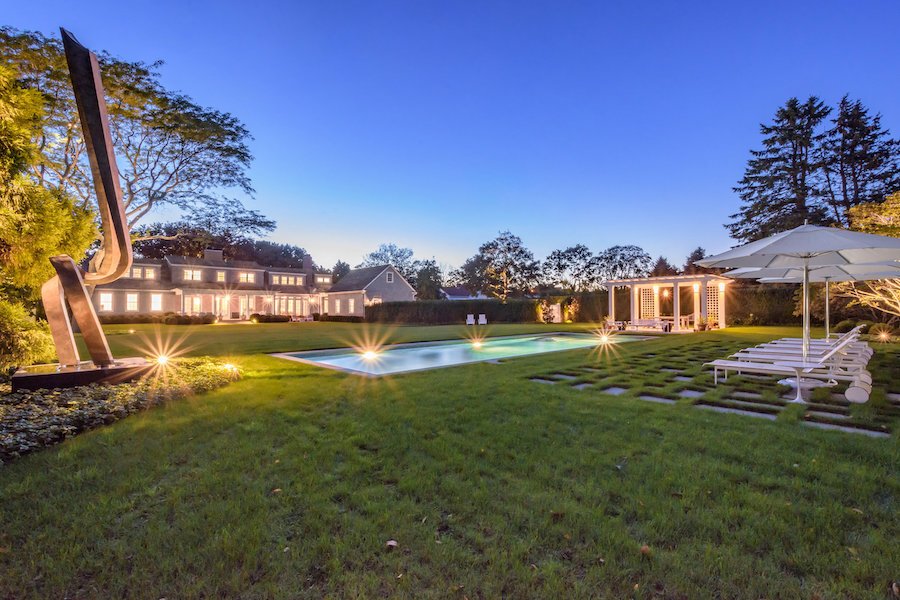
A beautiful landscape should not disappear when the sun goes down. With the right combination of light, shadow, texture, and contrast, the property can reveal an entirely different character after dark.
Thoughtful landscape lighting design does more than illuminate a driveway or make a garden visible. It draws attention to architecture, creates depth among plantings, and helps outdoor spaces feel inviting long after sunset.
For Southampton and Hamptons properties, where mature trees, distinctive architecture, and outdoor entertaining spaces often define the setting, careful lighting techniques can transform the nighttime experience.
The following five techniques demonstrate how professional landscape lighting designers use illumination to shape the way a property looks and feels.
Technique 01
Downlighting: Recreate the Softness of Moonlight
Downlighting places fixtures above the landscape and directs illumination toward the ground. When carefully positioned in mature trees or architectural locations, it can create an effect reminiscent of natural moonlight.
This technique works especially well across lawns, garden paths, courtyards, and outdoor seating areas where the design calls for gentle, even illumination without prominent fixtures at eye level.
Fixture placement is important. Poorly aimed downlights may cause glare, create unwanted bright spots, or cast distracting shadows. Thoughtful placement allows illumination to fall naturally across the landscape.
Design consideration: Warm, controlled light can complement stone terraces, planting beds, and residential architecture. Rather than illuminating every surface equally, the designer allows selected areas to remain softly shaded.
Technique 02
Accent Lighting: Highlight What Makes the Property Distinctive
Every landscape has defining features. It might be a mature specimen tree, a sculptural planting, a stone entrance, or an architectural element that deserves particular attention.
Accent lighting draws the eye to these details through carefully directed illumination. Uplighting is a familiar example, although the best direction depends on the form, material, and intended viewing angle.
The most effective designs establish a visual hierarchy. A striking tree might become the focal point, while nearby planting receives a quieter supporting layer of light.
The goal is not to make every feature compete for attention. It is to create a sequence of views that feels deliberate.
Design consideration: Evaluate an accent from the locations where it will actually be seen, including the driveway, terrace, and interior rooms overlooking the garden.
Technique 03
Shadowing and Silhouetting: Give Darkness a Purpose
Exceptional lighting design is not simply about adding brightness. Darkness and contrast are equally important parts of the composition.
Shadowing uses light positioned in front of an object to project its shape onto a surface behind it. The branching structure of a tree, for example, may create a delicate pattern against an architectural wall.
Silhouetting takes a different approach. A surface behind the subject is illuminated, leaving the foreground tree, sculpture, or planting in relative darkness. The outline becomes the visual feature.
Both techniques can introduce dimension and dramatic contrast without relying on excessive fixture output.
Design consideration: These effects work best when the subject has a recognizable shape and the illuminated backdrop provides appropriate contrast. Seasonal changes in foliage should also be considered.
Technique 04
Water Feature Lighting: Create Movement and Reflection
Pools, fountains, and reflecting water introduce another dimension to exterior lighting.
Because water responds differently to illumination than stone or vegetation, carefully positioned lighting can create reflections, depth, and subtle movement.
A still reflecting pool may mirror illuminated architecture or trees. A fountain can capture highlights across moving water. Nearby planting and hardscape lighting can also contribute to the effect.
Underwater fixtures, where appropriate, should be selected and installed specifically for their environment. Equipment suitability, electrical safety, maintenance access, and unwanted glare all require attention.
Design consideration: Water often benefits from restrained illumination. Excessive brightness or multiple competing colors can diminish the natural reflective qualities that make the feature visually interesting.
Technique 05
Grazing and Washing: Reveal Architectural Texture
Stone walls, textured exterior finishes, masonry, and architectural surfaces can take on a new character under carefully directed light.
Grazing positions fixtures close to a textured surface, allowing light to travel across it at a shallow angle. The resulting highlights and shadows emphasize the material's natural relief.
Washing produces a different effect. Light is distributed more broadly across a surface to create relatively even illumination.
Grazing can bring out the character of rough stone or deeply textured masonry. Washing may be more appropriate when the goal is to reveal an entire architectural elevation or create a balanced background for surrounding landscape elements.
Design consideration: The appropriate technique depends on the material, desired visual effect, viewing distance, and surrounding lighting conditions.
Intelligent Lighting Integration
Bring the Lighting Design Together with Intelligent Controls
These five techniques create visual interest individually, but the experience becomes more useful when the different lighting layers can be coordinated.
Professionally programmed lighting controls allow compatible exterior fixtures and circuits to respond together instead of requiring separate switches or applications throughout the property.
For example, an evening entertaining scene might highlight selected trees, softly illuminate architectural features, and provide comfortable light around a terrace.
A later nighttime scene could reduce decorative illumination while retaining appropriate pathway and entrance lighting. Scheduling can also help the property transition automatically as sunset times change throughout the year.
These experiences depend on the installed control system, compatible fixtures, appropriate wiring, and professional programming.
Home Technology Experts specializes in the technology that makes coordinated lighting experiences possible. Explore our approach to lighting design and integration .
A Complete Nighttime Composition
The Best Landscape Lighting Uses Restraint
A successful nighttime landscape is not defined by the number of fixtures installed or how brightly a property can be illuminated.
It is created through relationships between illuminated features, shadowed areas, architectural surfaces, and the natural surroundings.
A professional designer considers how each effect contributes to the complete scene, including the property's appearance from inside the residence.
On Hamptons properties, coastal exposure, mature planting, seasonal changes, neighboring residences, and local lighting requirements can all influence fixture selection and placement.
When lighting design and intelligent control are planned together, the result can be both visually refined and remarkably simple to enjoy.
See Your Property in a Different Light
Great landscape lighting begins with a thoughtful design. Our sister brand, Hamptons Landscape Lighting, specializes in creating distinctive nighttime environments for residential properties.
Explore how professional landscape lighting can bring architecture, gardens, and outdoor living spaces together after dark.
Discuss Your Landscape Lighting Project