
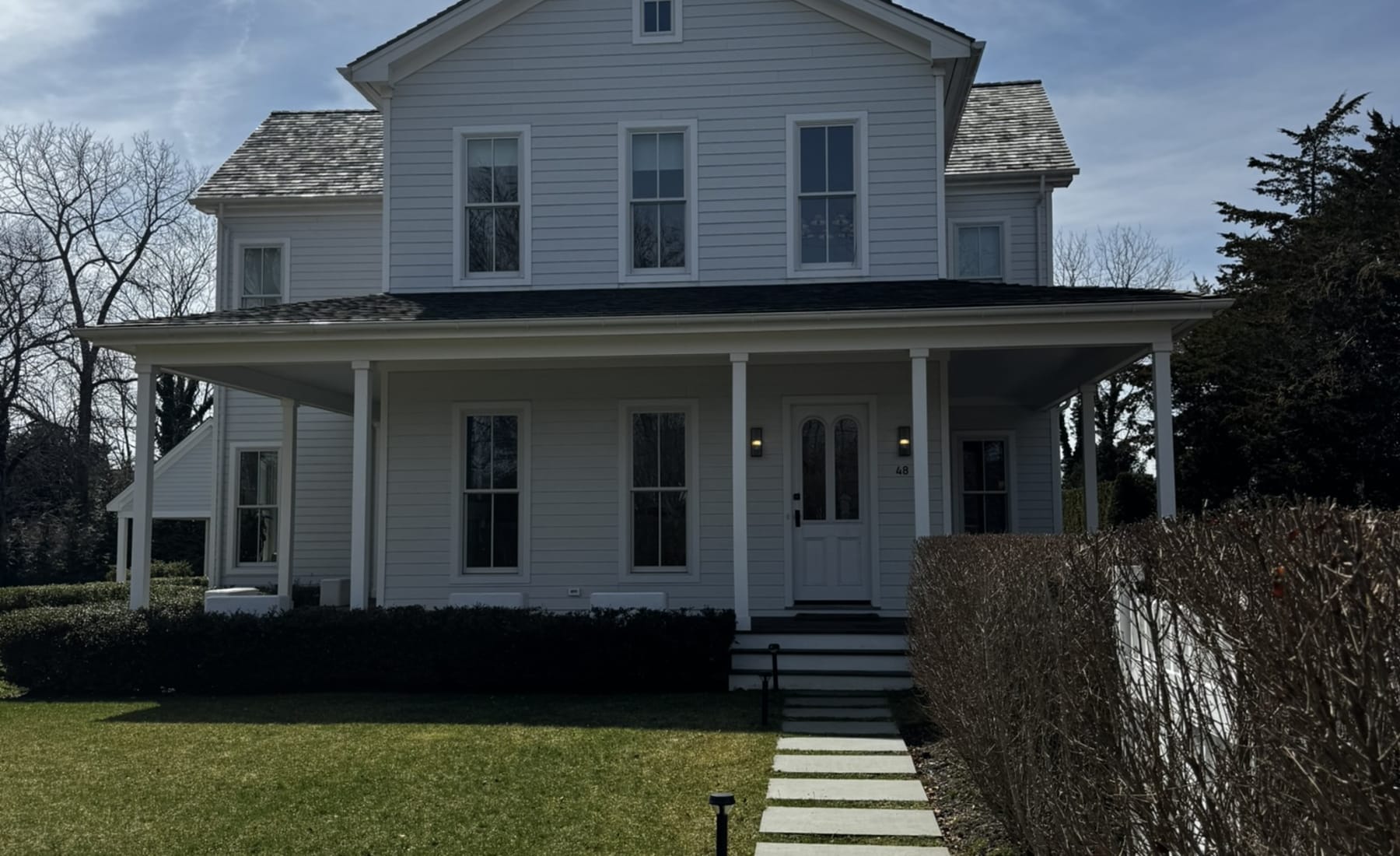
Designing Smart Home Technology for Long Island Luxury Homes
The homes have changed. The infrastructure behind them has not always kept pace.
Technology should reflect the history, scale, and use of the property.
Long Island has long served as both a year-round home for established New York families and a place where others came to find more land, privacy, and distance from the city.
During the Gilded Age, prominent families built country estates along the North Shore. These properties were close enough to Manhattan to remain connected, yet far enough away to offer waterfront acreage, gardens, and room to entertain.
Over time, that search for space extended farther east through Southampton, East Hampton, and Montauk.
The same pattern continues today. Communities closer to the city have become denser and more established. Older estates have been subdivided, expanded, or adapted for new uses. Farther east, seasonal cottages and modest properties have increasingly been replaced by substantial year-round residences with multiple buildings, expansive outdoor areas, and far greater technology requirements.
The result is a condition found throughout Long Island: a sophisticated modern home operating on infrastructure originally installed for a much simpler property.
Long Island homes are often built in layers.
Before new technology is specified, the existing home needs to be understood.
Several generations of construction can exist within one property.
Many North Shore estates and older luxury homes have been renovated more than once. A single property may include original masonry construction, a former service wing, a later addition, an updated kitchen, a converted carriage house, and a recently constructed pool house.
Each phase may have introduced its own wiring, equipment, service pathways, and construction methods. This is particularly important when evaluating low-voltage infrastructure.
- RG6 or earlier coaxial cable
- Repurposed telephone wiring
- CAT3 or CAT4 cabling
- Older Category 5 cable
- CAT5e, CAT6, or fiber
- Abandoned alarm and control wiring
Some of this infrastructure may still be useful. Other portions may no longer provide the bandwidth, power delivery, or reliability expected in a modern residence.
Replacing everything is not always necessary. Reusing everything is rarely the right answer.
Start with testing, tracing, and documentation.
HTE can evaluate the existing low-voltage system, identify what remains serviceable, and determine where new infrastructure is needed. This may involve tracing wiring from different renovations, testing coaxial and category cable, reviewing connections between buildings, and identifying legacy systems that have become difficult to maintain.
Making these determinations early gives the homeowner, general contractor, architect, and design team a clearer path forward. It can reduce unnecessary demolition, limit surprises during construction, and make the renovation easier to coordinate.
The work begins by understanding the house so the homeowner does not have to untangle its technical history.
The East End outgrew its original communications infrastructure.
The telephone and cable systems serving the South Fork were not designed for luxury residences with hundreds of connected devices and several buildings dependent on one network.
A property that once needed a telephone line and a few television outlets may now rely on its network for home-office use, surveillance, gate communication, lighting control, motorized shading, audio and video, guest connectivity, remote service, and communication between detached structures.
The technology load changed far more quickly than the infrastructure supporting it.
This is why a newly renovated home can still experience poor Wi-Fi, unreliable outdoor coverage, limited provider options, or weak connections between buildings. The finishes may be new while the property continues to depend on service routes and cabling introduced decades earlier.
A renovation should address both the visible home and the systems operating behind it. HTE’s residential network design considers the entire property, not simply the location of the internet modem.

Optimum, fiber, and Starlink for Hamptons residences
Internet availability on the East End remains highly specific to the property address.
Primary wired service
At many Hamptons addresses, Optimum remains the primary practical wired provider. Fiber availability continues to expand but should be verified for the exact property.
Independent backup
Starlink can provide a secondary connection that does not rely on the same local cable route as the home’s primary wired service.
Managed failover
A dual-WAN network can detect an outage, move selected traffic to a secondary service, and return the home to its primary connection when service is restored.
Verizon Fios is available in parts of Long Island, but availability should not be assumed on the South Fork without verifying the exact address. Cellular backup may also be useful where signal strength is dependable enough to support it.
The objective is not to promise that an internet connection can never fail. It is to avoid depending entirely on one obvious point of failure.

Internet redundancy is easier to plan before the home is finished.
Satellite equipment requires an appropriate mounting location, a usable path to the network equipment, access for future service, and a clear view of the sky.
Identifying those requirements during design or construction allows the architect, builder, electrician, roofer, and technology team to coordinate mounting, penetrations, cable pathways, power, equipment locations, and visual impact.
Waiting until the property is complete may force compromises. Finished surfaces may need to be disturbed, the ideal mounting location may no longer have a practical cable route, or equipment may be placed where it is difficult to maintain.
Power events often affect the home network first.
A short interruption can leave critical technology offline long after electrical power has returned.
Brief outages can create longer system problems.
Long Island homes, particularly on the East End, may experience outages, storm-related surges, brief interruptions, and generator transitions.
HTE does not design the home’s line-voltage electrical system, but these events directly affect the low-voltage equipment connected to it. A router, network switch, control processor, surveillance recorder, or audio component may remain offline after a disruption.
Equipment can also restart in the wrong sequence, preventing systems from communicating properly even after power has returned.
Protect the systems the rest of the home depends on.
- Router and firewall
- Internet-provider equipment
- Core network switches
- Control processors
- Surveillance recorders
- Access-control equipment
- AV distribution systems
- Local room components
A practical strategy may include UPS battery backup, surge protection, managed power distribution, remote outlet control, and automated recovery procedures.
The purpose is not necessarily to keep every component operating indefinitely. It is to protect critical equipment, support an orderly recovery, and provide a way to respond when no one is at the property.
Outdoor technology should be designed for Long Island conditions.
Long Islanders have always placed a high value on the space outside the home.
In the luxury residential market, the yard becomes a designed landscape. The pool becomes an outdoor living environment with a kitchen, cabana, terrace, bar, entertainment area, and guest accommodations.
North Shore properties may open toward the Long Island Sound. South Fork homes are often organized around the pool, ocean, landscape, and movement between interior and exterior spaces.
Technology serving these areas cannot be treated as an afterthought. Outdoor Wi-Fi, audio, televisions, surveillance, access systems, and lighting should be planned in relation to the architecture, landscape, exposure, and way each area will be used.
An outdoor rating is only one part of a reliable installation.
Long Island weather creates several forms of exposure.
- Rain and irrigation
- Drainage and snowmelt
- Salt air and corrosion
- Freeze-and-thaw cycles
- Summer heat and humidity
- Wind-driven weather
- Electrical surges
- Landscape maintenance
Installation details determine long-term performance.
Reliability depends on placement, drainage, protected connections, direct-burial cable, conduit, corrosion-resistant hardware, surge protection, building-entry details, and future service access.
A product can carry the correct environmental rating and still fail prematurely if it is placed in standing water, connected improperly, damaged during landscaping work, or installed where it cannot be serviced.
Outdoor systems can be incorporated during new construction or added to an existing estate. A carefully planned retrofit can still feel considered, permanent, and appropriate to the property.
Large Long Island properties require property-wide infrastructure.
Many estates operate more like small campuses than conventional single residences.
A property may include a main residence, pool house, guest house, gatehouse, detached garage, staff quarters, gym, office, studio, sports court, dock, or waterfront structure.
The central question is not simply whether each building has internet access. It is how the entire property functions as one coordinated environment.
Trying to extend a consumer mesh network from one structure to the next often creates an unreliable chain. Masonry construction, long distances, reflective glass, mature landscaping, and separate electrical services all work against this approach.
A property-wide network may use fiber between major buildings, point-to-point wireless where trenching is impractical, managed indoor and outdoor access points, local switches in secondary structures, and central monitoring across the estate.
Fiber is often preferred between buildings because it performs well over long distances and does not create an electrical pathway between separate structures.
The homeowner experiences one property. The infrastructure may need to treat it as several connected environments operating together.
Detached buildings should not be planned in isolation.
Shared infrastructure
Guest houses, pool houses, gatehouses, and garages may need access to the same internet, surveillance, control, audio, and monitoring systems as the main residence.
Early pathways
Conduit, fiber routes, equipment locations, and power are much easier to coordinate before driveways, terraces, lawns, and finished landscapes are complete.
Consistent operation
A coordinated design reduces duplicated equipment and allows each structure to serve its own purpose while remaining part of one manageable system.
The home should be ready before the owner arrives.
A technology problem is usually noticed quickly in a primary residence. In a seasonal home, an offline router, failed camera, or unresponsive control processor may remain unnoticed for days.
Remote management provides visibility into the systems that keep the home connected, secure, and ready for use.
HTE ExpertCare support can provide a clearer understanding of what happened, whether remote recovery is possible, and whether a technician needs to visit the property.
- Confirm whether the primary internet service is online.
- Determine whether a backup connection has taken over.
- Check whether routers and network switches are responding.
- Verify whether surveillance cameras remain accessible.
- Review whether equipment restarted correctly after an outage.
- Determine whether a remote reboot is appropriate.
- Identify when an on-site service visit is required.
Technology should remain serviceable after construction.
A system should not only work on the day it is installed. It should remain understandable, accessible, and supportable as the property changes.
- Clearly labeled wiring
- Organized equipment locations
- Appropriate ventilation
- Documented network architecture
- Accessible power and connections
- Usable service pathways
- Room for replacement equipment
- Remote-management capability
An equipment rack squeezed into an inaccessible cabinet may be visually unobtrusive, but it can create unnecessary service problems. Cabling without documentation may work initially while making future troubleshooting slower and more invasive.
Good infrastructure considers the people who maintain the property as well as the people who live there.
Local experience brings likely complications into focus earlier.
HTE does not approach these conditions from outside the region. The company’s owner and nearly all of its staff were born and raised on Long Island.
The team has spent years working in the homes, villages, waterfront communities, and seasonal properties discussed throughout this page.
Local knowledge does not replace the need to survey, test, and document a property. It makes those investigations more focused and helps the team address likely problems before they become expensive surprises.
- Older North Shore properties expanded through several renovations
- Internet availability that changes from one South Fork address to another
- Buried utilities that complicate fiber deployment
- Salt air, irrigation, freezing temperatures, and summer humidity
- Mature landscaping and several detached structures
- Seasonal homes requiring support while the owner is away
- Construction coordination that protects architecture and finishes
Technology should respond to the Long Island property.
A dual-WAN network with Starlink backup responds to limited internet-provider choice.
A structured cabling review responds to decades of coaxial cable, telephone wiring, early category cable, and partial renovations.
Managed power responds to equipment that may not restart correctly after an interruption.
Outdoor Wi-Fi, audio, video, surveillance, and lighting respond to a culture that treats the landscape as living space while expecting the installation to withstand all four seasons.
Fiber between buildings responds to the size and complexity of a modern estate. Remote monitoring responds to seasonal occupancy and the need to understand a problem before the homeowner arrives.
The most successful systems do not call attention to this complexity. They make the property easier to use, operate, and maintain while respecting the architecture, landscape, and history that made the home desirable in the first place.
Where smart home technology planning should begin
The right starting point is not a product list. It is an understanding of the property and how it needs to perform.
- Where is the home located?
- How and when is it occupied?
- Which internet services are available?
- What infrastructure already exists?
- Which wiring can be reused?
- Are there detached buildings?
- How are the outdoor areas used?
- Which finishes must be protected?
- Who operates and maintains the home?
- How should systems recover from failure?
Long Island homes developed in layers, from historic North Shore estates and established suburban communities to increasingly sophisticated properties farther east.
Their technology should be designed with the same level of local understanding.
HTE helps homeowners, architects, builders, and design professionals evaluate existing infrastructure, coordinate new systems, and create a practical plan for the entire property. Related systems may include architectural lighting control, motorized shading, audio and video, surveillance, access control, outdoor connectivity, managed power, and long-term support.
Long Island luxury home technology FAQs
Can old low-voltage wiring be reused during a renovation?
Some existing cabling may remain useful, while other wiring may no longer provide the bandwidth, power delivery, or reliability required by modern systems. The right approach is to trace and test the infrastructure before making assumptions. HTE can identify which wiring should be reused, replaced, supplemented, or abandoned and document the final system for future support.
Does a Hamptons home need backup internet?
A secondary connection can be valuable when a property depends on one wired provider. Depending on the address, Starlink or a reliable cellular connection may provide an independent backup. A managed dual-WAN network can move selected traffic to the secondary service during an outage and return the home to its primary connection when service is restored.
How should multiple buildings on an estate be connected?
Large properties often require fiber between major buildings, local network switches, managed access points, and coordinated power and monitoring. Point-to-point wireless may be appropriate where trenching is not practical. The final design should account for distance, construction materials, separate electrical services, landscape conditions, and future service access.
Can smart home technology be added to an existing luxury home?
Yes. A carefully planned retrofit can improve networking, lighting control, audio, surveillance, outdoor connectivity, and overall reliability without treating the home like new construction. The process begins with evaluating existing wiring, equipment locations, available pathways, architectural finishes, and the way the property is currently used.
Why is remote monitoring useful for a seasonal residence?
A technology failure in a seasonal home may remain unnoticed until the owner arrives. Remote monitoring can show whether the internet, network equipment, cameras, control systems, and managed power devices are responding. It can also help determine whether the issue can be addressed remotely or requires an on-site service appointment.
Create a more predictable and serviceable Long Island home.
Involve HTE early to evaluate existing infrastructure, coordinate new systems, and plan technology around the architecture, landscape, occupancy, and long-term needs of the property.