
Did You Know a Smart Home Can’t Be Insulated From Change?
What “Future-Proof” Really Means in a Well-Designed Home
In well-considered homes, the most important decisions are rarely the most visible ones.
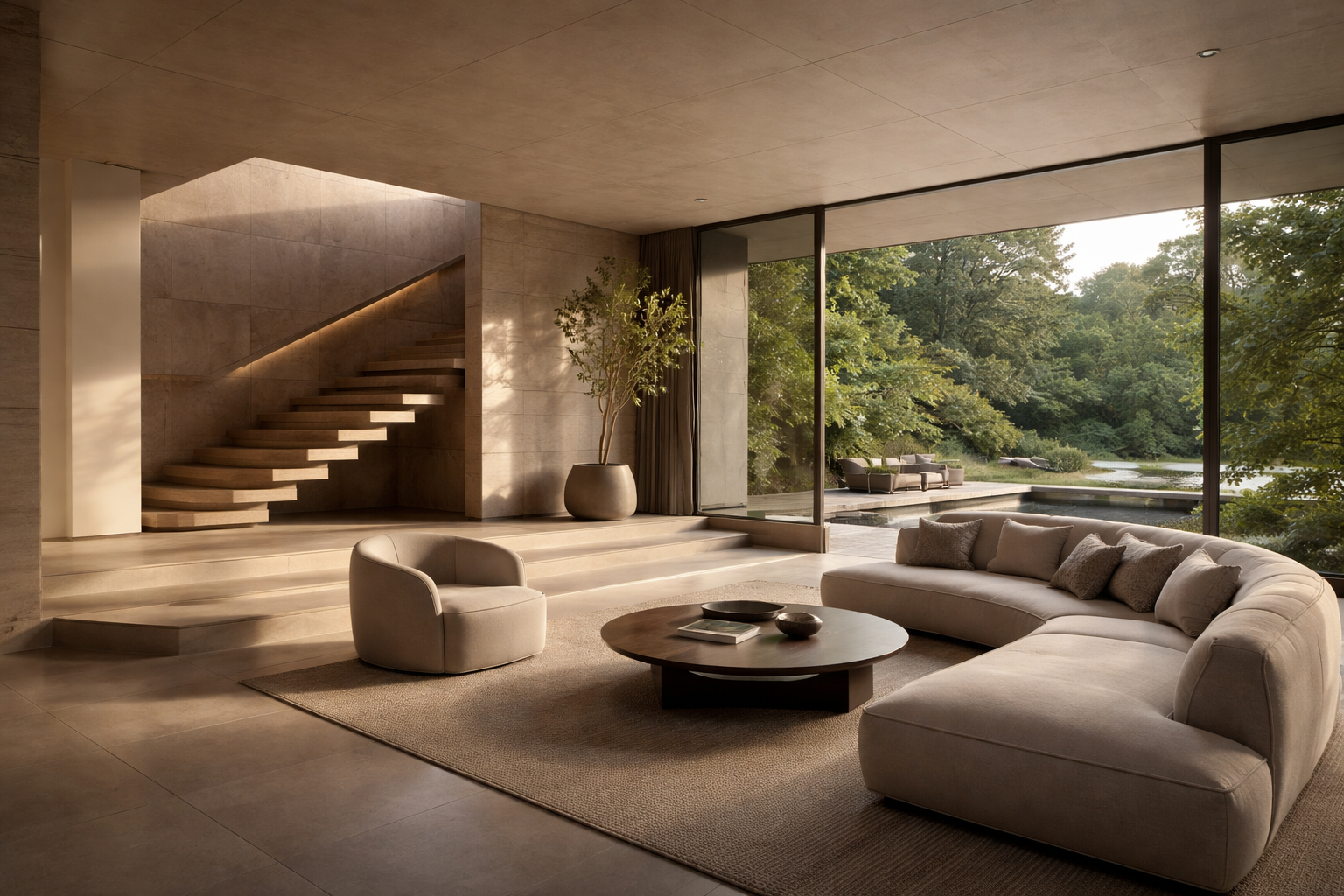
Creating a future-proof home design
“Future-proof” is often used to suggest certainty—that a home can somehow be insulated from change. In reality, no system stands still. Homes designed with that expectation tend to feel dated sooner, not later.
True future-proofing isn’t about predicting what comes next. It’s about designing a home that can adapt without losing its composure.
Designing for Evolution, Not Prediction
Homes that age well are defined less by the technology they contain and more by the intelligence of their underlying structure.
Adaptable Infrastructure
Flexibility is planned long before any devices are selected. Infrastructure is designed to adapt quietly. Systems are modular. Capacity is built-in. Decisions are made with the assumption that technology will evolve—even if the home itself should not have to.
This approach prioritizes optionality over novelty. It favors platforms that grow through software and compatibility, rather than rigid systems that demand wholesale replacement.
The result is a home that evolves without walls being reopened, finishes disturbed, or daily life disrupted.
Home Technology Experts partners with architects, builders, and designers to deliver luxury technology solutions that respect design integrity & client expectations.
“In residential design, a future-proof home is not one that anticipates specific technologies—but one built with adaptable infrastructure, serviceable systems, and documentation that allows change without disruption.”
Infrastructure as a Form of Stewardship
In homes of lasting quality, infrastructure is an act of care.
Centralized equipment locations, organized cabling, and generous capacity are not indulgences. They acknowledge that a home is a long-term asset. These decisions protect architectural intent, interior design, and material investment over time.
The value of this planning is rarely seen—but it’s always felt. It simply prevents disruption.
Stewardship, in this context, is quiet and intentional.
Documentation Is What Allows a Home to Endure
Many systems age poorly, not because they are obsolete, but because they are undocumented.
Without clear records, even modest changes become invasive. Systems must be reverse-engineered. Updates feel risky. Progress slows.
Expensive errors occur.
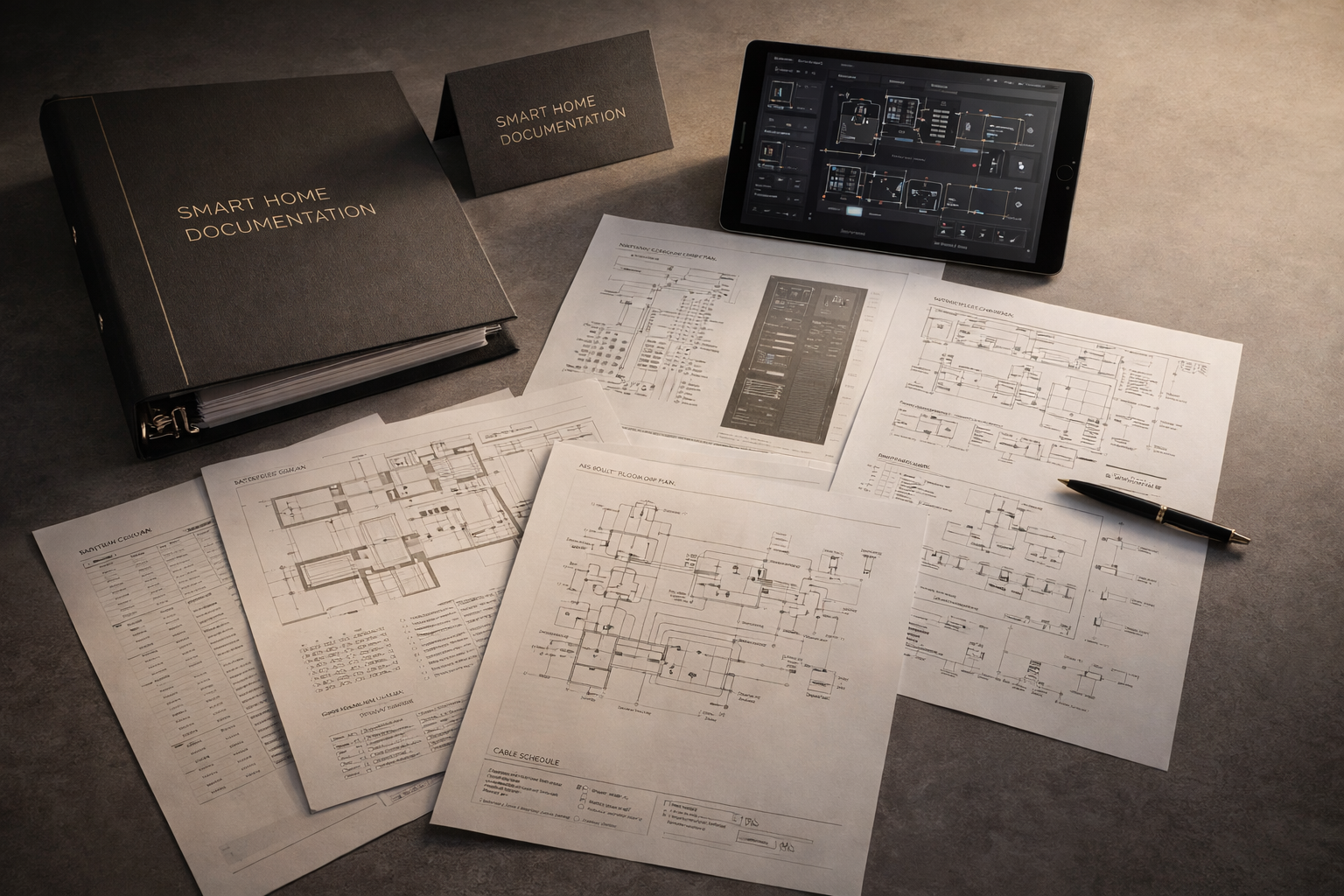
Homes that are properly documented—layouts, logic, backups, and as-built records preserved—retain clarity. Years later, changes can be made decisively rather than cautiously.
Documentation protects continuity. It allows a home to evolve regardless of who services it, preserving both value and intent.
What Makes a Home Truly Future-Proof? Designing for Change, Not Prediction
Serviceability Over Spectacle
Technology should be easy to support and unobtrusive to maintain.
Equipment belongs in accessible, conditioned spaces. Layouts should be legible. Components should be standardized enough to allow replacement without disruption.
Equally important is the service relationship behind the system. Ongoing care ensures capabilities remain current and stable—without periodic upheaval.
A future-ready home is one where updates take hours, not weeks of demolition.
A More Cultivated Understanding of “Future-Proof”
The most intelligent investments in a home are often invisible.
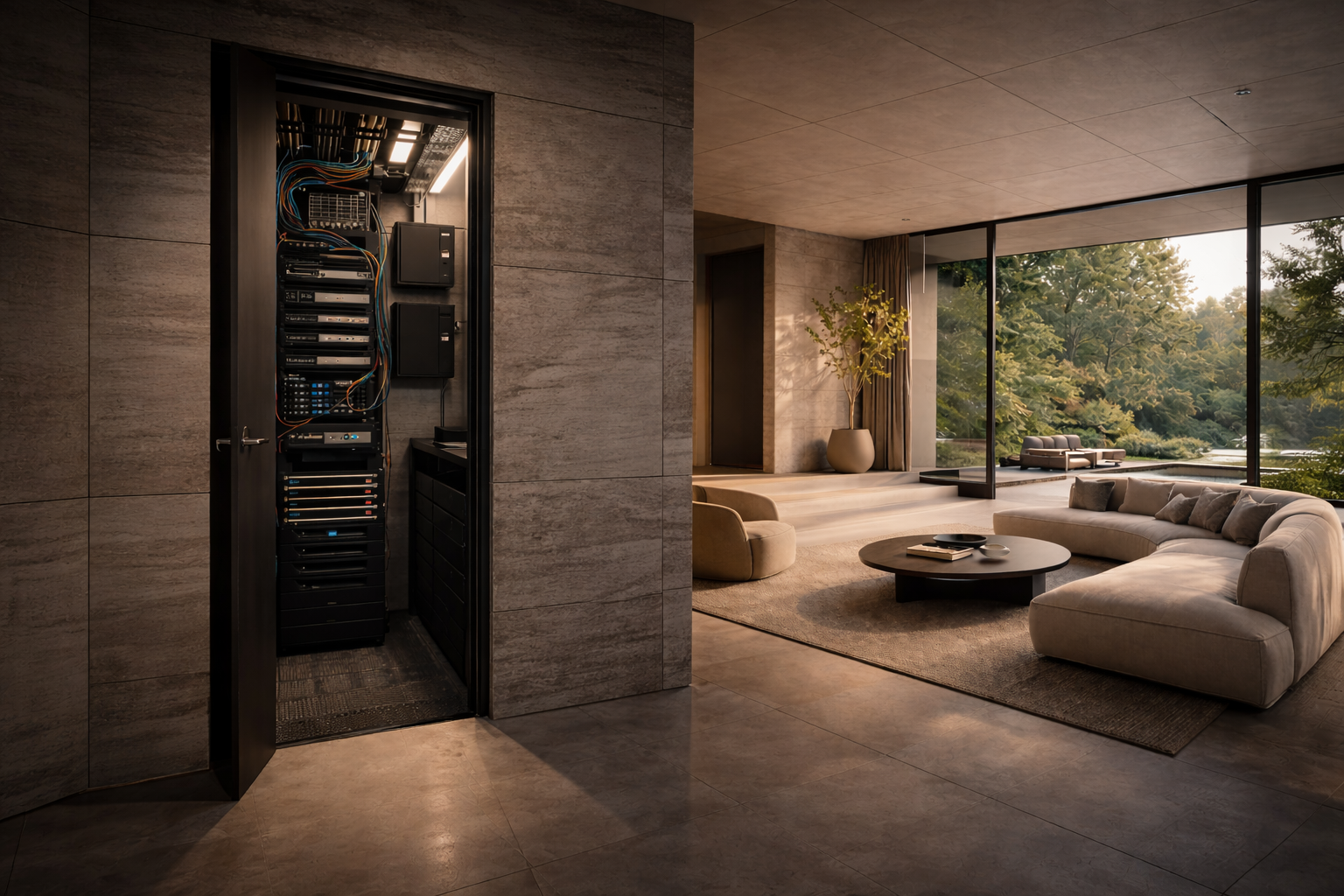
They live behind walls, inside equipment rooms, and within decisions that anticipate change without dramatizing it. They allow capability to advance while the home itself remains intact.
At Home Technology Experts, we design residential systems that welcome evolution rather than resist it—because the most future-proof homes are not frozen in time.
“Serviceablility without distruption”