
Did You Know You Could Delete Technology Overload With Smart Homes?

Delete Technology Overload With a Smarter Home
Smart home technology is meant to simplify daily life. Too often, it does the opposite. Multiple unnecessary apps, a stack of remotes in a single room, forgotten logins, exposed wiring, unsightly installations, and disconnected devices create friction instead of ease.
Home Technology Experts (HTE) designs smart homes that remove this complexity. Each system is intentionally planned, fully integrated, and engineered to work quietly in the background — every day, for the long term.
A properly designed smart home does not demand attention. It supports comfort, security, and entertainment with quiet confidence — without frustration.
Why Technology Overload Happens
Technology overload often begins with good intentions. A thermostat here. Lighting controls there. Speakers, cameras, streaming devices — each added one at a time, often from different manufacturers.
Without a comprehensive plan, home networks become strained and unreliable. Devices compete for bandwidth. Poor switching architecture creates broadcast storms. Routers become overloaded just as someone attempts a work call or streams a film.
Instead of enjoying their home, homeowners find themselves managing it.
Integration Over Accumulation
Reducing technology overload begins with a plan.
HTE designs cohesive systems where lighting, shades, climate, audio, video, and security operate through a single, consistent interface. Rather than juggling apps and remotes, homeowners interact with one predictable environment.
Control platforms such as Josh AI, Control4, and Savant each have their proper place within a well-designed ecosystem. However, the most advanced app is not always the best solution. At Home Technology Experts, we prioritize intelligent architecture paired with the simplest, most intuitive user experience.
With thoughtful integration, a single action can adjust lighting, lower shades, set the temperature, and begin music — seamlessly and without guesswork.
When designing a system, we begin by understanding the life our client wants to create. What role should technology play? Where should it enhance the experience — and where might it detract? Clarity at this stage defines the outcome.
Once the objectives are understood, we engineer systems capable of achieving them reliably. We balance construction realities, architectural constraints, and site conditions to deliver the intended result with as few compromises as possible.
This forward-thinking approach allows us to design the proper infrastructure from the outset rather than retroactively correcting preventable issues.
The goal of automation is harmony between systems. For example, Sonos relies entirely on the network for synchronized, high-performance audio. That network must be designed to support the specific demands of the installation.
This may require hardwired amplifiers, properly configured layer-2 switching, adequate router throughput, and strategically placed WiFi access points. In larger estates, PoE-powered access points must be supported by switches with sufficient PoE budgets to maintain stable coverage across the property.
Without this level of planning, adding multiple Sonos devices to a WiFi network can create broadcast storms and instability. Outdoor areas — such as pools or terraces — may lack proper access points, leaving homeowners unable to control music without returning inside.
In luxury homes, that level of inconsistency is unacceptable.
Fewer Controls. Better Results.
A professionally engineered smart home reduces visible technology.
Walls are not crowded with mismatched switches. Counters are not cluttered with devices. Controls are intentional, refined, and intuitive.
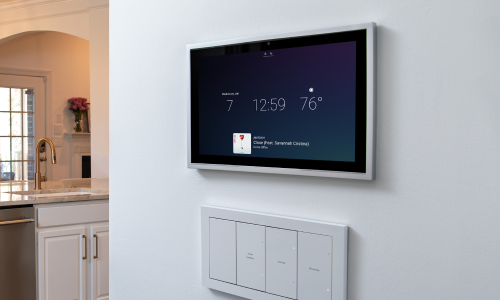
Architectural keypads, discreet touchscreens, and carefully programmed scenes allow homeowners to interact less frequently while achieving superior outcomes. Technology becomes supportive rather than intrusive — present, but never overwhelming.
Learn About C Seed Outdoor TVs
Automation That Simplifies Daily Life
Automation is one of the most effective ways to reduce technology fatigue.
Lighting and shades adjust naturally throughout the day, responding to sunlight. Climate systems maintain comfort without constant manual changes. The home adapts on its own, without ongoing input.
For large automation systems in New York City, the Hamptons, and Greenwich, this level of control — including lighting, health, and wellness systems — restores ease and consistency.
Entertainment Without Friction
Entertainment systems are a common source of frustration. Multiple inputs, remotes, and streaming platforms can make sitting down to relax a complicated experience.
Integrated audio and video systems simplify everything. Music moves easily from room to room. Media responds quickly and predictably. Simplified user interfaces remain consistent from room to room and even house to house.
We take the friction out of home automation so the focus returns to enjoyment — not troubleshooting.
Designed for Long-Term Simplicity
Reducing technology overload isn’t just about today.
HTE designs systems to be serviceable, scalable, and supported over time. Software-driven platforms allow for updates and refinements without constant replacement. The system evolves without becoming confusing or obsolete.
This approach protects the investment while preserving ease of use as technology changes.
Tailored for Distinctive Homes
Homes in New York City, the Hamptons, and Greenwich each present unique considerations — from space constraints to architectural sensitivity.
At HTE, we design smart home systems that respect the character of each property while delivering consistent, reliable performance. The result is technology that feels natural, refined, and quietly effective.
Delete the Overload. Enjoy Your Home Again.
If technology in your home feels overwhelming, it may be time for a more thoughtful approach.
Home Technology Experts designs smart homes that simplify control, reduce clutter, and restore balance — systems built to be reliable, predictable, and easy to live with.
Contact HTE to explore a smarter, more manageable home.
Frequently Asked Questions
Why does smart home technology feel overwhelming?
Most homes add devices over time without a unified plan, resulting in multiple apps, remotes, and inconsistent performance.
What is smart home integration?
Smart home integration connects lighting, climate, entertainment, and security into one cohesive system with a consistent interface.
Can automation really reduce daily interaction with technology?
Yes. Automated lighting, shades, and climate reduce the need for manual adjustments throughout the day.
Is smart home integration worth it for existing homes?
Yes. Many systems can be unified and improved without a full renovation. When construction and repair are to be avoided, working with an experienced technology team during a retrofit is essential.
Do you design systems for second homes in the Hamptons?
Yes. Integrated systems are ideal for second homes, providing reliability, remote access, and ease of use. Remote service capabilities, access control for service personnel, and lighting control that makes the home appear occupied are especially valuable for second residences.