
Memory Shortages Could Affect Home Electronics Pricing and Availability

“Memory price increases in 2026 are affecting smart home systems and home electronics, making early planning and product coordination more important for reliable project outcomes.”
When Memory Prices Rise, Home Electronics Feel It
What the current DRAM and NAND crunch could mean for smart home systems, entertainment, networking, and project planning
If you have been hearing more discussion about memory shortages lately, there is a good reason for it.
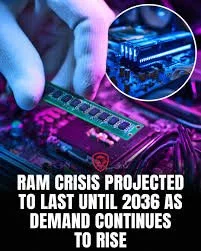
The market for DRAM and NAND flash, the memory used in everything from televisions and streaming boxes to networking hardware, control systems, servers, laptops, and storage devices, has tightened significantly in 2026. Industry trackers are reporting steep quarter-over-quarter contract price increases, driven largely by suppliers prioritizing AI infrastructure, server demand, and enterprise storage. In plain English, more of the world’s memory supply is being pulled toward data centers and high-performance computing, leaving less flexibility across the broader electronics market.
For most homeowners, memory is not something they think about when planning a project. But it quietly sits inside many of the products that make a modern home work beautifully. And when memory prices rise sharply, the effects can ripple into the categories we design, specify, install, and support every day.
At Home Technology Experts, that matters.
What is actually happening in the memory market?
Two categories are at the center of this conversation: DRAM, which helps devices operate quickly and smoothly, and NAND flash, which provides storage. Both have seen major price pressure.
TrendForce reported that conventional DRAM contract prices surged in the first quarter of 2026 and projected another major increase in the second quarter. It also projected similarly sharp increases in NAND flash contract pricing, citing ongoing supply constraints and the reallocation of production toward higher-priority applications such as HBM, server DRAM, and enterprise SSDs. Gartner also warned that surging memory costs are large enough to affect finished device pricing and shipments across the broader electronics market.
This is not simply a niche semiconductor story. It is a supply-and-pricing story that can influence the cost and availability of products far beyond the data center.
Why this matters for home electronics
The products used in luxury homes may not look like “memory products,” but many depend on memory-intensive components behind the scenes.
That includes smart TVs, streaming devices, network hardware, surveillance systems, whole-home storage, control processors, user interfaces, mobile devices, and many of the supporting electronics that help a home feel seamless. If memory becomes more expensive, manufacturers typically have only a few options: absorb the cost, raise prices, reduce specifications, or limit availability. Market analysts have already warned that OEMs may respond by shipping lower-memory or lower-storage configurations at similar price points, or by moving pricing upward to protect margins.
In other words, the impact may not always show up as a dramatic headline that says a product is “unavailable.” Sometimes it shows up more subtly. A familiar model may suddenly cost more. A certain SKU may disappear. A storage-heavy version may become harder to get. A product family may have fewer promotional discounts than buyers are used to seeing.
That pattern is especially relevant in custom residential work, where planning, compatibility, and timing matter just as much as price.
If you are planning an upcoming project, evaluating upgrades, or coordinating a specification with a client, our team is happy to help you think through timing, product categories, and procurement strategy.
The categories most likely to feel it
At HTE, we look at this through the lens of how technology actually lives inside a home.
The products used in luxury homes may not look like “memory products,” but many depend on memory-intensive components behind the scenes.
That pattern is especially relevant in custom residential work, where planning, compatibility, and timing matter just as much as price.
1. Televisions and streaming ecosystems
TVs and streamers are not the most memory-intensive products in the world, but they absolutely rely on DRAM and flash storage. If component pricing continues to rise, manufacturers may become more selective about which models they promote aggressively, which models stay widely available, and which configurations remain in the lineup. TrendForce has also noted that mature-node and lower-priority product categories can feel the squeeze when suppliers optimize for more strategic, higher-margin demand elsewhere.
For clients, that can mean less predictability around a favorite model or price point. For projects, it can mean more importance placed on early selection and procurement.
2. Networking and Wi-Fi hardware
Networks are the quiet foundation of a well-performing smart home. Access points, controllers, switches, gateways, and supporting hardware all contain memory and storage components. When shortages or allocation pressures spread through the supply chain, networking products can experience cost movement or longer lead times, especially when manufacturers are managing component substitutions behind the scenes. TrendForce and supply-channel reporting both point to tightening inventories and extended lead times in parts of the memory ecosystem, which can flow into downstream hardware availability.
For us, that reinforces the importance of careful forecasting on infrastructure, not just the more visible electronics in a system.
3. Surveillance, storage, and media-heavy systems
NAND pricing is especially relevant anywhere storage matters. Enterprise demand has already been cited as a major reason NAND supply is tightening, with suppliers allocating more aggressively toward enterprise SSD output. That can put pressure on storage-related categories more broadly, including the kinds of drives and storage-based products that support surveillance retention, media libraries, backups, and other data-heavy use cases.
If a project includes recording-heavy security, local storage, or premium media infrastructure, memory pricing is not an abstract market issue. It may directly affect the products being quoted.
4. Control, smart home, and embedded electronics
A modern home depends on many devices that are relatively small, but not simple. Touchpanels, processors, gateways, video distribution components, surveillance accessories, and other embedded products often rely on specific memory types and validated parts. In these categories, the challenge is not always just cost. Sometimes it is qualification, substitutions, or production consistency. When a specific component becomes constrained, manufacturers do not always have effortless alternatives.
That can create ripple effects in lead times, revision cycles, or model availability even when the finished product looks unchanged from the outside.
Why AI demand affects your living room
This is one of the more surprising parts of the story.
A homeowner may reasonably ask: what does AI infrastructure have to do with a TV, network switch, or smart home processor?
Quite a lot, actually. The largest memory makers are increasingly prioritizing HBM, server DRAM, and enterprise storage because those categories are strategically important and financially attractive. TrendForce has repeatedly cited capacity reallocation toward HBM and server applications, while Micron has described overall supply as constrained by cleanroom space and the needs of AI-era demand.
When capacity is finite, the market does not need every category to be “out of stock” for pressure to appear. It only needs enough supply to be redirected toward higher-priority applications that the rest of the market feels tighter. That is often how consumer and residential electronics get affected: indirectly, but meaningfully.
Could this really raise prices for homeowners?
Yes, and in some cases it already has.
Home electronics are not all affected equally, and not every category will move in lockstep. But the broader lesson is clear: when a core component category rises this sharply, it eventually shows up in finished electronics pricing, configuration decisions, and procurement strategy.
That is why we are already seeing some price increases in the field. And it is why we expect thoughtful planning to matter even more over the coming quarters.
What this means for HTE clients
For our clients, the takeaway is not panic. It is planning.
If you are considering a home technology project, a renovation, or a meaningful system upgrade, this kind of market environment makes early conversations more valuable. It may make sense to lock in certain categories sooner, especially if your project includes televisions, networking, surveillance, storage, or other electronics that are more exposed to component fluctuations.
It also means flexibility matters. A well-designed project is not just about selecting products. It is about building a system thoughtfully enough that substitutions, timeline adjustments, or phased procurement decisions can be handled gracefully if the market shifts. That is one of the reasons design, coordination, and specification disciplines matter so much in custom work.
When the market is calm, good planning feels elegant. When the market gets choppy, it becomes a real advantage.
What this means for our builder, architect, and trade partners
For our partners, this is one more reminder that technology should be discussed early, not late.
When memory-driven pricing and availability pressure begins to move through the supply chain, late-stage decisions become more expensive. Product families can shift. Lead times can move. “We’ll pick that later” becomes a riskier strategy, particularly on infrastructure, storage-heavy systems, and electronics categories that may already be feeling cost pressure.
This does not mean every project needs to rush procurement. It means we should be more intentional about identifying exposed categories, reviewing alternatives where sensible, and aligning specifications with real-world availability rather than assuming the market will stay flat.
That kind of coordination protects everyone: the homeowner, the design team, the builder, and the final installation schedule.
Our view at HTE
We do not believe this is a reason to overreact.
We do believe it is a reason to stay thoughtful.
At Home Technology Experts, our role is to help clients and partners navigate moments like this with clarity. That means watching the market, understanding where supply-chain pressure is most likely to affect home electronics, and helping guide decisions before small issues become avoidable frustrations.
The best technology projects are not only beautiful when complete. They are also well-managed while they are coming together.
And in a market like this, that matters even more.
If you are planning an upcoming project, evaluating upgrades, or coordinating a specification with a client, our team is happy to help you think through timing, product categories, and procurement strategy.
Will the market calm down soon?
Eventually, yes. Immediately, probably not.
Manufacturers are investing heavily, and there are public plans for additional capacity and packaging expansion from major players such as Micron, SK hynix, Samsung, and Kioxia. But those ramps take time. Public disclosures suggest that some meaningful relief may come in stages, while larger capacity additions extend into 2027 and 2028. That means 2026 is likely to remain more about allocation, prioritization, and selective pressure than true abundance.
So while this is not a forever problem, it is a near-term planning reality.