
Reference Level Audio Video Systems
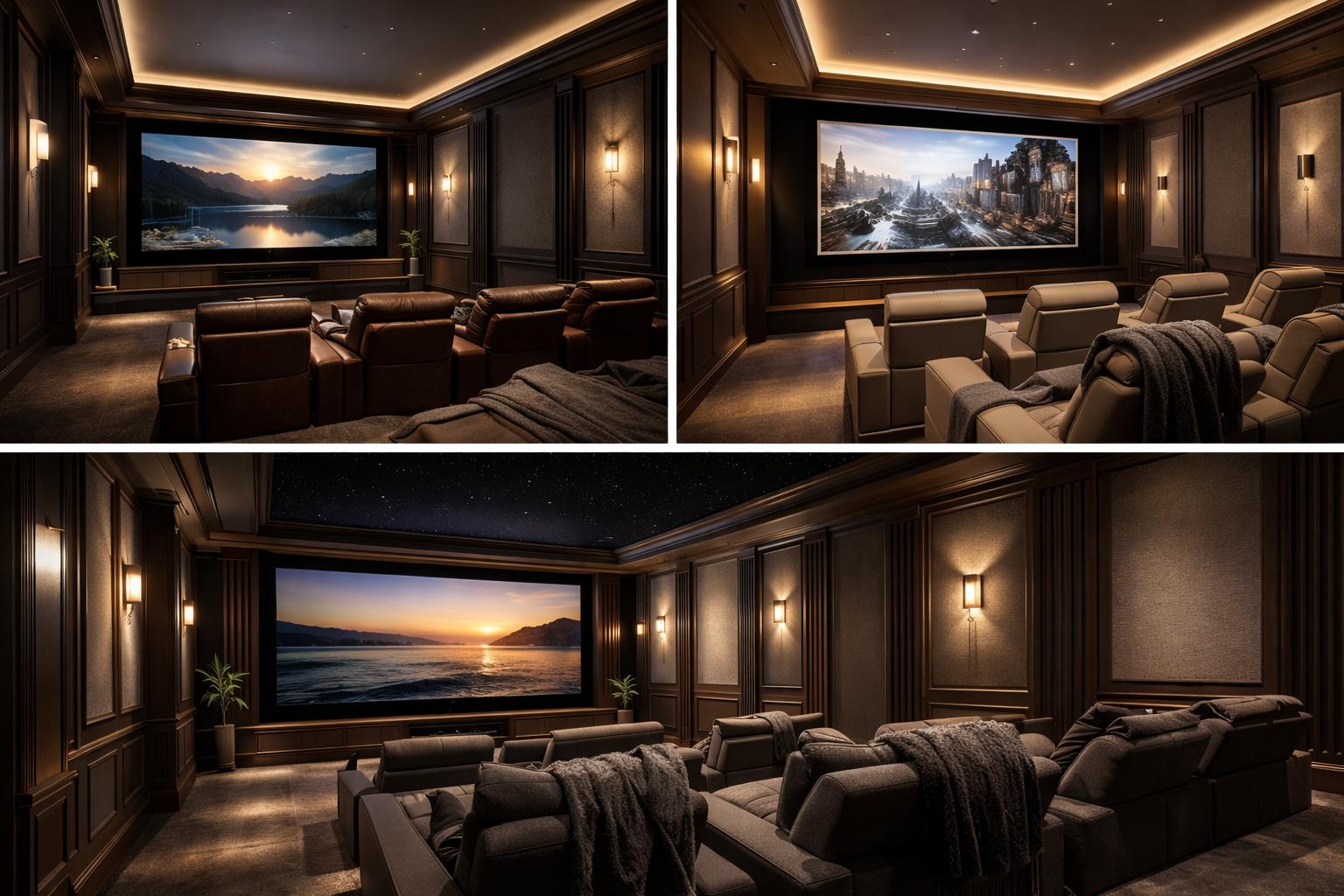
A high-end home theater is more than a media room. It is a fully engineered environment designed to deliver cinematic-scale visuals, immersive three-dimensional audio, and precise system calibration tailored to your space.
For luxury homeowners, the goal is not simply bigger screens or louder sound—it is seamless integration, performance consistency, and an experience that rivals (or exceeds) commercial cinemas.
What Is a High-End Home Theater System?
A high-end home theater system is a purpose-built entertainment environment that combines large-format display technology, immersive audio formats like Dolby Atmos, advanced video processing, and professional calibration to deliver reference-level performance.
These advanced home audio systems are typically installed in dedicated rooms and designed as a fully integrated system rather than a collection of individual components.
Key Components of a Luxury Home Theater
1. Video Systems for Large-Scale Viewing
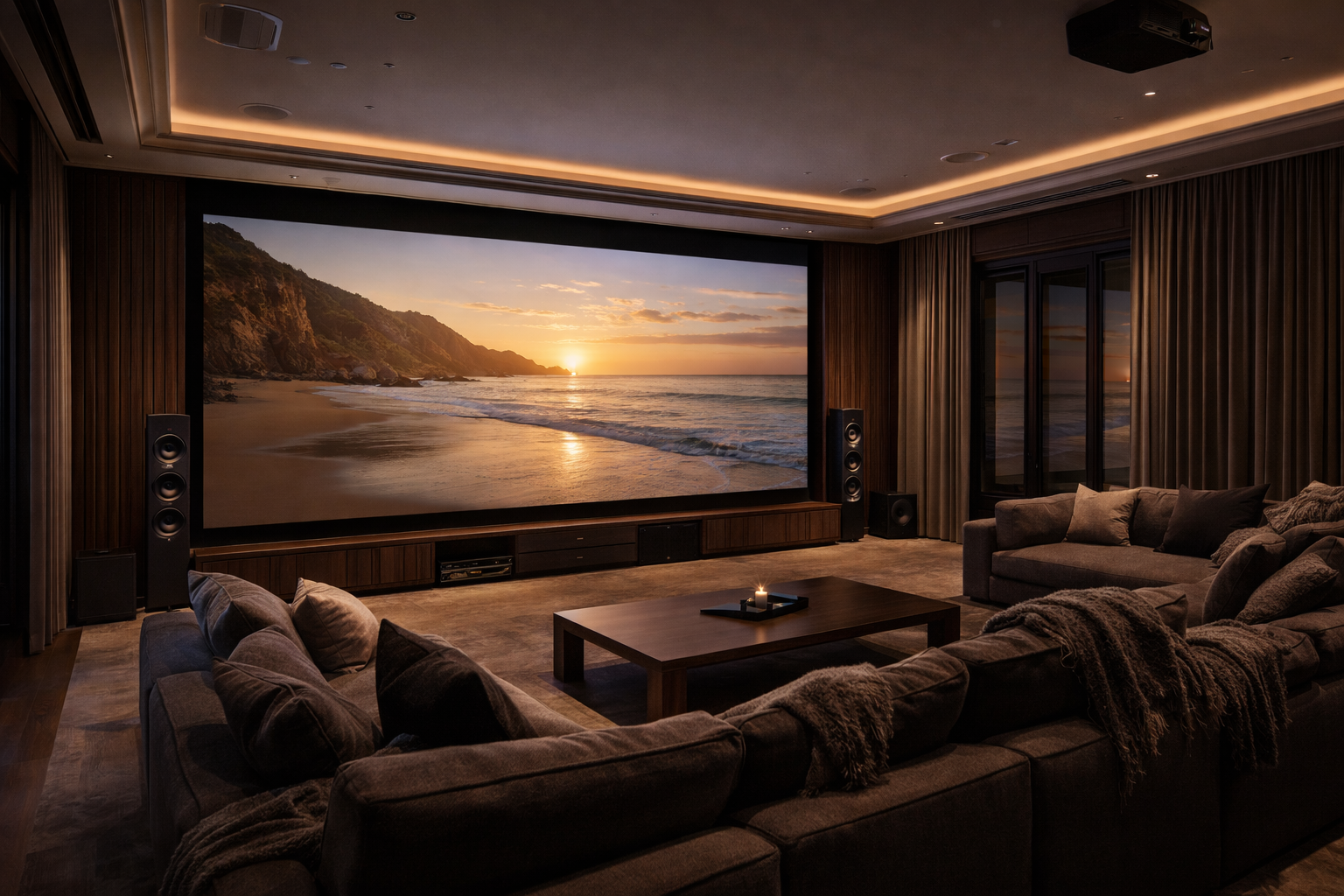
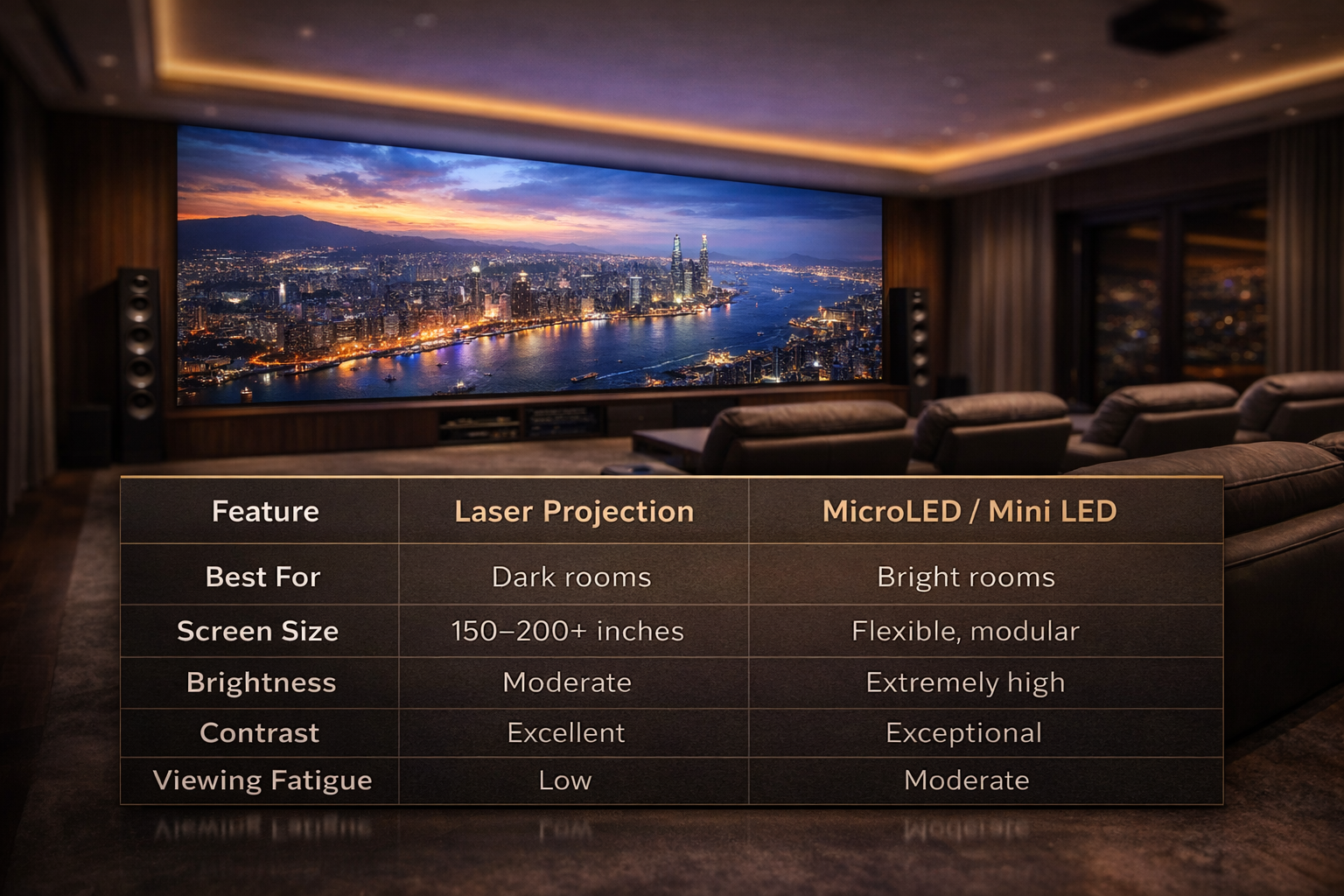
Luxury home theaters are designed around large screens—typically 150 to 200 inches or more.
Display Options
Laser Projectors (Most Common)
Ideal for dark, dedicated rooms
Cinematic image quality with excellent color accuracy
Less visual fatigue over long viewing sessions
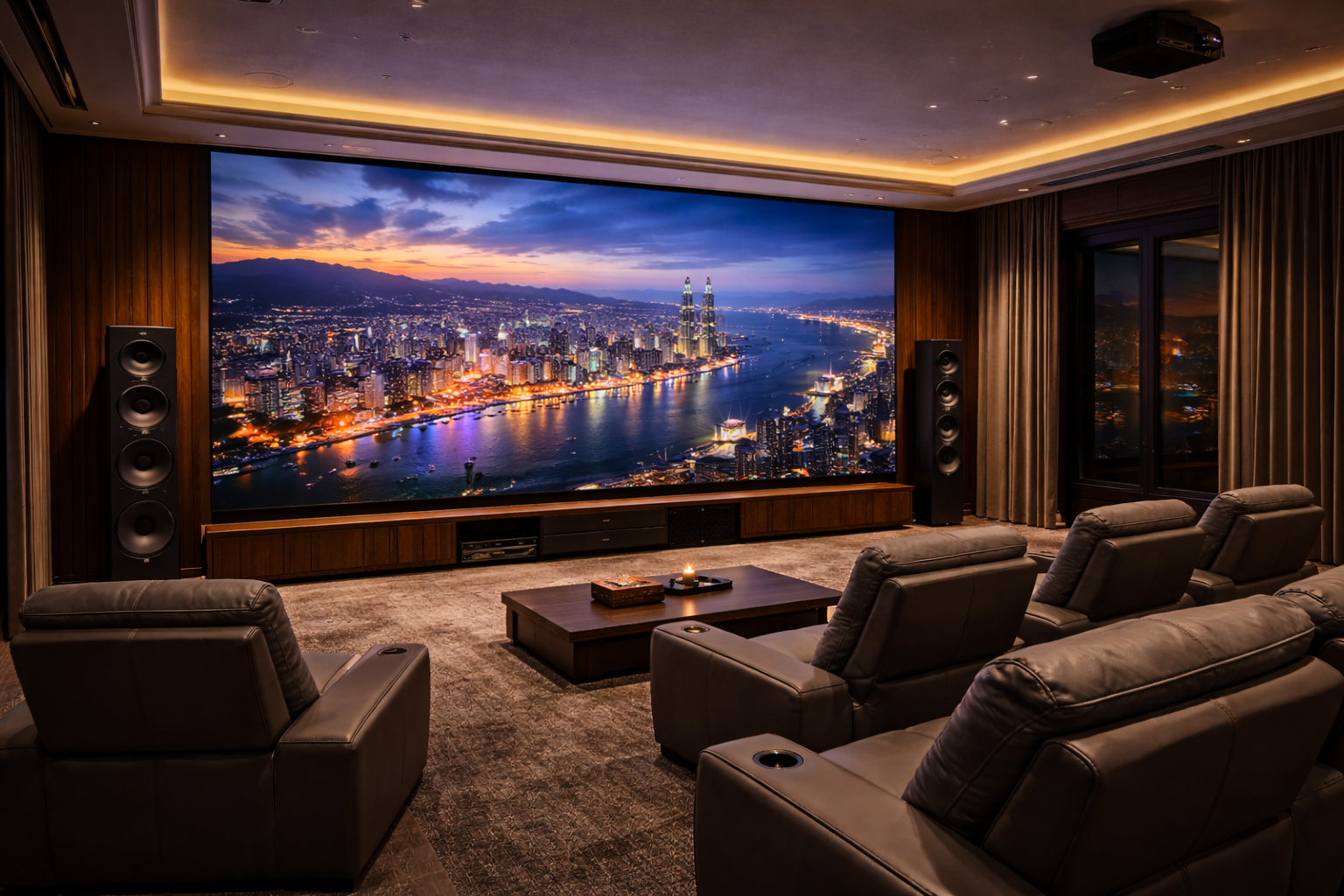
MicroLED and Mini LED Walls
Extremely bright (often exceeding 3,000 nits)
Exceptional contrast and HDR performance
Flexible sizing and aspect ratios
Best Choice Depends On:
Room lighting conditions
Screen size goals
Viewing preferences (cinematic vs ultra-bright)
2. Resolution and HDR Performance
Most premium systems are built around 4K content, supported by advanced upscaling technologies that maintain clarity on very large screens.
High Dynamic Range (HDR) is critical for realism, enabling:
Deeper blacks
Brighter highlights
Greater color accuracy
Formats like Dolby Vision enhance HDR through dynamic tone mapping, adjusting image performance scene by scene.
3. Video Processing (Critical but Often Overlooked)
Every image you see is processed. In high-end systems, that processing is centralized and controlled.
Dedicated processors such as madVR Envy and Lumagen Radiance provide:
Dynamic tone mapping
Advanced upscaling
Artifact reduction
Motion optimization
The goal is not more processing—but precise, consistent processing aligned with the display and room.
4. Immersive Audio Systems
Audio is where luxury theaters become truly transformative.
Modern systems use object-based formats such as:
Dolby Atmos
DTS:X
Auro-3D
These systems create a three-dimensional sound field with sound moving above, around, and through the room.
Typical Speaker Configuration
Front LCR speakers behind an acoustically transparent screen
Surround and rear speakers integrated into walls
Ceiling-mounted height speakers
Multiple subwoofers (often four or more)
5. Amplification and Audio Processing
High-performance theaters use dedicated audio processors and multichannel amplifiers instead of standard AV receivers.
These systems manage:
Object-based decoding
Bass management
Time and phase alignment
Room correction
6. Room Correction and Acoustic Design
Even the best equipment performs poorly in an untreated room.
Leading calibration platforms include:
Dirac Live
Trinnov Optimizer
Anthem ARC
These systems analyze your space and optimize sound for every seat.
Acoustic treatments (panels, bass traps, diffusion) further enhance clarity and immersion.
Display Technology Comparison
Example of a Reference-Level System
A typical luxury home theater system may include:
150–200 inch acoustically transparent screen
Laser projector or MicroLED display
Dedicated video processor
9.4.6 or 11.4.8 Dolby Atmos speaker layout
Multiple subwoofers for consistent bass
Separate audio processor and amplifiers
Integrated lighting and control system
Professional calibration for audio and video
How Much Does a High-End Home Theater Cost?
Costs vary significantly depending on room size and system complexity.
Typical ranges:
Entry luxury: $75,000 – $150,000
Mid-tier luxury: $150,000 – $300,000
Reference-level: $300,000+
Factors that influence cost include:
Display technology
Audio system size
Acoustic treatment
Custom installation and design
Common Mistakes to Avoid
Prioritizing equipment over system design
Using too few subwoofers
Ignoring room acoustics
Relying on default settings instead of calibration
Mixing incompatible components
Why System Integration Matters Most
The defining factor of a high-end home theater is not any single component.
True performance comes from integration across:
Display and video processing
Speaker placement and alignment
Bass management
Room acoustics
Calibration
Without proper design and calibration, even the most expensive systems will not perform to their potential.
Create a Theater Designed for Your Home with HTE
A luxury home theater should be tailored to your space, your preferences, and how you watch and listen.
Whether you are building a dedicated theater or integrating a system into a larger living environment, expert design and calibration are essential to achieving reference-level performance.
Schedule a private consultation to design a system tailored to your home and lifestyle.
Summary: What Defines a High-End Home Theater
Large-format display (150–200 inches or more)
Advanced HDR and video processing
Immersive audio (Dolby Atmos or equivalent)
Multi-subwoofer bass system
Dedicated processing and amplification
Professional calibration and acoustic design
A well-designed system delivers not just better performance—but a completely different level of experience.