When to Rebuild a Smart Home Equipment Rack
And Why It Matters
When to Rebuild a Smart Home Equipment Rack And why it matters for reliability, service, and long-term upgrades.
Your rack is the infrastructure behind everything: audio, video, Wi-Fi, automation, and power. When structure is lost, reliability follows.
The infrastructure behind the experience.
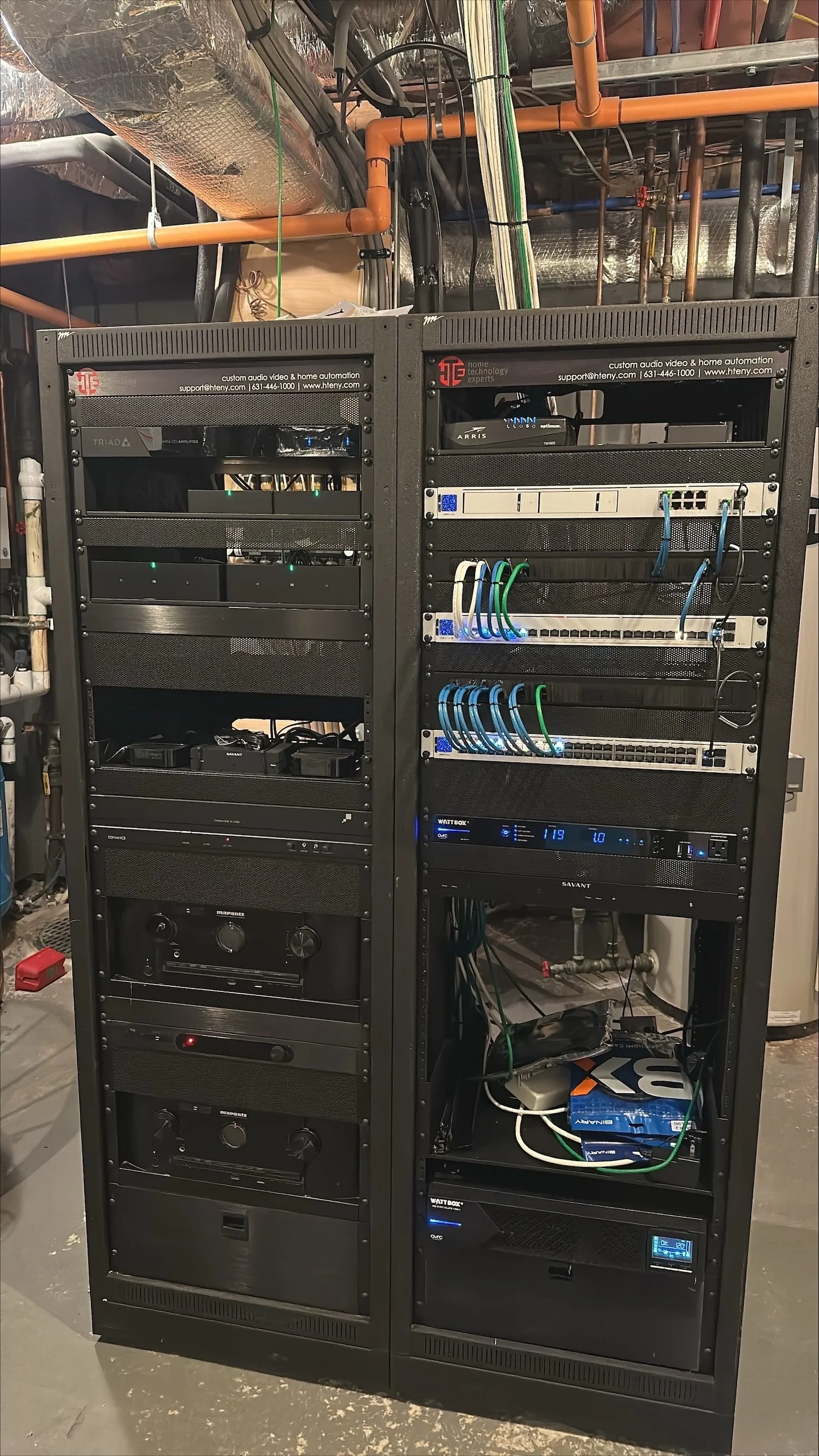
A smart home rack is engineered to be clean: structured routing, intentional cable lengths, centralized power, labeling, and airflow. On installation day it looks clean because it’s built that way.
Explore Networking Standards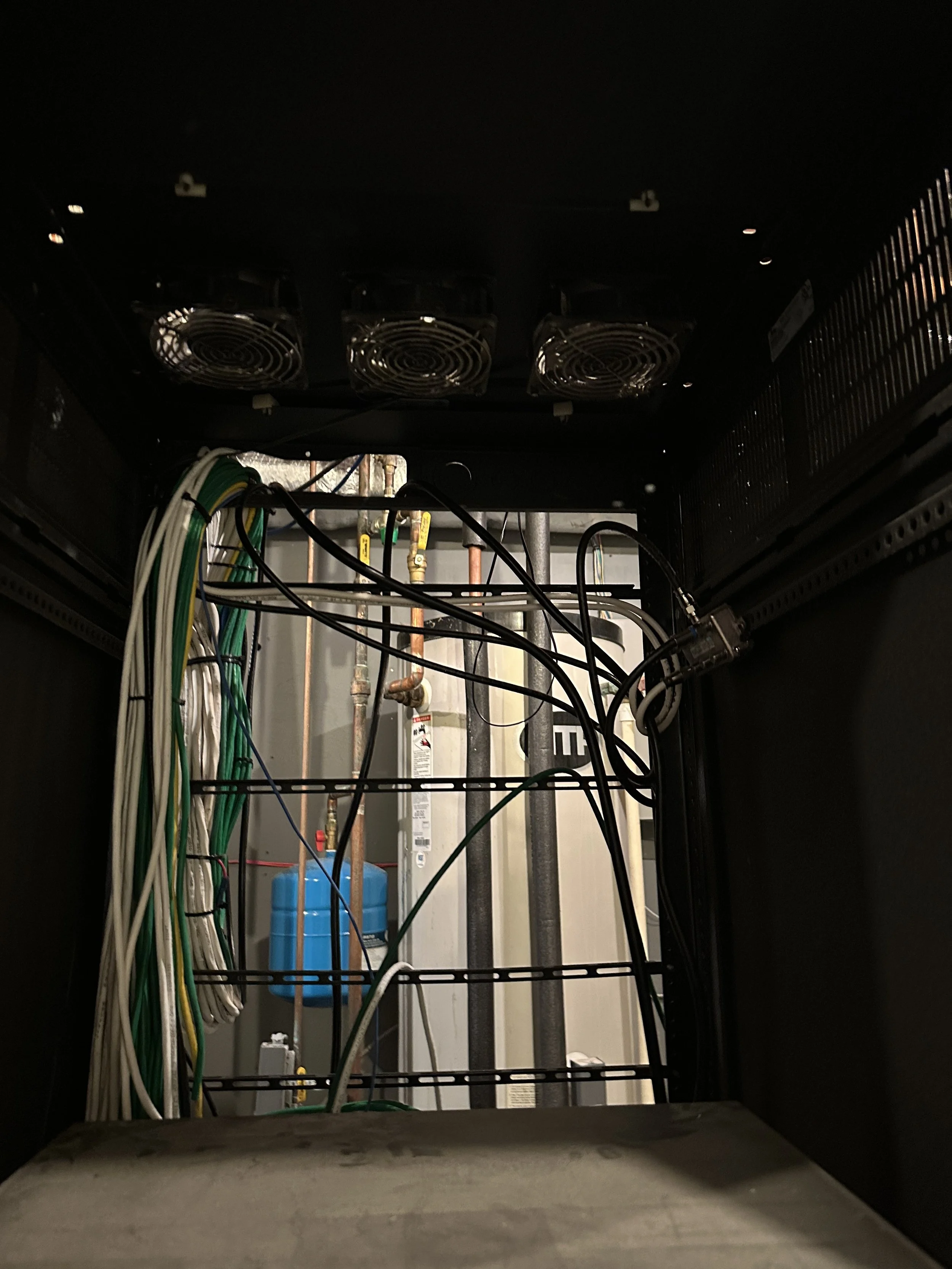
A rack is engineered to be clean.
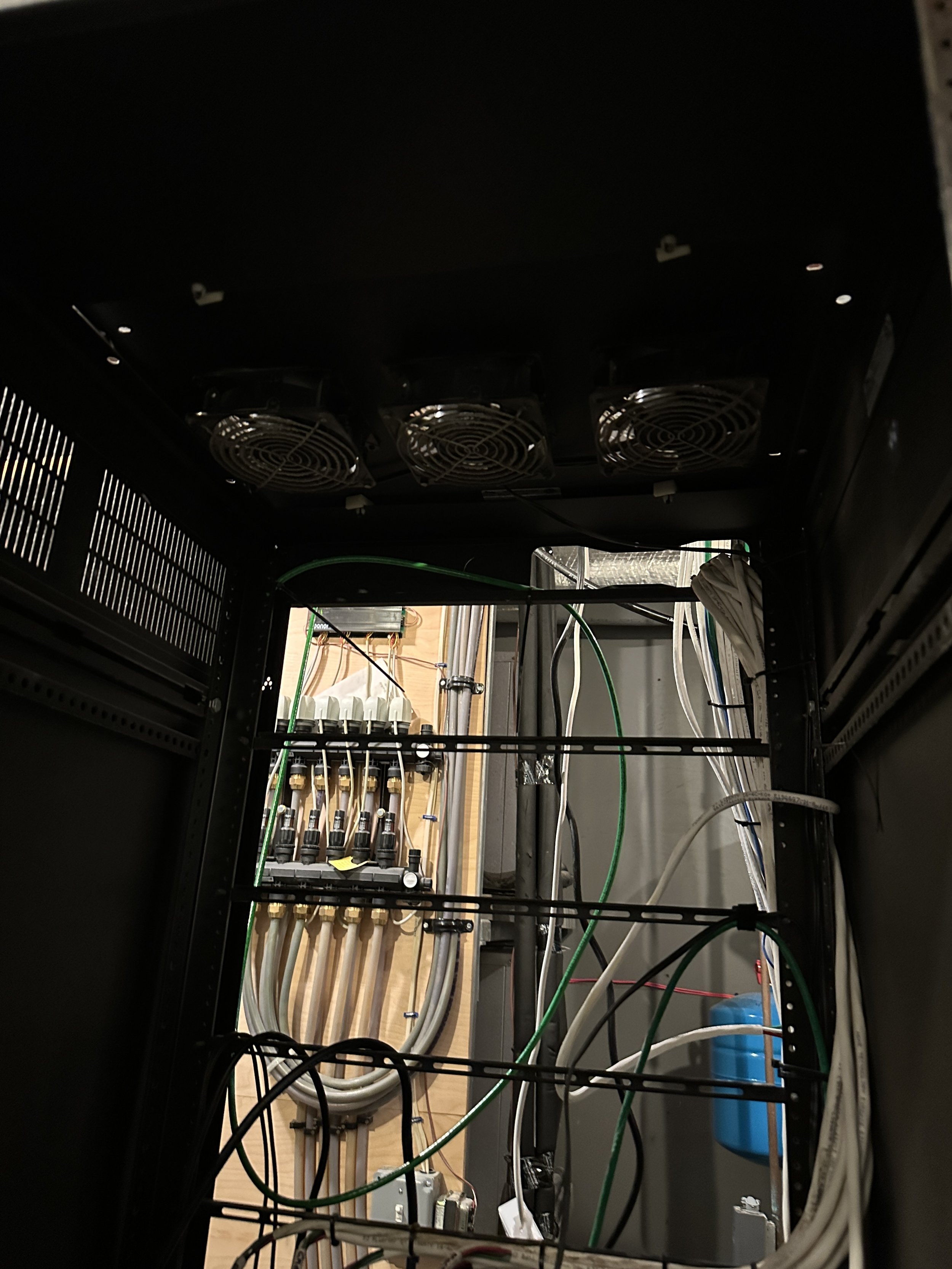
Dust + heat shortens equipment life. Restricted airflow and clutter raise temperatures and increase failure rates. A professional rack is designed with airflow, cable management, and a clear service path — so it stays stable year after year.
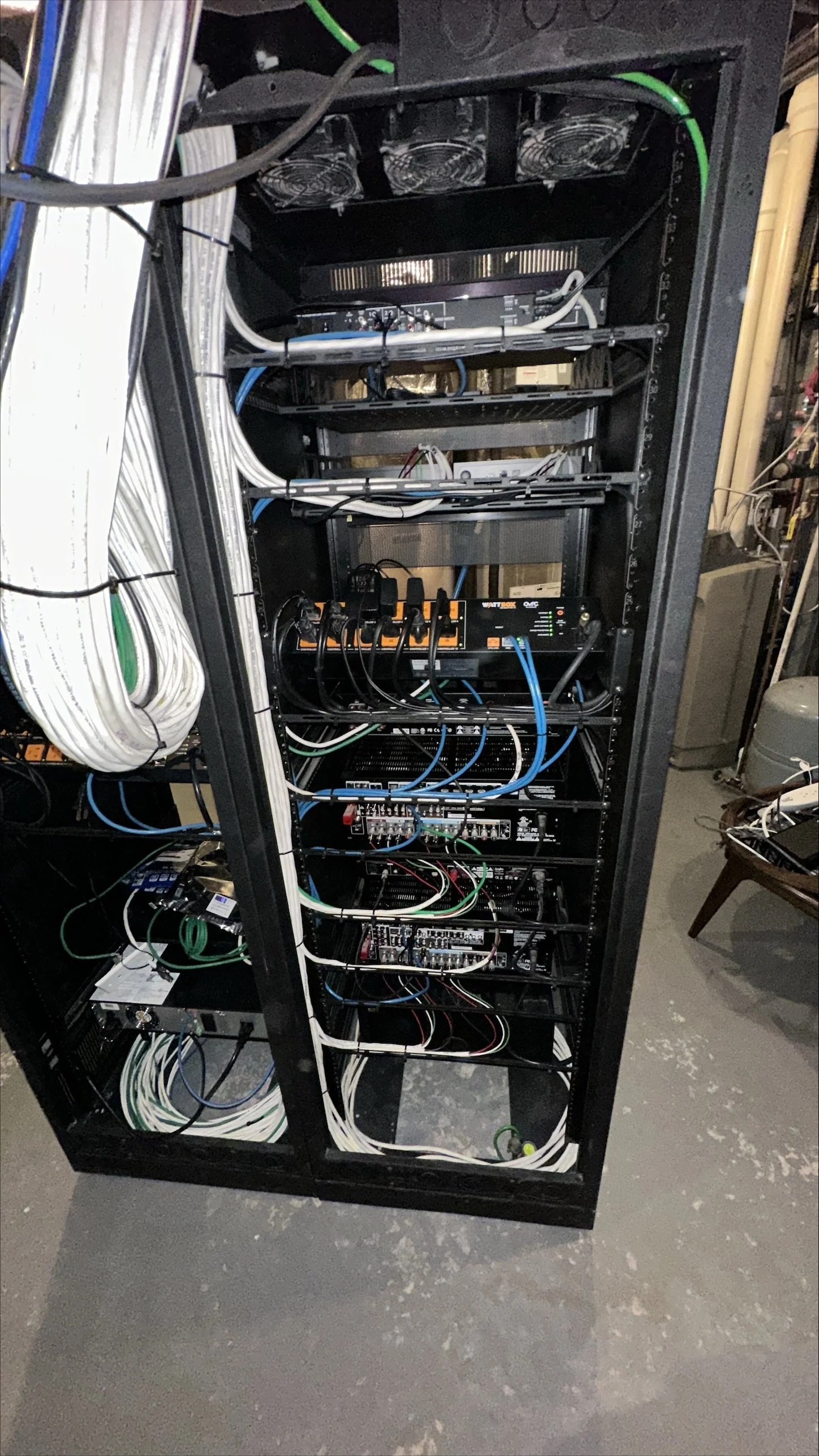
Incremental changes become permanent disorder.
Hardware fails. Platforms evolve. Streaming replaces legacy sources. A decade of small changes can erase the original structure.
Partial replacements
Equipment is swapped without full re-integration, leaving “temporary” wiring that becomes permanent.
Fragmented power
Power strips get added outside protected circuits—reducing the consistency of surge protection and sequencing.
Lost labeling
Patch panels get reassigned without re-labeling. Service becomes slower and more expensive.
Outdated documentation
As records fall out of sync, future upgrades require unraveling years of improvisation.

A messy rack is not cosmetic.
Disorganization creates measurable risks—especially when the estate has guests, multiple buildings, outdoor zones, and constant streaming demand.
Slower service
Unlabeled wiring increases troubleshooting time—simple service calls take longer than they should.
Higher failure risk
Dust accumulation and restricted airflow trap heat and shorten equipment lifespan.
Inconsistent protection
Fragmented power strips reduce effective surge protection. Consider centralized power protection for higher continuity.
Upgrade limitations
Outdated cabling and chaotic rack space make modern bandwidth and new components harder to support.
Rack rebuild vs. full system replacement
Many homeowners assume that if their smart home feels outdated, the entire system must be replaced. In many cases, that’s unnecessary. A professional rebuild restores structure without replacing every component.
- Logical cable management
- Airflow + cleaning strategy
- Labeling + documentation
- Power consolidation + sequencing
- Upgrade readiness
Long-life components often remain viable. The rebuild focuses on infrastructure—not wholesale replacement.
What a professional rack rebuild includes
Every cable is routed intentionally. Every connection is labeled. Power is consolidated and protected. The objective is long-term reliability—not cosmetic improvement.
Obsolete removal
Supported hardware
Structured cabling
Centralized power
Clear labeling + documentation
Airflow + cleaning
Structure you can see. Performance you can feel.
The goal isn’t “pretty.” The goal is predictable reliability: airflow, labeling, power consistency, and upgrade readiness.