
Why Your Lighting Should Be Human-Centric
Human-Centric Lighting
Designed to support how you live, not just how you see
Lighting That Follows a Daily Rhythm
Most lighting stays the same all day. Your body does not.
Human-centric lighting aligns your home with a natural cycle—brighter, cooler light in the morning, and warmer, softer light in the evening.
The goal isn’t more light. It’s the right light, at the right time.
Why This Matters
Your body runs on a 24-hour internal rhythm. Light is what keeps it on track.
Wake up more easily
More consistent energy
Natural wind-down at night
When lighting doesn’t support that rhythm, fatigue during the day and difficulty settling at night often follow.
Where Standard Lighting Falls Short
Most homes rely on static lighting—same color, same intensity, regardless of time of day.
- • More time spent indoors
- • Less natural daylight exposure
- • Brighter, cooler light at night
That combination works against a natural rhythm.
How It Works in Practice
Color Temperature
Cooler in the morning, warmer in the evening.
Light Level
Higher intensity during the day, softer at night.
Timing
Gradual, automatic transitions aligned to your home.
Where It Makes the Biggest Difference
Designed for Real-World Living
At HTE, these systems are planned as part of the overall lighting and control strategy—not added later.
The result is lighting that feels consistent, predictable, and aligned with how the home is actually used.
Key Takeaway
Human-centric lighting gives your environment a sense of timing—helping your body recognize when to be alert and when to rest.
Plan It Correctly From the Start
If you're planning a new build or updating your lighting, we can help design a system that’s structured, reliable, and built for long-term use.
Get Started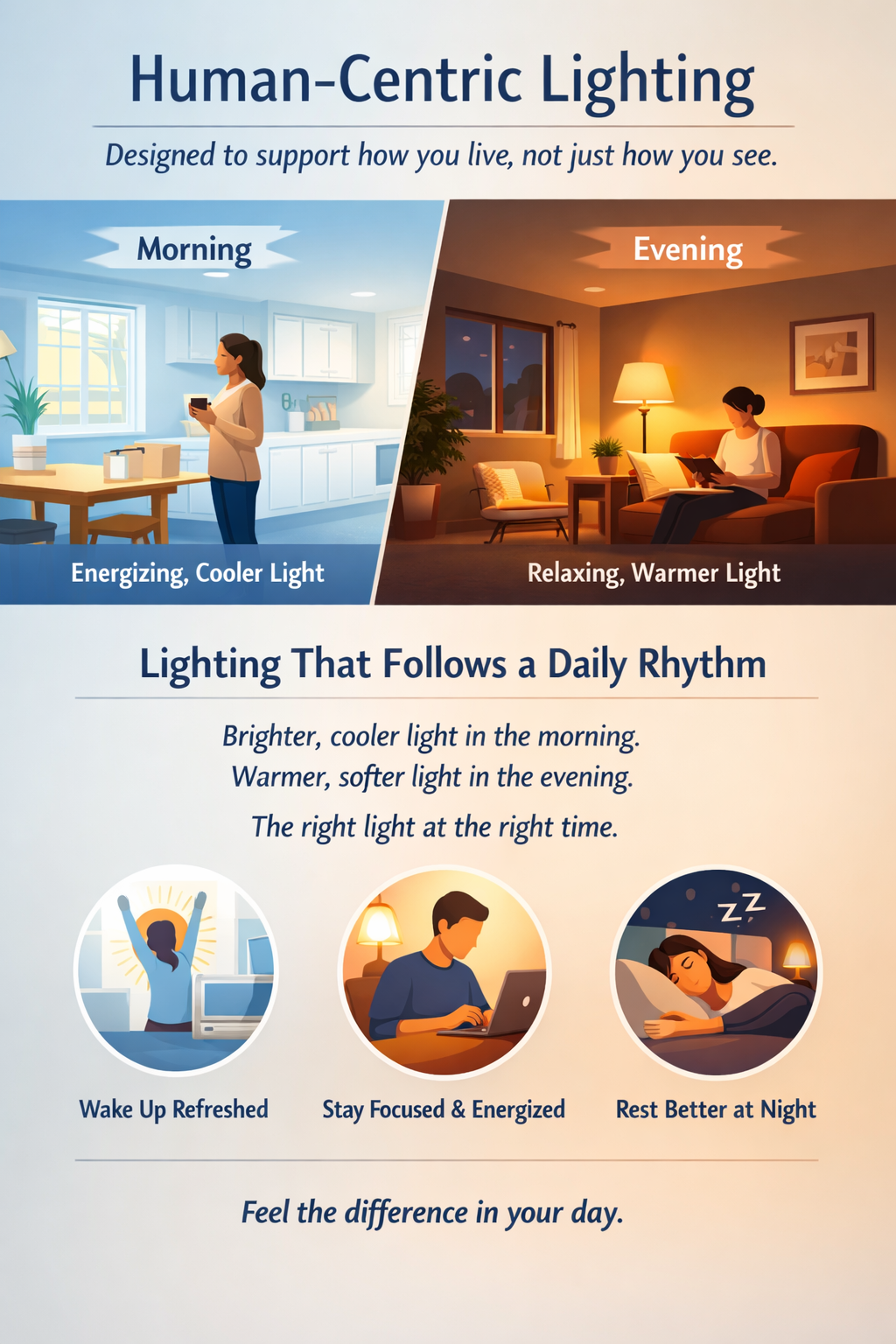
FAQ
Human-Centric Lighting Questions
Clear answers to the questions homeowners ask most when planning lighting that supports daily rhythm.
What is human-centric lighting?
How is human-centric lighting different from standard lighting?
Does human-centric lighting help with sleep?
Where does human-centric lighting make the biggest difference?
Does the system require constant adjustment?
Is human-centric lighting overly complicated to use?
Can human-centric lighting be added to an existing home?
What makes HTE’s approach different?
LEARN MORE: DIMMING AND GLARE CONTROL